Ceremony & Vows
Breaking the Glass Jewish Wedding: What Every Couple Should Know
The stomp, the shatter, the joyful cry of Mazal Tov — breaking the glass is one of the most iconic moments in any Jewish ceremony. Here is what it means, how it is done, and the modern variations couples are embracing in 2026.
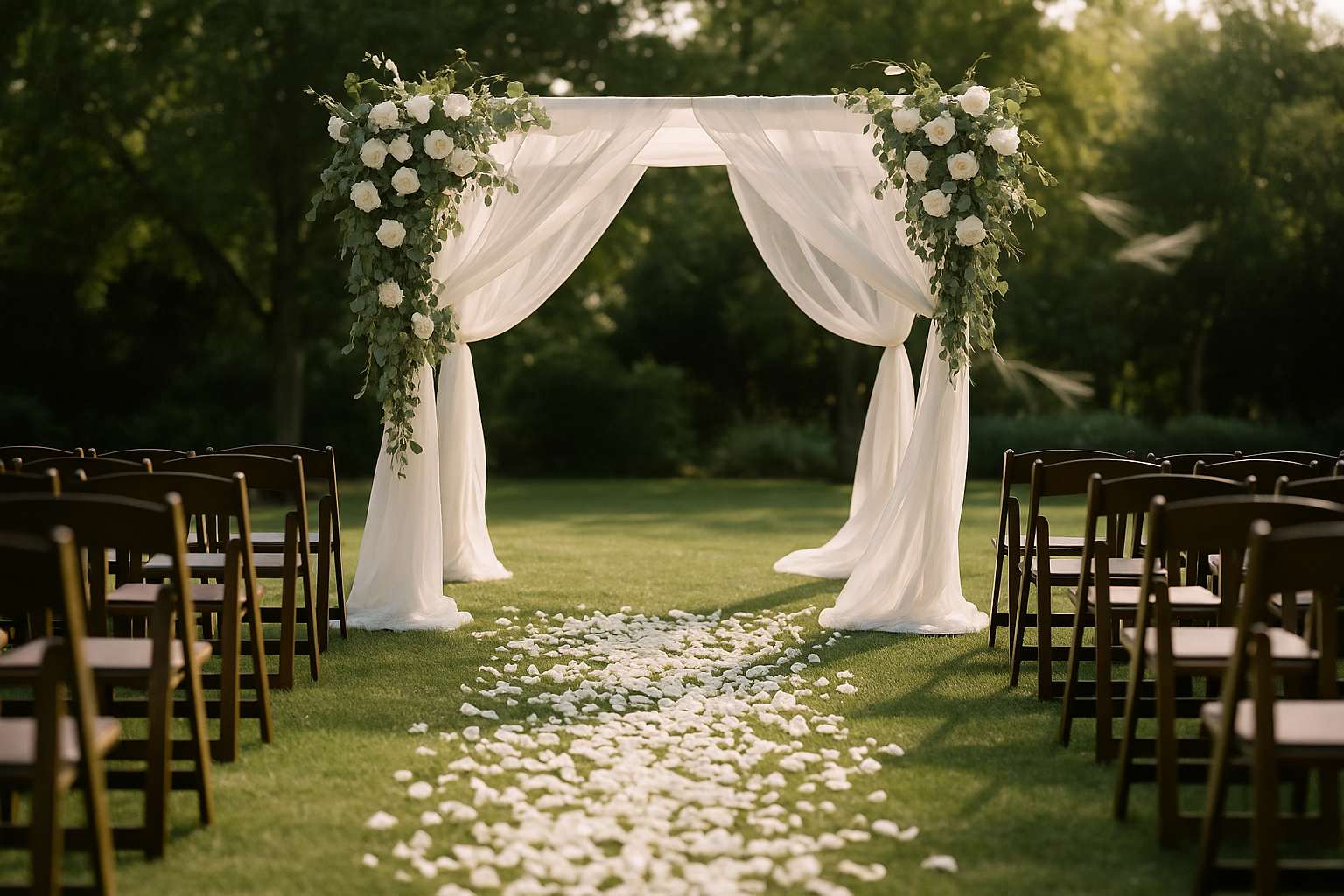
Breaking the glass at a Jewish wedding is a moment of layered meaning — commemorating the destruction of the Temple in Jerusalem, affirming the permanence of marriage, and punctuating the sacred ceremony with a joyful communal burst of Mazal Tov. It takes roughly three seconds and leaves a memory that lasts a lifetime.
There is almost no moment in any wedding tradition that works quite like this one. The ceremony has been building — the chuppah, the circling, the ring, the seven blessings — and now the rabbi nods, the groom raises his foot, and in the instant the glass shatters, every person in the room erupts together. It is solemn and jubilant at the same time. It is, for many Jewish brides and grooms, the single most powerful moment of their entire wedding day.
But breaking the glass is not simply theater. It is a ritual whose meaning has been debated, refined, and deepened across two millennia of Jewish thought. Understanding why you are doing it — and how to do it with intention — transforms the moment from a ceremony beat into a genuine covenant act.
What is the origin and meaning of breaking the glass at a Jewish wedding?
The tradition's roots lie in the Talmud. Chabad.org's authoritative account traces the custom to the Talmudic sage Mar bar Rabina, who, observing the unbridled joy at his son's wedding feast, seized an expensive goblet worth 400 zuzim and shattered it before the assembled guests — creating an immediate moment of sobriety in the midst of celebration. The principle: where there is great rejoicing, there must be trembling. Joy without awareness is not complete joy.
From this origin, multiple interpretive layers have accumulated over the centuries, each adding dimension to the moment:
- Memory of the Temple's destruction: The most universally recognized meaning is the commemoration of the destruction of the First Temple (586 BCE) and the Second Temple (70 CE) in Jerusalem. The Talmud teaches: "If I forget you, O Jerusalem, let my right hand forget its cunning" (Psalm 137:5). Even at the apex of personal joy, the Jewish people carry this historical wound. The breaking of the glass inserts that memory into the wedding ceremony as a deliberate act — not to diminish the happiness, but to honor the full complexity of what it means to be Jewish.
- The permanence of the union: Shattered glass cannot be perfectly restored. In the same way, the marriage bond formed under the chuppah is meant to be irrevocable — a covenant entered with full awareness of its permanence.
- The fragility of happiness: Glass is transparent, delicate, and finite. The act of breaking it acknowledges that life contains both joy and sorrow, and that love must be actively tended and protected.
- A new beginning: Jewish Ceremonies describes it as the shattering of the old to make way for the new — a letting go of the past self and a turning toward the shared future.
According to My Jewish Learning, few Jewish symbols carry a single explanation — and this one is, as they put it, "downright kaleidoscopic." The richness of interpretation is part of what makes it so durable: it holds meaning for the traditionally observant, the culturally connected, and the interfaith couple alike.
How does the breaking of the glass vary across Jewish denominations?
| Denomination | Who Breaks | Glass Type | Primary Framing | Egalitarian Variation Common? |
|---|---|---|---|---|
| Orthodox | Groom only | Plain drinking glass or wine goblet | Temple destruction; Talmudic obligation | No |
| Conservative | Groom (traditional); both partners (egalitarian) | Glass or light bulb | Temple memory + permanence of union | Increasingly common |
| Reform | Often both partners together | Glass or light bulb; sometimes two glasses | Permanence, bittersweet joy, mutual commitment | Yes — standard practice |
| Reconstructionist | Both partners | Glass or light bulb | Mutual covenant; life's fragility | Yes — standard practice |
| Interfaith / Secular | Both partners or one, per preference | Light bulb often preferred for ease | Cultural continuity; personal meaning | Yes — fully flexible |
A notable 2025 development in Conservative practice: a synagogue in Minnesota became the first in that denomination to permit its clergy to participate in interfaith ceremonies, reflecting evolving denominational boundaries. For couples navigating these questions, the most important step is an early, honest conversation with your rabbi about what is required, what is permitted, and what will be most meaningful for your specific community and family.
What do you actually need to prepare — and what are the practical details every couple overlooks?
The glass itself. A plain drinking glass or a thin wine goblet is the traditional choice. Many ceremony coordinators now recommend a light bulb instead — it shatters completely and dramatically with minimal force, is virtually impossible to stomp without full breakage, and produces a satisfying sound that carries beautifully in any ceremony space. Whatever you choose, it must be wrapped securely before the ceremony.
The wrapping. Place the glass inside a doubled cloth napkin or a small velvet bag and knot it closed firmly. Some couples add a zip-top freezer bag as a third containment layer, particularly for outdoor ceremonies where shards could scatter more widely. The wrap should be generous enough to catch every fragment. The velvet bag is the most elegant option and serves double duty if you plan to collect a shard as a keepsake afterward.
The stomp. The glass is placed on the floor directly in front of the groom — or between both partners if you are breaking together. It is stomped firmly with the right foot, using the heel for maximum force. Hesitation or a glancing blow risks an incomplete break, which is both practically inconvenient and symbolically awkward. Brief yourself and your partner to commit fully to the stomp. Most rabbis and ceremony coordinators will walk you through this at the rehearsal.
The response. As soon as the glass shatters, the entire room cries out "Mazal Tov!" and the musicians immediately begin. This transition from silence to jubilation is deliberate and powerful. Brief your guests — particularly those attending a Jewish ceremony for the first time — in your ceremony program so they know their enthusiastic participation is not just welcome but expected. Many couples also include the song Siman Tov u'Mazel Tov in their ceremony program so guests can sing along.
The keepsake. Designating someone — your wedding coordinator, day-of planner, or a trusted family member — to collect a shard immediately after the recessional is one of the most overlooked planning details. Bring a small velvet pouch or sealed container to the ceremony specifically for this purpose. Many couples frame a shard alongside a ceremony photograph; some commission glass artists to incorporate a piece into a custom object. Either way, this physical artifact becomes one of the most meaningful keepsakes from the ceremony.
How is the glass-breaking moment changing in 2025–2026?
Several meaningful evolutions are visible across Jewish wedding communities in 2025 and 2026. Egalitarian glass-breaking — both partners stomping simultaneously — has moved from Reform and Reconstructionist communities into mainstream Conservative practice, reflecting a broader cultural shift toward mutual ceremonial participation. Some couples use two glasses rather than one, with each partner breaking their own; the symbolism of two complete lives joining is explicit and moving.
A growing number of couples are adding a reciprocal element to a traditionally groom-only stomp: the bride places the kippah on the groom's head just before the break, creating a moment of mutual consecration that honors traditional ceremony structure while adding an egalitarian gesture. The ceremony program's explanatory language has also evolved — rather than simply listing the moment as "Breaking the Glass," more couples are including two or three sentences explaining its meaning in both Hebrew and English, so interfaith guests and non-Jewish family members experience the full emotional weight of the ritual rather than a confusing surprise.
The keepsake tradition is also growing: shadow boxes, framed ceremony mementos, and small glass-art commissions incorporating a shard from the ceremony glass are increasingly common gifts from one partner to the other, or from parents to the couple. The shard, held in a velvet bag and framed alongside a photograph of the moment it was created, is a remarkable physical artifact of one of the most extraordinary seconds of a marriage's beginning.
Whatever form the breaking takes at your wedding — traditional stomp, mutual shattering, one glass or two — the moment will carry the weight of thousands of years of joy, memory, and communal hope. That is not nothing. That is, in fact, everything.
Frequently asked
Why do couples break a glass at a Jewish wedding?
The breaking of the glass carries several overlapping meanings that Jewish tradition has developed across the centuries. The most widely cited interpretation is the commemoration of the destruction of the First and Second Temples in Jerusalem — in 586 BCE and 70 CE respectively — ensuring that even at the height of personal joy, the Jewish people carry a thread of collective grief and historical memory. A second meaning relates to the permanence of the marriage bond: as broken glass cannot be fully restored, so the covenant formed under the chuppah is intended to be irrevocable. A third interpretation speaks to the fragility of life itself — the delicacy of happiness and the responsibility couples share to protect and nurture their love.
Who traditionally breaks the glass, and is it always the groom?
In traditional Orthodox and many Conservative ceremonies, the groom alone breaks the glass with his right foot. The right foot is traditionally associated with strength and forward momentum. In Reform, Reconstructionist, and many egalitarian Conservative ceremonies, both partners break a glass together — either each stomping simultaneously on their own wrapped glass, or alternating on the same one. Some couples choose a symbolic variation where the bride wraps the glass in the cloth herself, signifying her active participation even in the traditional single-stomp format. In 2025 and 2026, egalitarian glass-breaking has become increasingly common even in moderate Conservative communities, reflecting a broader trend toward mutual participation in ceremony rituals. If the denominational expectations of your specific community are important, confirm the practice with your officiant before the ceremony — customs vary meaningfully by congregation and rabbi.
What kind of glass is actually used, and how is it prepared safely?
The most traditional choice is a plain drinking glass or wine goblet — a simple vessel, as the ritual is about the act of breaking rather than the object's value. Many rabbis and ceremony coordinators recommend using a light bulb instead of glass, since a light bulb shatters dramatically and completely with minimal force, creates a satisfying sound, and produces fewer dangerous shards. Whatever vessel you choose, it must be wrapped securely before the ceremony. The standard approach is to place the glass inside a doubled cloth napkin or a small velvet bag and tie it closed — both contain the shards completely and prevent any risk of injury. A third layer inside a small zip-top bag adds further protection. The wrapped parcel is placed on the floor and stomped firmly.
What does 'Mazal Tov' mean and why do guests shout it after the glass breaks?
Mazal Tov (מַזָּל טוֹב) is a Hebrew and Yiddish expression meaning "good fortune" or "good luck," used in contemporary practice as the equivalent of "Congratulations!" It is shouted with great joy and volume the instant the glass shatters — creating the ceremonial turning point from solemnity to pure jubilation. According to My Jewish Learning, the immediate musical response in many Ashkenazic ceremonies is the song Siman Tov u'Mazel Tov, which guests and musicians join together. The transition is intentional and powerful: the ceremony climaxes in a moment of communal noise, shared emotion, and celebration. For guests who are attending a Jewish wedding for the first time, knowing that they are both expected and welcome to shout Mazal Tov enthusiastically — the louder the better — is one of the most welcoming pieces of guidance any host can provide.
Does the breaking of the glass have different meanings across denominations?
The core meaning — remembrance of the Temple's destruction and joy tempered by historical awareness — is shared across all major Jewish denominations. The differences are in practice and emphasis rather than theology. In Orthodox communities, the groom alone breaks the glass; the act is understood strictly through the lens of Talmudic teaching and Temple memory. In Conservative communities, both the traditional practice and egalitarian adaptations are common, with individual rabbis setting their own policy. In Reform and Reconstructionist ceremonies, the ritual is often performed by both partners together as a mutual covenant act, and the explanatory framing may emphasize the permanence of the union and the bittersweet nature of life as equally as Temple remembrance. Some secular or interfaith Jewish couples retain the glass-breaking as a powerful cultural touchstone while framing its meaning in terms that resonate for their personal and spiritual context.
Can we keep a piece of the broken glass as a keepsake, and how is that done?
Keeping a shard from the broken glass is a lovely, meaningful, and growing tradition. The most common format is collecting a small piece in a velvet or silk pouch and framing it alongside a professional ceremony photograph — creating a shadow box that pairs the visual memory of the moment with a physical artifact from it. Some couples incorporate the shard into a piece of jewelry, a paperweight, or a glass art piece commissioned from a studio artist. A few ketubah artists even offer designs that include a small framed compartment for the glass. To do this well, designate a specific person — your wedding planner, day-of coordinator, or a trusted family member — to collect the shard before the recessional begins. Bring a small velvet bag or sealed container to the ceremony for this purpose.