Ceremony & Vows
Buddhist Wedding Ceremony: Traditions, Rituals & What to Expect
Buddhism has no single prescribed wedding rite — which makes a Buddhist ceremony among the most personal, spiritually grounded celebrations in any tradition. Here is everything you need to plan one with depth and intention.
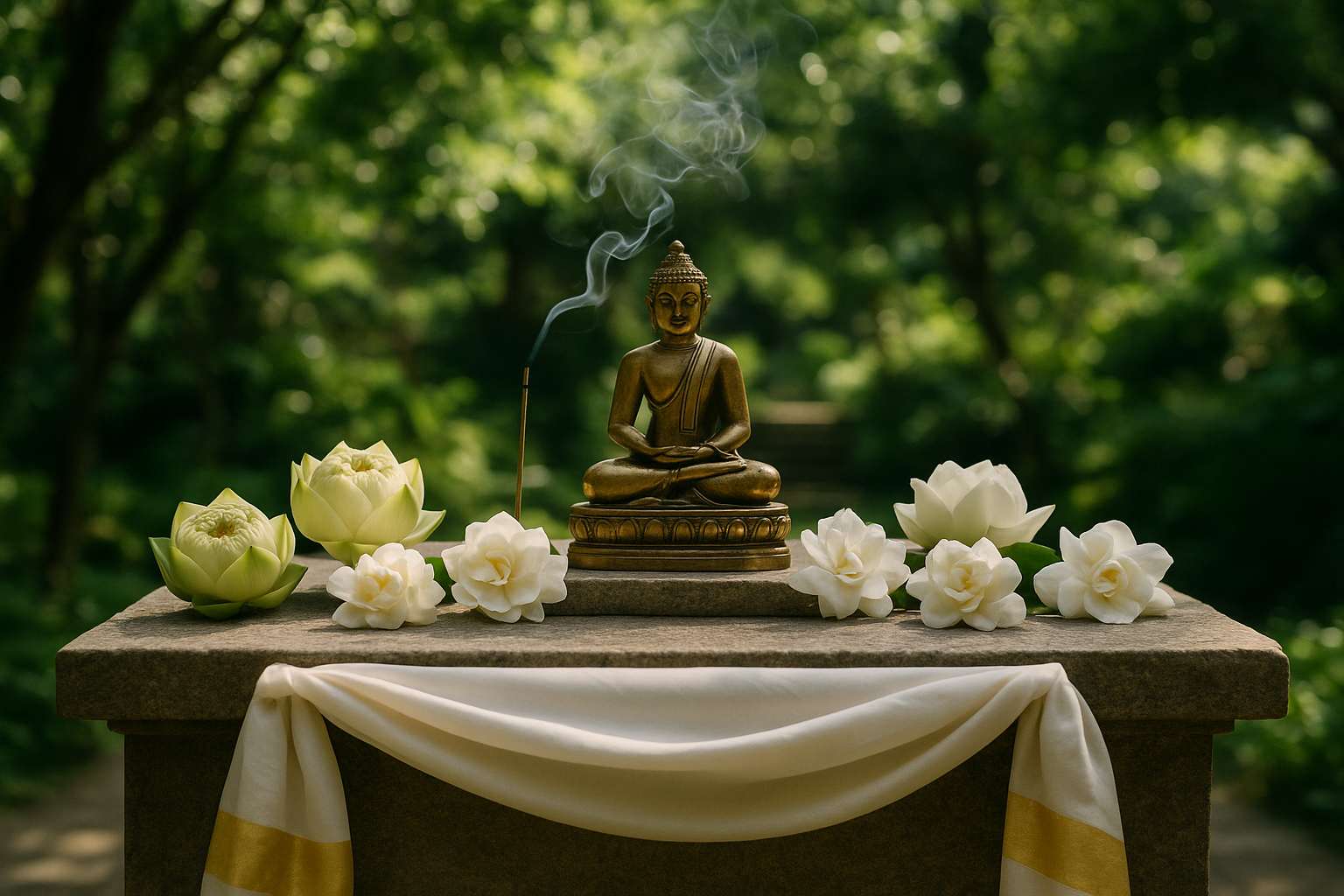
A Buddhist wedding ceremony is one of the most personal and flexible in any tradition — Buddhism prescribes no single wedding rite, so the ceremony is shaped by the couple's specific lineage, cultural heritage, and spiritual values, typically running 30 to 60 minutes and centered on blessings, mindfulness, and the community's witness.
Of all the faith-based ceremonies a couple might plan, the Buddhist wedding is perhaps the least prescriptive and the most profoundly personal. Where a Catholic marriage ceremony follows a specific liturgical structure and a Jewish wedding is anchored by the ketubah, the chuppah, and the sheva brachot, Buddhism offers something rarer: a framework for intention rather than a script. The form is yours to shape. The depth is yours to bring.
What that means in practice — for American couples planning a ceremony in 2026 — is both a beautiful freedom and a real planning challenge. A Buddhist ceremony is not plug-and-play. It requires genuine engagement with your tradition, your officiant, and what you actually believe. The couples who do that work tend to produce ceremonies that guests remember for years.
What are the main types of Buddhist wedding ceremony, and how do they differ?
Buddhism encompasses an enormous range of traditions, and no two Buddhist wedding ceremonies need look alike. Understanding the five major streams — and what each one tends to offer — is the essential first step in your planning.
| Tradition | Cultural Roots | Officiant Role | Distinctive Elements | Typical Duration |
|---|---|---|---|---|
| Theravada | Thai, Sri Lankan, Cambodian, Burmese | Monks bless; civil officiant solemnizes | Sacred water blessing, sai sin sacred thread, alms-giving (Tak Bat), monks' chanting | 60–90 minutes |
| Mahayana | Chinese, Vietnamese, Korean | Temple abbot or dharma teacher | Incense and flower offerings at altar, bodhisattva invocations, taking of vows | 45–75 minutes |
| Tibetan (Vajrayana) | Tibetan, Bhutanese, Mongolian | Lama | Astrologically determined timing, khata (white silk scarves), complex ritual offerings | 60–120 minutes |
| Zen | Japanese, Korean, Western | Roshi or trained dharma teacher | Contemplative dharma talk, exchange of rings, minimalist aesthetic, meditation | 30–50 minutes |
| Japanese Shinto-Buddhist Hybrid | Japanese | Shinto priest or Buddhist officiant | San-san-kudo (three-times-three sake sharing), shiromuku (white kimono), ancestral honoring | 40–60 minutes |
For American couples with mixed or Western Buddhist backgrounds — or those drawn to Buddhist principles without a specific cultural lineage — the Zen and interfaith-Buddhist ceremony models offer the most accessible starting point. American Marriage Ministries notes that contemporary Buddhist ceremonies embrace elements of the couple's individual cultures, leading to "a large variety of unity rituals" — garlands, threads, rings, or any symbol meaningful to the couple.
What rituals and elements belong in a Buddhist wedding ceremony?
A thoughtfully constructed Buddhist ceremony typically moves through several phases, each with its own character and purpose. The sequence below reflects a Western-accessible structure drawn from common elements across Theravada, Zen, and Mahayana practice — adapt it with your officiant to suit your specific tradition.
Opening meditation and bell ringing — 5 minutes. The ceremony begins in stillness. A bell, singing bowl, or gong marks the transition from the noise of the gathering day to the sacred attention of the ceremony. Guests who are unfamiliar with this practice often describe it as the single most powerful moment of orientation they have experienced at a wedding.
Welcome and dharma talk — 10 to 15 minutes. The officiant or monk addresses the couple and the gathered community. A good dharma talk for a wedding is not a lecture; it is a meditation on the particular nature of love — its impermanence, its generosity, its daily practice. The best dharma talks for weddings are specific to the couple: their story, their character, their commitment.
Floral and incense offerings. Flowers and incense placed at the altar carry deep symbolic weight in every Buddhist tradition. Flowers represent the beauty and impermanence of all living things — the same impermanence that gives each moment of love its preciousness. Incense represents the rising of prayers and merit toward the well-being of all beings. Guests as well as the couple may participate in offerings at some ceremonies.
Sacred water blessing — particularly in Theravada ceremonies. Elders or guests pour water over the couple's joined hands using a conch shell or sacred vessel. This act signifies purification, the washing away of past grievances, and the welcoming of a new shared life. In Thai Buddhist tradition, the couple holds their hands together in a prayer gesture while each elder pours, offering a personal blessing as they do.
Tying of the red thread. In many Buddhist ceremonies — particularly those rooted in Chinese Mahayana practice — a monk or elder ties the couple's hands together with a red or white thread that has been blessed with prayers and chanting. The red thread is a symbol of protection, good fortune, and the spiritual connection between two souls. This single gesture photographs beautifully and carries a weight of meaning that guests of any background immediately feel.
Exchange of vows. Buddhist wedding vows are not standardized — they are written by the couple, often with the guidance of their officiant. The best Buddhist vows carry the register of dharma practice: honest about impermanence, rooted in compassion, and specific about the particular kind of partnership these two people are committing to. Common structures draw on the language of the Four Immeasurables (loving-kindness, compassion, sympathetic joy, equanimity) as a framework for marital commitment.
Blessing by the sangha. In Buddhist tradition, the sangha — the community of practitioners — is one of the Three Jewels alongside the Buddha and the Dharma. Inviting the community to offer a collective blessing to the couple is both spiritually meaningful and deeply moving. This may take the form of a chanted dedication of merit, a spoken affirmation, or simply a moment of collective silence and intention.
How do you plan auspicious timing for a Buddhist wedding?
In several Buddhist cultural traditions, the selection of a wedding date and time is not simply a logistical matter — it is a spiritual consultation. In Thai Theravada Buddhism, a professional astrologer (Moh Doo) consults both the couple's birth charts and the lunar calendar to identify auspicious dates and times. Thursday is considered particularly auspicious. Wan Phra — Buddhist holy days that fall on new and full moon days — are generally avoided for weddings. Many Thai families request a ceremony start time that includes the number 9, which is considered supremely auspicious: 9:09 a.m. is a popular choice.
In Tibetan Buddhist tradition, an astrological consultation with the lama is similarly essential before confirming a date. The lunar calendar, the couple's birth signs, and the elemental balance of the year all factor into the recommendation. For couples working within a Western calendar context, even a brief consultation with a knowledgeable teacher about auspicious timing — or simply an acknowledgment of the intentionality of the date chosen — honors the tradition without requiring a full Tibetan astrological reading.
Zen and Western Buddhist ceremonies are generally less bound by astrological timing conventions, though some practitioners consult the lunar calendar for full-moon dates, which are considered particularly powerful moments for intention and commitment.
What does a Buddhist wedding ceremony cost in 2026?
The Buddhist ceremony itself is among the most accessible of any religious tradition in terms of baseline cost. The following estimates reflect 2025–2026 U.S. market data:
| Element | Typical Low | Typical High | Notes |
|---|---|---|---|
| Monk or officiant dana (gift) | $200 | $1,500 | Dana is a respectful gift, not a fixed fee; adjust to tradition and involvement |
| Temple ceremony fee | $300 | $3,000 | Varies significantly by temple, city, and arrangement |
| Ritual items (incense, flowers, candles, offerings) | $100 | $500 | Lotus, white gardenias, and incense are widely available at Asian specialty markets |
| Traditional attire (varies by tradition) | $500 | $8,000+ | Shiromuku kimono rental, Thai silk, Tibetan chuba; range reflects regional and customization variation |
| Full ceremony + reception | $10,000 | $80,000+ | Ceremony costs are low; total spend is driven by reception choices |
One of the genuine graces of a Buddhist ceremony is that its spiritual power is entirely independent of its cost. The most moving Buddhist wedding ceremonies tend to be among the simplest — a well-chosen space, genuine vows, a dharma teacher who knows the couple, and a community gathered with intention.
For couples planning a Buddhist ceremony as part of a larger modern wedding, the practical advice from experienced planners is this: give the ceremony its own sovereign time. Do not compress the dharma talk to fit a cocktail-hour schedule. Do not rush the bell ringing because the caterer needs the room. The ceremony is the wedding. The rest is celebration.
Frequently asked
What makes a Buddhist wedding ceremony different from other religious weddings?
The most distinctive feature of a Buddhist wedding is that Buddhism has no universally prescribed marriage sacrament. While Catholic, Jewish, and Islamic ceremonies are bound by specific liturgical requirements, Buddhist weddings draw their structure from cultural tradition, regional practice, and the couple's own spiritual lineage. This makes every Buddhist ceremony uniquely personal. The ceremony is built around blessings, mindfulness, the cultivation of merit, and the community's witness — rather than a doctrinal legal contract. Most Buddhist couples in the United States obtain a civil marriage license separately and then hold a spiritually meaningful ceremony with a monk, dharma teacher, or trained officiant. The result is often one of the most heartfelt and meditative ceremonies of any tradition — deeply personal, rooted in compassion, and free from a one-size-fits-all liturgical script.
Do Buddhist weddings require a monk or priest to officiate?
In Theravada traditions — Thai, Sri Lankan, Cambodian, and Burmese — monks traditionally bless rather than officiate weddings, as formal officiating is generally considered outside their monastic role. The couple may receive blessings from monks at a temple, but the legal ceremony is conducted separately. In Zen, Tibetan, and many Western Buddhist contexts, a dharma teacher, lama, or ordained lay teacher may formally officiate and sign the civil marriage license if they are registered with the state. In the United States, interfaith or nondenominational officiants trained in Buddhist ceremony can also conduct a meaningful ceremony incorporating Buddhist elements. The key is to identify a person who genuinely knows the specific tradition you wish to honor — not simply someone familiar with Buddhism in a general sense — and to confirm that they are legally authorized to solemnize marriages in your state.
How long does a Buddhist wedding ceremony typically last?
A Western-friendly Buddhist ceremony typically runs 30 to 60 minutes — considerably more intimate and brief than, say, a full Hindu Vivah ceremony. Theravada ceremonies that include a formal monk blessing session and alms-giving (Tak Bat) may extend to 90 minutes or more. Japanese Shinto-Buddhist hybrid ceremonies are similarly compact — the san-san-kudo (three-times-three sake sharing) and ceremonial exchange are the structural heart, and the overall ceremony rarely exceeds an hour. Tibetan Buddhist ceremonies conducted by a lama may be longer and more ritually complex, particularly when astrological timing and specific offering sequences are observed. Always discuss expected duration with your officiant during the planning process, and build a wedding day timeline that gives the ceremony the unhurried space it deserves — a ceremony that feels rushed communicates that it was secondary to the reception.
What should guests wear to a Buddhist wedding ceremony?
Guest attire at a Buddhist wedding varies significantly by tradition, setting, and the level of formality the couple has chosen. For a temple-based ceremony — whether Theravada, Tibetan, or Mahayana — modest coverage is respectful: covered shoulders and knees, nothing revealing. Shoes are typically removed before entering the temple or dharma hall. In Thai and Cambodian Theravada traditions, guests often wear conservative attire in soft colors; bright red may be avoided at some ceremonies. In Zen and Western Buddhist contexts, the dress code is often defined by the couple's overall wedding formality rather than by religious prescription — a Zen ceremony at a serene outdoor retreat center may welcome anything from elegant garden-party attire to white linen. When in doubt, follow the couple's invitation language and, if they have a wedding website, look for any dress-code guidance there. A modest and thoughtful presence is always correct.
How much does a Buddhist wedding ceremony cost in the United States?
A Buddhist wedding ceremony is among the most budget-accessible religious ceremonies available in the United States, largely because it requires no mandatory expensive elements. The monk or officiant's dana (a respectful gift, not a fixed fee) typically ranges from $200 to $1,500 depending on the level of involvement, the tradition, and the region. Temple ceremony fees, when applicable, range from $300 to $3,000. Ritual items — incense, lotus or other flowers, candles, offering bowls — add roughly $100 to $500. Traditional attire, when purchased or commissioned, ranges from $500 to $8,000 depending on cultural tradition and degree of customization. A full Buddhist ceremony plus a wedding reception can total anywhere from $10,000 to $80,000 depending on guest count, venue, and catering choices — factors that are wedding-specific rather than Buddhism-specific. The ceremony itself remains one of the most spiritually rich and financially accessible options available.
Can a Buddhist wedding be legally recognized in the United States?
Yes, but with an important clarification. The spiritual ceremony itself does not automatically confer legal marriage — what matters legally is whether your officiant is registered with your state to solemnize marriages and signs the civil marriage license. In most U.S. states, ordained ministers, dharma teachers, and even interfaith officiants ordained through organizations like the American Marriage Ministries can legally sign marriage licenses. Before booking any Buddhist officiant, confirm two things: that they are legally ordained in your state's requirements, and that they have experience signing marriage licenses properly. Some Theravada-tradition monks in the United States decline to perform legal civil functions as part of their monastic vows — in those cases, couples hold a brief civil signing ceremony (at the courthouse or with a civil officiant) separately from the religious blessing. This two-ceremony model is entirely common and carries no diminishment of either moment.