Ceremony & Vows
Courthouse Wedding Checklist: What Every Couple Should Know
A courthouse wedding is legally identical to any other — and with the right preparation, it can be just as beautiful. Here is everything you need to make it official, smooth, and genuinely memorable.
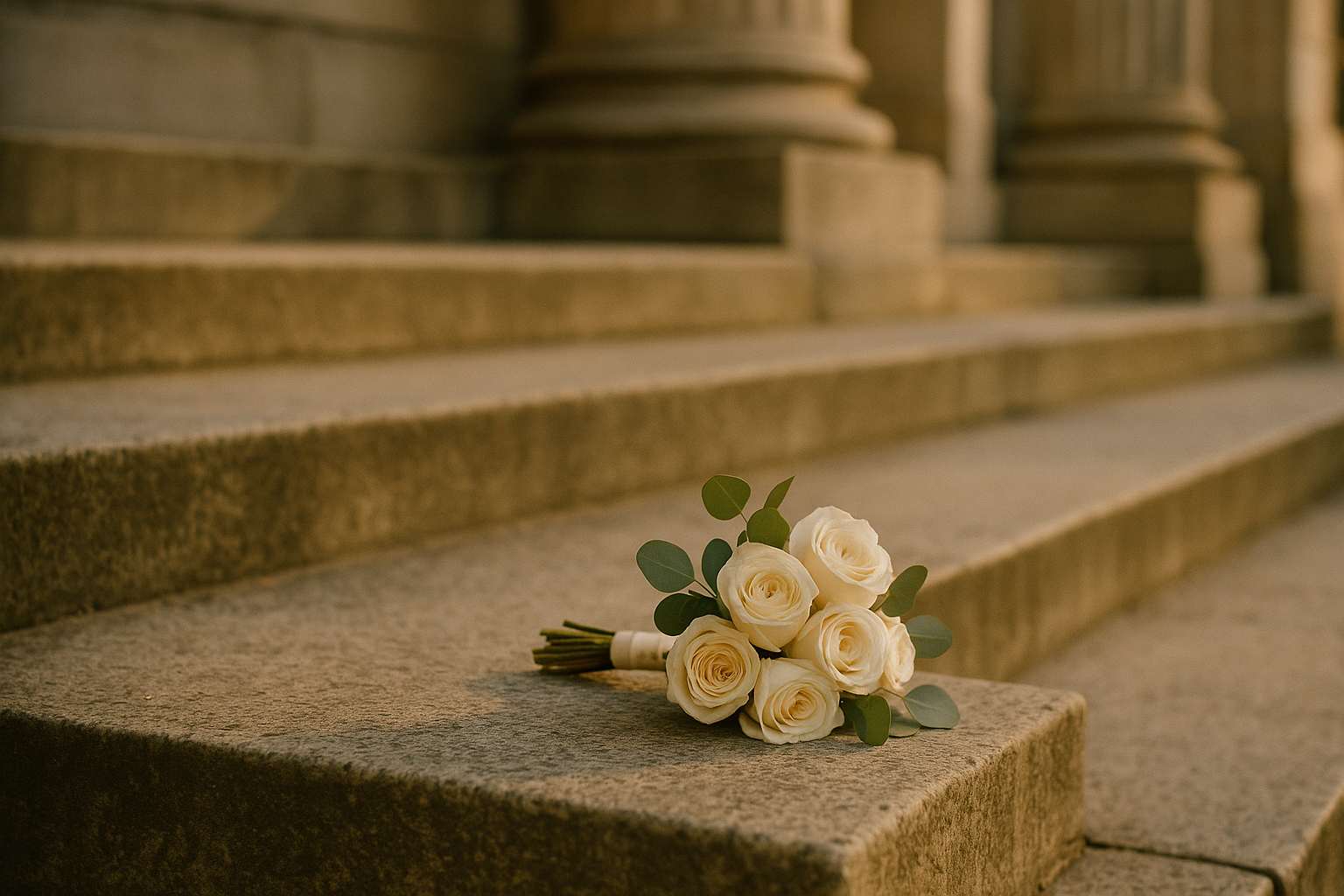
A courthouse wedding is legally identical to a traditional ceremony and costs $50 to $300 total. Bring valid photo ID, your marriage license, witnesses, and payment. Apply for the license 3 to 5 weeks before the ceremony to clear waiting periods without risking expiration — and arrive 15 minutes early on the day.
What exactly is a courthouse wedding, and is it legally the same as any other?
A courthouse wedding — also called a civil ceremony — is a legal marriage performed by a judge, magistrate, justice of the peace, or authorized civil officiant in a government building. It is not a lesser or provisional form of marriage. The moment you exchange vows before an authorized officiant, sign the marriage license, and the license is filed with the county, you are legally married in every sense that the law recognizes. The same spousal rights, tax-filing options, inheritance protections, and name-change pathways apply whether your ceremony took place in a candlelit cathedral or a room off the courthouse lobby.
Courthouse weddings have seen a notable rise in 2025–2026, driven by couples who prioritize legal clarity without ceremony complexity, couples planning a larger celebration later, micro-wedding couples marrying intimately before a destination event, and couples for whom the legal paperwork is simply a meaningful private beginning to a life built together. According to Junebug Weddings, courthouse ceremonies typically run 10 to 20 minutes — brief enough to be lunch-hour events, significant enough to be among the most vividly remembered moments of a couple's life.
What does the courthouse wedding checklist actually include?
A well-organized courthouse wedding requires preparation in three phases: before the day, on the day, and immediately after. The checklist below covers every item.
Before the Ceremony
- Research your specific courthouse. Not all courthouses perform wedding ceremonies. Call or check the official county website to confirm they offer civil marriage ceremonies, whether an appointment is required, what hours are available, and the accepted forms of payment.
- Apply for your marriage license. Both partners must typically appear in person at the county clerk's office, though a growing number of counties (particularly in Colorado and Utah) accept online applications. Bring valid photo ID, birth certificates, Social Security numbers, and documentation of any prior marriage dissolution. Pay the license fee — national average approximately $65, ranging from $20 to $169 by county.
- Understand your state's waiting period. Most states have no waiting period. Florida waives its three-day waiting period for Florida residents who complete an approved premarital course. New Jersey, Maryland, and Washington State have mandatory waiting periods of two to three days. Apply early enough that the waiting period clears before your ceremony date.
- Confirm your license validity window. Most licenses expire 30 to 90 days after issuance. Apply 3 to 5 weeks before the ceremony to stay comfortably within the window without risking expiration.
- Schedule the ceremony appointment. Many courthouses book civil ceremonies weeks in advance, especially Friday afternoons, which are in high demand. Call immediately after receiving your license to secure your preferred date and time.
- Confirm witness requirements. Most states require one or two witnesses aged 18 or older. Identify and confirm your witnesses well in advance; provide them the exact address, arrival time, and parking information.
- Plan your attire. You do not need a traditional bridal gown — though you absolutely may wear one. Many courthouse brides choose a tea-length dress, a tailored blazer and trousers, or a simple chiffon midi in ivory or blush. Whatever you choose should photograph beautifully and feel unmistakably like you.
- Order a bouquet. Even the simplest arrangement — white ranunculus, garden roses, eucalyptus — transforms courthouse photographs from administrative to genuinely beautiful. Many florists offer small bouquets ($45 to $90) with 48-hour notice.
| Item | Who Brings It | Notes |
|---|---|---|
| Valid government-issued photo ID | Both partners | Driver's license, state ID, or passport — must be unexpired |
| Marriage license | Either partner (keep together) | Applied for in advance; must not be expired on ceremony date |
| Ceremony fee payment | Either partner | Cash or check preferred; confirm accepted forms with courthouse |
| Witness ID | Each witness | Witnesses must be 18+ and not one of the couple being married |
| Divorce decree or death certificate (if applicable) | Relevant partner | Required for anyone previously married; must be certified copy |
| Wedding rings | Either partner | Designate a ring keeper the night before to avoid last-minute panic |
On the Wedding Day
- Arrive 15 to 20 minutes early. Courthouses run back-to-back appointments. A five-minute grace period is standard; arriving late risks forfeiting your slot entirely and rescheduling at a fee.
- Bring the document envelope. One designated person carries all paperwork — marriage license, IDs, payment, and any required additional documentation. Do not split documents across purses and pockets.
- Bring your rings. The most overlooked item. Place both rings in a dedicated ring box the night before. Forgotten rings at a courthouse ceremony are preventable and avoidable.
- Have personal vows ready if you plan to speak them. Many civil officiants permit couples to add a brief personal exchange before or after the required legal language. Ask in advance whether personal vows are permitted and if there is a time limit.
- Assign a photographer. A trusted friend with a good camera — or a professional photographer booked for a one-hour courthouse session — transforms the signed license and the courthouse steps into lasting images. Do not rely on phone snapshots alone for a moment this significant.
After the Ceremony
- Confirm the officiant files the license. The signed marriage license must be returned to the county clerk within a specified window — typically three to ten days after the ceremony. Confirm this explicitly with your officiant before you leave the building.
- Order certified copies of the marriage certificate. Request at least four to six certified copies from the county clerk at the time of filing. These are the foundation documents for every name-change and legal update that follows: Social Security Administration, DMV, passport, employer, bank, and insurance. Ordering additional copies weeks after filing is more expensive and slower.
- Celebrate in a way that feels like you. Plan a meal, a gathering, or a private toast that honors the day. A courthouse ceremony need not end at the parking lot. A dinner reservation at a beloved restaurant, a champagne toast in a meaningful location, or a small gathering with the people you love most transforms a legal proceeding into a genuinely commemorated occasion.
What are the most common courthouse wedding mistakes to avoid?
The courthouse wedding is deceptively simple — which is exactly why preparation matters. The following mistakes appear repeatedly:
- Applying for the license in the wrong jurisdiction. Some states require the ceremony to occur in the county that issued the license. Confirm this rule before applying anywhere other than the ceremony county.
- Forgetting the marriage license on the wedding day. The officiant cannot legally complete the ceremony without it. The license keeper assignment is the single most important logistical decision you will make.
- Arriving without confirmed witnesses. Witnesses who agree informally and do not show up are the second most common courthouse wedding crisis. Confirm attendance in writing, provide parking and time instructions, and have a backup contact who can step in on short notice.
- Signing in your future married name. Both partners sign the marriage license using their current legal names. Signing your anticipated married name before the name-change process is complete can delay or invalidate the registration.
- Not ordering enough certified copies. Every legal and financial institution that needs to update your name — SSA, DMV, passport agency, employer, bank, investment accounts — requires a certified copy. Order six at minimum.
A courthouse wedding beautifully handled is one of the most intimate and meaningful ways to begin a marriage. The legal weight of what happens in that room is identical to any ceremony in any venue in the world. What you carry from it — the photograph on the courthouse steps, the signed license you frame, the memory of looking at each other in a quiet room and meaning every word — belongs entirely to you.
Frequently asked
What documents do you need for a courthouse wedding?
For a courthouse wedding, both partners must bring a valid government-issued photo ID — a driver's license, state ID, or passport — along with their Social Security numbers. Most courthouses also request certified birth certificates, particularly if either partner is under 18 or has a complex identity history. If either partner has been previously married, you must bring a certified copy of the divorce decree or the deceased spouse's death certificate. Bring the original marriage license you applied for in advance, payment for the ceremony fee (cash or check, as some courthouses do not accept credit cards), and contact information for your required witnesses. Organize all documents in a single envelope the night before and assign one person to be the keeper of that envelope on the wedding day. The most common courthouse wedding crisis is perfectly preventable: forgetting the marriage license at home.
How much does a courthouse wedding cost in 2026?
The total cost of a courthouse wedding in 2026 typically ranges from $50 to $300, covering both the marriage license fee and the civil ceremony fee. Marriage license fees vary significantly by state and county — from approximately $20 in some Colorado counties to $169 in King County, Washington — with a national average of around $65. Civil ceremony fees charged by the courthouse on top of the license typically run $25 to $75. Some courthouses offer ceremony slots by appointment only; others permit walk-ins on a first-come basis. Couples who choose to add a small celebration after the ceremony — a private dinner, a dessert gathering with close family — can still keep total costs well under $500 while creating a genuinely meaningful day. This affordability is one of the courthouse wedding's most underappreciated qualities: it frees budget for a honeymoon, a home, or a larger anniversary celebration.
Do you need witnesses for a courthouse wedding?
Most states require one or two witnesses to be present at a civil ceremony and to sign the marriage license. The witness must be 18 years of age or older, must not be one of the two people getting married, and does not need to be a resident of the state in most jurisdictions. Even in states that require only one witness, experienced wedding planners recommend bringing two as a backup — if a guest is running late or becomes too emotional to sign clearly, having a second witness already present eliminates stress. Witnesses sign the marriage license at the ceremony alongside the officiant. Colorado is the only state in the U.S. that permits full self-solemnization, meaning a couple may legally marry themselves with no officiant or witnesses required. For all other states, confirm your specific county's requirements directly with the clerk's office before your ceremony date.
How do you make a courthouse wedding feel special?
A courthouse wedding becomes meaningful through intentional details, not elaborate logistics. A bridal bouquet — even a simple arrangement of garden roses and eucalyptus — adds beauty to every photograph and gives the bride something purposeful to hold. A dressed-up outfit, not necessarily a full bridal gown, creates a visual occasion; many brides choose a tea-length dress, a tailored suit, or an elegant midi dress in ivory or blush. Arrive 15 to 20 minutes early to compose yourselves before the ceremony rather than rushing from a parking spot. After the legal proceedings, plan a small celebration that reflects who you are — a brunch at a restaurant that matters to you, a champagne toast in a park, a dinner with the people you love most. Write personal vows even if the officiant has a script; many civil officiants will permit a brief personal exchange before or after the required language. A trusted photographer — even a friend with a good camera — transforms the courthouse steps and the signed license into images you will keep forever.
When should you apply for a marriage license before a courthouse ceremony?
The ideal window for applying for your marriage license is three to five weeks before your ceremony date. This timing ensures you clear any state waiting period (which ranges from zero to five days depending on jurisdiction), keeps you comfortably within the license's validity window (typically 30 to 90 days depending on the state), and gives you buffer time if any documentation issues arise. Apply too early and the license may expire before your ceremony; apply too late in a state with a waiting period and the ceremony date becomes invalid. Washington State's King County, for example, has a three-day waiting period and charges $169 for the license — couples who apply on a Thursday cannot hold their ceremony until Sunday at the earliest. Always confirm the waiting period and validity window directly with your specific county clerk, as these details vary and are periodically updated.