Ceremony & Vows
Marriage License Requirements by State: The 2026 Guide
Every U.S. state issues marriage licenses differently — from fees as low as $30 to waiting periods up to six days. Here is everything you need to know before you visit the county clerk.
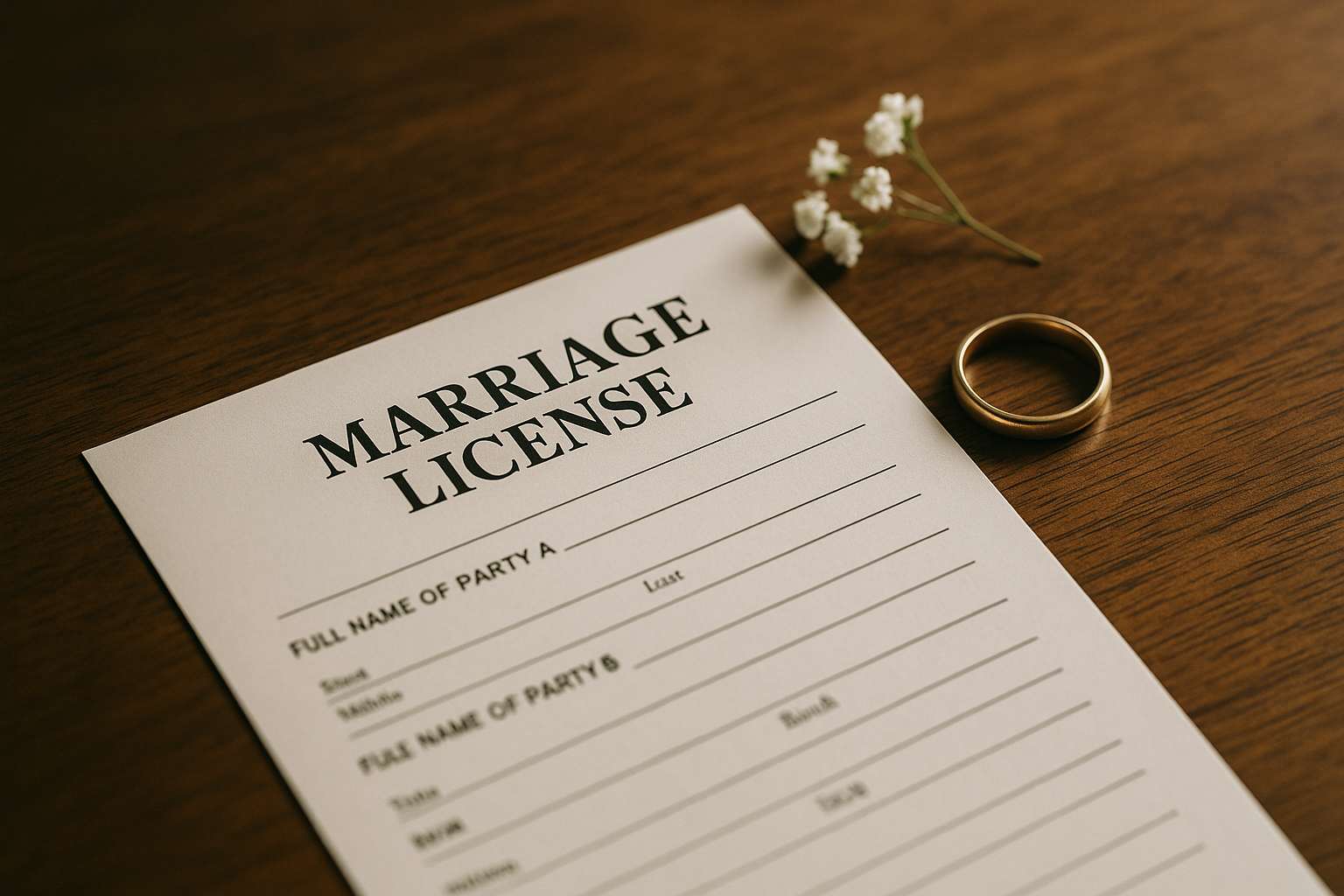
A U.S. marriage license requires both partners to appear at a county clerk's office, present valid government ID, pay a fee averaging $65 (but ranging from $10 to $170+), and wait zero to six days depending on the state. Apply 3–5 weeks before your wedding to clear any waiting period and stay within the license's validity window.
The marriage license is the document that transforms your beautiful ceremony into a legally recognized union. Without it — or with one that has expired, was issued in the wrong county, or was signed by an unregistered officiant — your ceremony carries no legal weight. The good news: getting this right is straightforward when you know what to expect. The complication is that the rules vary meaningfully from state to state, and some of the most commonly searched information online is outdated.
What is the difference between a marriage license and a marriage certificate?
These two documents are often confused but serve distinct purposes at distinct moments in the process.
| Document | What It Is | When You Get It | What It Proves |
|---|---|---|---|
| Marriage License | Government permission to marry | Before the ceremony, from the county clerk | You are legally eligible and authorized to marry |
| Marriage Certificate | Official record that you married | After the ceremony is filed with the county | Your marriage occurred and is legally recorded |
The license is issued before the ceremony. Your officiant and witnesses sign it at the ceremony. Your officiant then returns it to the county clerk within a specified window — typically three to ten days. The county records it and issues your marriage certificate, which is the document you will use for every subsequent name-change and legal process. Certified copies of the certificate — not the license — are what banks, the Social Security Administration, the DMV, and the passport agency require. Order at least four to six certified copies at the time of filing; $10–$25 each is far less than the cost and delay of reordering weeks later.
What are the marriage license requirements in every state?
Requirements are set at the state level and administered at the county level, which means your county clerk's office is always the authoritative source. The framework below applies nationally; confirm current details with your specific county before your appointment.
Documentation required in most states:
- Valid, unexpired government-issued photo ID (driver's license, state ID card, or U.S. passport) for both partners
- Social Security number for each partner (physical card not always required, but the number must be provided)
- Birth certificate, requested by some counties for secondary identity verification
- Certified proof of divorce or death of prior spouse, if applicable
As confirmed by the Justia Family Law Center's 50-state survey, digital copies and expired documents are not accepted in any U.S. jurisdiction. Bring originals.
How do waiting periods and validity windows work by state?
Two timing variables shape your application strategy: waiting periods and validity windows.
A waiting period is a built-in delay between when you apply and when you may legally marry. It ranges from zero to six days. Most U.S. states have eliminated waiting periods entirely. The states with notable waiting periods in 2026 include:
- Wisconsin: 6 days
- Alaska: 3 business days
- New Jersey: 72 hours from application
- Texas: 72 hours (waivable with an approved premarital education course)
- Florida: 3 days for Florida residents (waived with a premarital course; non-residents are exempt entirely)
- Maryland: 48 hours
- New York: 24 hours
A validity window is how long you have after receiving the license to use it for the ceremony. If the ceremony does not occur within the window, the license expires and you must reapply and pay again. Common validity windows include California (90 days), Arizona (1 year), Colorado (35 days), New York (60 days), Texas (90 days), and New Jersey (6 months). Apply 3–5 weeks before your wedding to clear the waiting period and stay well within validity for almost every U.S. state.
What does a marriage license cost in 2026?
License fees vary by state and sometimes by county. The national average is approximately $65, ranging from under $20 in some jurisdictions to over $170 in others. Notable fees in 2025–2026:
- Michigan: approximately $20 (pending legislation may raise to $50)
- Colorado: approximately $30
- Washington D.C.: approximately $45
- California: $61–$97 depending on county
- Texas: approximately $80 depending on county
- Wisconsin: approximately $110
- Washington State (King County): $169 (raised from $69 in late 2024)
Several states offer meaningful fee reductions for couples who complete an approved premarital education course. Oklahoma reduces the fee from $50 to $5; Minnesota offers a $75 reduction for 12 hours of education; Texas provides a $60 discount for 8 hours; Florida reduces the fee and waives the waiting period. Courses typically cost $25–$150 and are available online in most states — in higher-fee jurisdictions, the savings often make them well worth the time investment.
Who can legally officiate a wedding?
An authorized officiant must be recognized under state law to perform marriages. Categories recognized in most states include ordained or licensed clergy (priests, ministers, rabbis, imams, pastors); judges, magistrates, and justices of the peace; notary publics in Florida, South Carolina, and Maine only; and friends or family ordained online through organizations like the Universal Life Church in most — but not all — states.
Online ordination is broadly available but not universally recognized. Before assuming your best friend can legally marry you, verify the requirements of your specific state and county with the county clerk. Some counties require pre-registration of online-ordained officiants; others do not recognize online ordinations at all. Colorado remains the only state where no officiant is required at all — couples may self-solemnize their own marriage without any third party conducting the ceremony.
What is the name-change process after marriage?
Name change is entirely optional. If you choose not to change your name, no action is required. If you do wish to change your name, the process follows a mandatory sequence:
- Social Security Administration first: File Form SS-5 in person at your local SSA office or by mail. Free; takes approximately two weeks. Your SSN does not change — only the name on record. The SSA notifies the IRS automatically.
- Driver's license second: Visit the DMV with your updated SSA card and certified marriage certificate. Typically processed same-day.
- Passport third: Form DS-5504 (free) if passport is under 12 months old; DS-82 (approximately $130) for passports 1–15 years old. Standard processing: 10–13 weeks. Expedited: 7–9 weeks at additional cost.
- Employer and financial accounts: HR, bank, credit cards, insurance, investment accounts, estate documents.
- Other government records: Voter registration, vehicle title, TSA PreCheck/Global Entry.
Third-party name-change services including HitchSwitch and NewlyNamed have grown significantly in popularity, helping couples navigate the full paperwork process for a flat fee of approximately $40–$100 — a worthy investment for anyone who finds the sequence daunting.
Frequently asked
How far in advance should I apply for my marriage license?
The ideal application window is 3–5 weeks before your wedding date for most couples. This clears any waiting period (which runs zero to six days in the United States depending on your state), keeps you comfortably within the validity window of most licenses (30–90 days in most states, up to one year in Arizona), and provides a meaningful buffer if any paperwork surprises arise. Applying too early is as problematic as applying too late: if you apply 90 days before a wedding in Colorado (where the license is valid for only 35 days), you will need to reapply and pay again. Applying too late in a state with a waiting period — Wisconsin requires six days, New Jersey and Texas require 72 hours — risks not having your license in time for the ceremony. The safe planning window is 3–5 weeks for almost every U.S. jurisdiction.
What documents do I need to get a marriage license?
Standard documentation required at most U.S. county clerk offices includes: a valid, unexpired government-issued photo ID (driver's license, state ID, or passport) for both partners; your Social Security number (the physical card is not always required, but the number must be provided in most states); a birth certificate, which some counties request as secondary identity verification; and certified documentation of any prior marriages ending in divorce or death — a certified divorce decree or death certificate as applicable. Expired IDs, digital copies, or photocopies are not accepted; bring originals. If either partner is under 18, additional documentation — parental consent forms and in some states a judge's order — is required, though as of 2026 several states including New Jersey, Delaware, Pennsylvania, and New York have enacted complete bans on marriages under 18 with no exceptions.
Which states have a waiting period for a marriage license?
As of 2026, waiting periods vary from zero to six days. States with no waiting period include Arizona, California, Colorado, Connecticut, Indiana, Nevada, and the majority of U.S. states — your license is issued immediately and you may marry the same day. States with notable waiting periods: Wisconsin requires six days; Alaska requires three business days; New Jersey, Texas, and Florida (for Florida residents — non-residents are exempt) require 72 hours; Maryland requires 48 hours; New York requires 24 hours. Some states offer waiting period waivers for couples who complete an approved premarital education course — Texas and Florida are notable examples. Colorado is notable for the opposite reason: no waiting period, fully online application in many counties, and self-solemnization rights, making it the most accessible U.S. state for elopements.
How much does a marriage license cost?
Marriage license fees vary widely by state and even by county. The national average is approximately $65, with fees ranging from roughly $10 in the least expensive jurisdictions to over $170 in some counties. Recent notable fee increases: Washington State's King County raised its fee from $69 to $169 in late 2024 — a $100 increase. Michigan has pending legislation to raise its $20 fee to $50. Budget conservatively and check your specific county's current fee before your appointment. Certified copies of the marriage certificate, which you will need for name-change purposes, are a separate cost — typically $10–$25 per copy. Order at least four to six certified copies at the time of filing; ordering additional copies weeks later is slower and more expensive. Third-party name-change services such as HitchSwitch and NewlyNamed can manage the paperwork process for approximately $40–$100.
Can a friend or family member officiate my wedding legally?
In most U.S. states, yes — provided the person follows any state-specific requirements and is properly authorized. Services like the Universal Life Church issue online ordinations that are recognized in the majority of U.S. states, but recognition is not universal. Before assuming your best friend or sibling can legally marry you, verify the specific requirements of your state and county with the county clerk's office. Some counties require an online-ordained officiant to pre-register or file documentation before performing a ceremony; others require no advance registration. The stakes of getting this wrong are significant: if your officiant is not legally authorized to perform marriages in your state, your ceremony is not legally valid regardless of how meaningful it was. After the ceremony, your officiant is legally responsible for signing the marriage license and returning it to the county clerk within a specified window — typically three to ten days. Confirm this obligation explicitly with your officiant before the wedding day.
What is the name-change process after marriage?
Name change after marriage follows a mandatory sequence in which each agency relies on the one before it. Start with the Social Security Administration: file Form SS-5 (Application for a Social Security Card) in person at your local SSA office or by mail. Required documents include your certified marriage certificate, current photo ID, and proof of citizenship. This step is free and typically takes approximately two weeks. Next, update your driver's license at the DMV with your updated SSA card and certified marriage certificate; this is usually processed same-day. Passport updates follow: Form DS-5504 is free if your passport was issued within the past 12 months; DS-82 (renewal, approximately $130) covers passports 1–15 years old; DS-11 (new application, approximately $165) covers older passports. Passport processing takes 10–13 weeks standard or 7–9 weeks expedited. Finally, update your employer HR records, bank accounts, credit cards, insurance policies, and investment accounts. Name change is entirely optional — if you choose not to change your name, no action is required.