Flowers & Décor
Average Cost of Wedding Flowers: A 2026 Breakdown
Wedding florals absorb 8–10% of most budgets — but what that looks like in dollars depends heavily on your season, market, and guest count. Here is what couples are actually spending in 2026, and where every dollar goes.
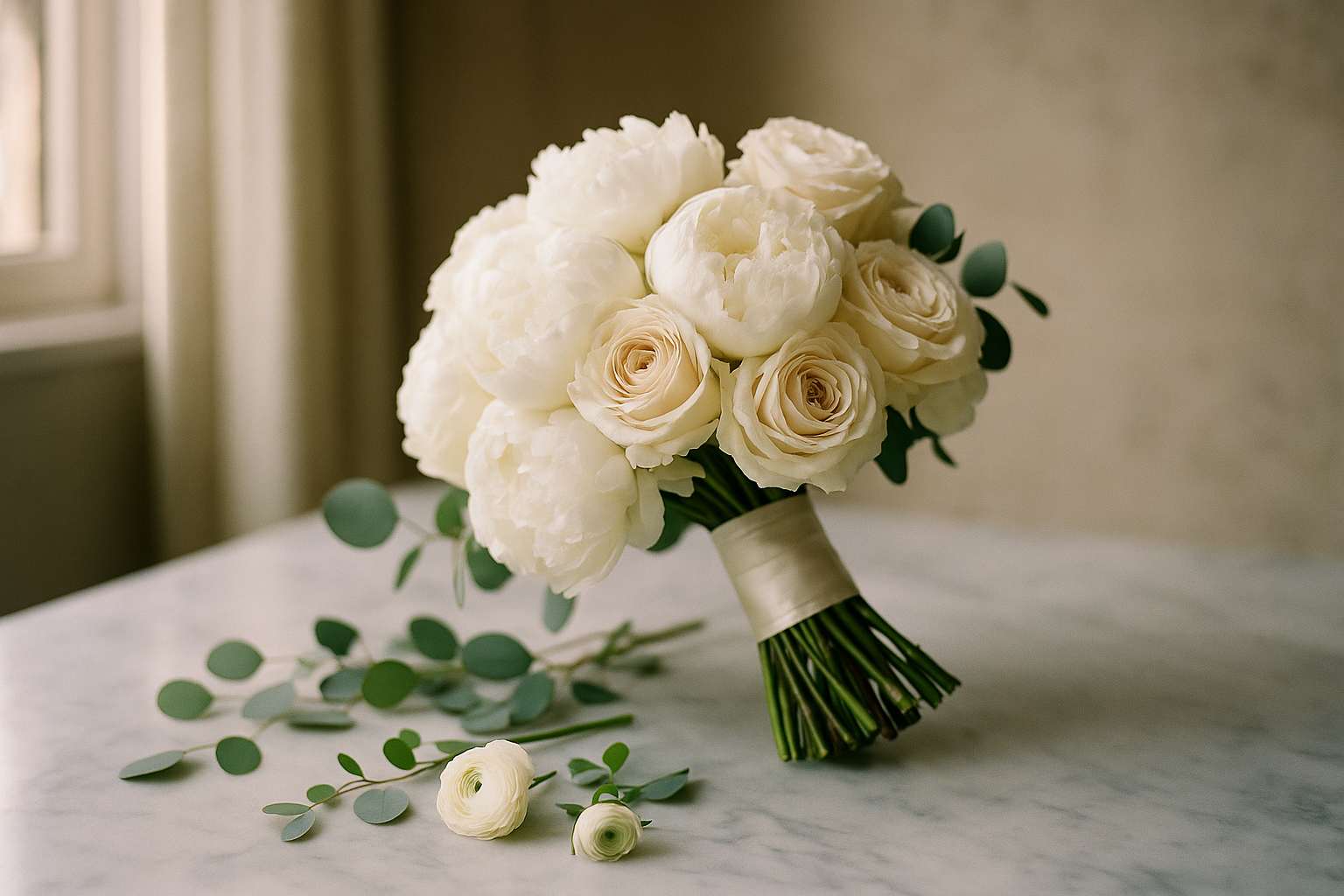
Most U.S. couples spend $2,500–$5,000 on wedding flowers in 2026, with the national average hovering around $2,800 (The Knot) to $6,300 (Zola's full-service index). Your season, market, guest count, and flower choices determine where you land — and smart planning can shift the number by $1,000 or more without sacrificing a petal of beauty.
Nothing transforms a ceremony space quite the way flowers do. The moment the bridal bouquet arrives on the morning of the wedding, the day becomes real — and the florals that follow, from the aisle markers to the sweetheart table garland, carry that feeling through the entire event. Yet for all their emotional power, wedding flowers remain one of the most frequently underestimated line items in the budget. Couples often call florists with a number in mind that is half what the vision they've pinned on Pinterest actually requires.
This guide gives you the actual prices — by item, by budget tier, and by season — so you can walk into a florist consultation knowing exactly what your vision costs and where you can steer it if needed.
What do wedding flowers actually cost per item in 2026?
Before looking at totals, it helps to understand the building blocks. Wedding florals fall into three categories: personal flowers (carried or worn by the wedding party and family), ceremony florals, and reception florals. Most couples undercount the personal flowers until they sit down and list every boutonniere, corsage, and bridesmaid bouquet by name.
| Item | Who It's For | Cost Range (2026) |
|---|---|---|
| Bridal bouquet | Bride | $150–$350 (premium: $400–$600+) |
| Toss bouquet | Bride (secondary) | $35–$75 |
| Bridesmaid bouquets | Each bridesmaid | $75–$150 each |
| Groom's boutonniere | Groom | $20–$45 |
| Groomsmen boutonnieres | Each groomsman | $15–$35 each |
| Corsages (mothers, VIPs) | Mothers, grandmothers | $35–$65 each |
| Ceremony arch or floral arbor | Ceremony backdrop | $300–$3,500+ |
| Aisle markers (per marker) | Pews or chairs | $15–$60 each |
| Low centerpieces | Per reception table | $75–$175 each |
| Tall centerpieces | Per reception table | $175–$450+ each |
| Head or sweetheart table garland | Head table | $200–$600 |
| Cake florals | Wedding cake adornment | $50–$175 |
These ranges reflect fresh flowers from a professional florist with standard delivery and setup. Geographic location moves them significantly: The Knot's real-wedding data shows couples in New York City averaging $8,000 for florals, while Milwaukee averages $5,500 — and smaller markets with lower overhead often come in well below both. Labor fees, delivery, and post-wedding strike (breakdown and removal) are typically billed separately and can add several hundred dollars to the final invoice.
What are the budget tiers for wedding florals — and what does each get you?
Florists broadly categorize wedding floral budgets into three tiers. Understanding what each tier realistically covers prevents the most common disappointment in floral planning: arriving at a consultation with a $2,000 budget and a $7,000 Pinterest board.
Entry-level ($1,500–$2,500): This tier comfortably covers the essentials — a bridal bouquet, smaller bridesmaid bouquets, boutonnieres and corsages for the immediate wedding party and family, and modest ceremony arrangements. Reception centerpieces at this level will be simple: bud vases, single-flower posies, or greenery-forward arrangements using seasonal fillers. It is a beautiful budget when paired with a naturally gorgeous venue that needs little floral enhancement.
Mid-range ($2,500–$6,000): The range where most U.S. couples land. At $4,000–$6,000 you can have a lush bridal bouquet with premium blooms, a full set of ceremony florals including a meaningful arch or altar arrangement, varied centerpiece heights across reception tables, and some cocktail hour accents. This is the tier where the wedding photographs as you imagined it.
Full-service ($6,000–$10,000+): Opens up statement installations — full floral arches with structural mechanics, suspended ceiling arrangements, elaborate tablescapes with multiple focal points per table, and the kind of floral backdrop that makes an entire social media moment. Zola's Wedding Cost Index places the national average for full-service florist packages at $6,300, reflecting that many couples in this category are working with a florist on a comprehensive design vision rather than individual pieces.
How does the season affect what you will pay for wedding flowers?
Season is the single most powerful budget lever available to you before you book a single vendor. In-season flowers cost 20–40% less than out-of-season equivalents because they arrive at the wholesaler in abundant supply, domestically grown, without long-haul refrigerated shipping from South America or Holland. Out-of-season flowers can cost 30–50% more per stem — and some specialty imports reach four times the price of a seasonal substitute.
The practical rule: identify your color palette and mood, then let your florist match the most beautiful in-season blooms to that brief. A bride who falls in love with peonies but marries in October can achieve the same lush, full aesthetic with dahlias — which are at their absolute peak in September and October — for a fraction of the cost of imported off-season peonies. Ranunculus and garden roses serve the same role for winter and early spring brides.
Year-round staples — standard roses, hydrangeas, alstroemeria, lisianthus, baby's breath, and most greenery varieties — are grown in sufficient global volume to remain available and relatively stable in price regardless of season. Building your palette around these foundations and adding seasonal accents is a reliable way to achieve lushness while managing cost.
What are the smartest ways to reduce your wedding flower budget?
Experienced planners and florists consistently point to five strategies that deliver real savings without compromising the visual result:
Repurpose aggressively. Moving ceremony florals to the reception — the arch behind the sweetheart table, aisle markers becoming cocktail hour accents, altar arrangements flanking the dance floor — can reduce your total floral spend by 20–30%. This requires advance coordination with your florist and day-of coordinator, but it is the highest-return move available. Couples who plan the "floral journey" of each piece at the design stage rather than the night of the wedding save $500–$1,500 routinely.
Lean into greenery. Foliage costs a fraction of premium blooms per stem and creates volume, texture, and the lush garden quality many brides are seeking. Eucalyptus, Italian ruscus, ferns, olive branches, and bay all photograph beautifully and hold well in heat. A design that is 40% greenery can achieve the same fullness as an all-flower arrangement at meaningfully lower cost.
Choose seasonal and local. Working with a farmer-florist — a grower who also designs — can eliminate multiple wholesaler markups and deliver flowers harvested hours, not days, before your wedding. The Association of Specialty Cut Flower Growers (ASCFG) maintains a directory of domestic flower farms by state; many offer wedding services directly.
Consider dried or silk for lower-visibility pieces. High-quality silk flowers from specialist suppliers have reached a level of realism in 2025–2026 that surprises even experienced florists. Bridesmaids' bouquets, boutonniere accents, and decor pieces in areas of lower guest attention are strong candidates for silk or dried elements, freeing budget for the bridal bouquet and ceremony centerpieces that receive the most scrutiny — and the most photographs.
Go monofloral for centerpieces. A vessel filled entirely with one flower — all white ranunculus, all garden roses, all dahlias — photographs with real drama, sources efficiently, and costs less than a complex mixed arrangement. Many of the most elegant 2026 weddings are choosing this approach deliberately.
One hidden cost to confirm before signing any contract: who breaks down and removes the floral arrangements after the reception? If that service is not included, breakdown fees can add $200–$500 to your bill. Confirm in writing whether delivery, setup, and strike are line-itemed or bundled into the overall quote.
How do you find and vet a wedding florist?
Book your florist 9–12 months before your wedding date for peak-season Saturdays; 6–9 months is a workable minimum for most markets. Top florists fill their calendars early, and the best ones will not hold your date without a deposit.
When consulting, ask for a per-item itemized proposal rather than a single total — this allows you to see exactly what you are getting and where to make adjustments. Ask about their substitution policy if a specific flower is unavailable near your date, their experience at your venue (ceiling height, natural light, and architecture affect what arrangements work), and how many weddings they take per weekend. Request to see full event galleries, not only highlight bouquet shots, to assess their range across ceremony and reception spaces.
Consider donating your flowers after the reception. Programs including Random Acts of Flowers coordinate pickup and delivery of wedding florals to hospitals and care facilities. Arranging this at booking is one of the most meaningful gestures a couple can make — and it costs nothing.
Frequently asked
What is the average cost of wedding flowers in 2026?
National averages vary by source because they reflect different buyer profiles. The Knot's 2025 Real Weddings Study — which surveys close to 11,000 couples — found most couples spending around $2,800 on wedding florals. Zola's Wedding Cost Index, which includes full-service florist packages, reports an average closer to $6,300. A practical working range for most U.S. couples in 2026 is $2,500–$5,000. Couples in major metros such as New York City, Los Angeles, or San Francisco should budget 20–30% higher due to elevated labor and studio overhead costs. The most meaningful benchmark is not the national average but an itemized estimate from two or three florists who have worked at your actual venue.
What percentage of the wedding budget should go to flowers?
Industry planners consistently recommend allocating 8–10% of the total wedding budget to florals and decor. On a $35,000 wedding — close to the 2026 national average — that translates to $2,800–$3,500. Couples who are especially floral-focused sometimes increase this to 12–15%, offsetting the higher floral spend by scaling back in another category such as stationery or wedding favors. The percentage matters less than building an itemized list: count every person who carries or wears flowers, every table, and every ceremony space before you can accurately total your floral needs.
How much does a bridal bouquet cost in 2026?
A bridal bouquet from a professional florist typically runs $150–$350 for a well-crafted arrangement of seasonal blooms. Designs featuring premium or rare flowers — peonies in October, lily of the valley, imported garden roses, or cascading orchids — can push the price to $400–$600 or more. At the other end, a simple posy of locally grown seasonal flowers from a farmer-florist can come in under $100. The toss bouquet, which many brides forget to order, adds another $35–$75. For context, high-quality silk bridal bouquets from specialist suppliers range from $31 to $179 — a meaningful difference if your budget is tight.
What drives wedding flower costs up the most?
Three factors have the largest impact on your floral total. First, flower choice relative to your season: requesting peonies in October or tulips in August means importing them, which can increase per-stem cost by 30–50% over their in-season equivalent — sometimes more. Second, guest count, because every additional table requires another centerpiece. A wedding of 150 guests with 15 tables needs 15 centerpieces; adding 30 guests and two more tables adds $300–$800 depending on your centerpiece style. Third, labor-intensive designs — suspended floral installations, elaborately wired composite bouquets, multi-space ceremony and cocktail hour setups — all require significantly more florist hours and therefore higher quotes. On the savings side, repurposing ceremony florals at the reception can save $500–$1,500.
Can I save money on wedding flowers by using in-season blooms?
Yes — and it is one of the most reliable ways to reduce floral costs without any visual sacrifice. In-season flowers cost 20–40% less than off-season equivalents because they are grown in sufficient volume domestically and require no long-haul refrigerated shipping. A bride marrying in May who loves peonies is in luck: May is peak peony season, and she will pay national-market prices. The same bride marrying in October will pay a significant premium for the same blooms shipped from a Southern Hemisphere grower. The most effective approach is to communicate your color palette and aesthetic to your florist and give them latitude to source the most beautiful in-season options within that brief, rather than specifying individual flowers a year in advance.
Should I tip my wedding florist?
Gratuities for florists are not contractually required but are genuinely appreciated, particularly for the installation crew who typically arrive before sunrise to set a ceremony arch or hang a floral installation. Industry standard is 10–20% of the floral labor fee, given on wedding day directly to the crew or included in the final payment with a note. For a full-service florist whose total bill is $4,000 (roughly half of which is labor), a tip of $100–$200 is appropriate. If you are working with a farmer-florist or smaller studio where the owner does the installation personally, a tip of $50–$150 plus a prompt, detailed online review is a meaningful expression of thanks.