Food & Drink
Family Style Wedding Reception: Your Complete 2026 Guide
Family-style service — platters passed table to table — creates the warmest, most communal wedding meal. Here is everything you need to know before you book: costs, staffing, venue requirements, allergy logistics, and whether it is right for your guest list.
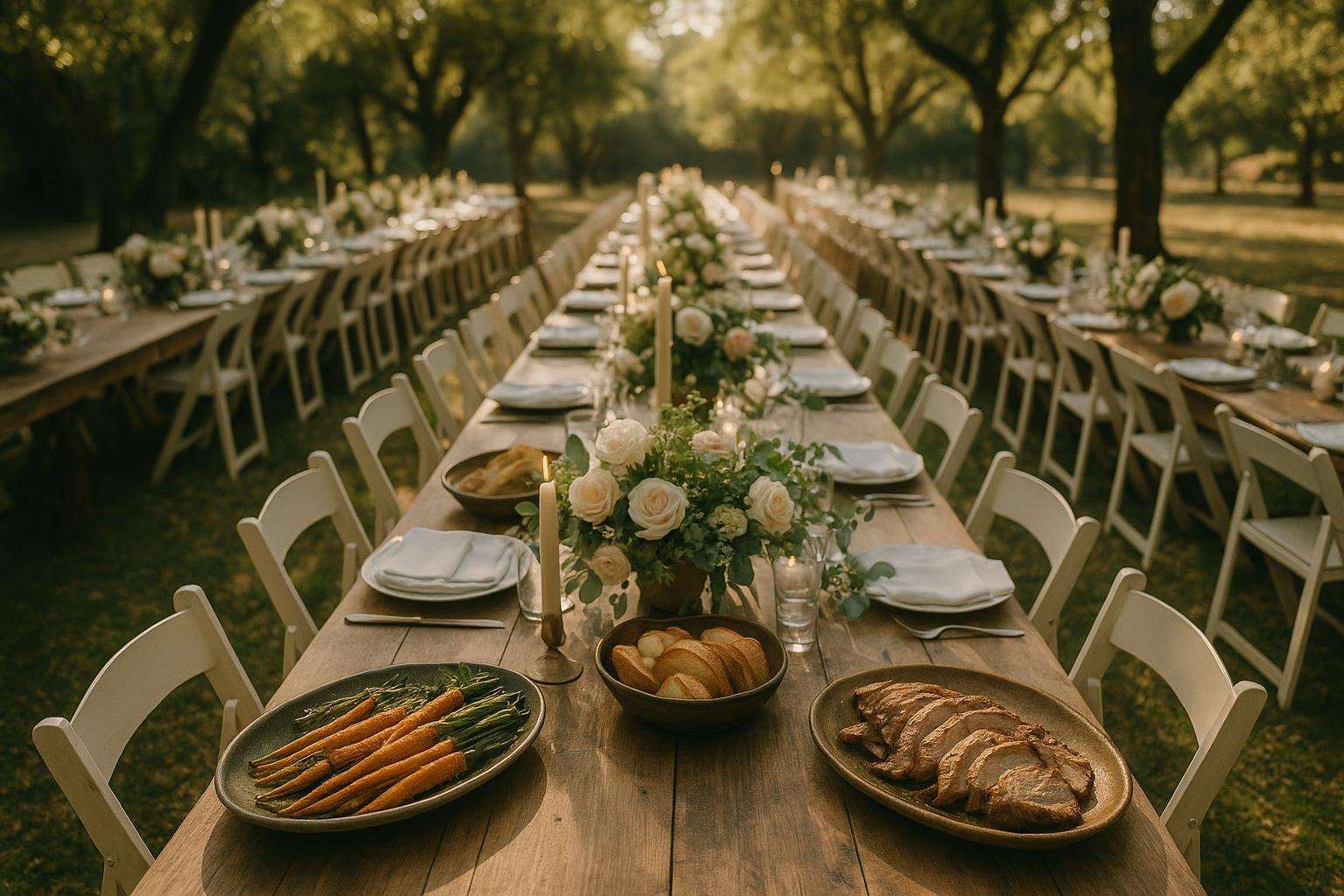
Family-style wedding receptions place large shared platters at each guest table for guests to pass and serve themselves, creating genuine warmth and communal connection. In 2026 it costs roughly $50–$120 per person for food, requires tighter staffing than a buffet, and works best for 50–150 guests at venues with adequate kitchen capacity.
There is a particular magic that happens when a table of guests — some of whom met only hours ago — passes a platter of roasted chicken or a bowl of pasta between them. That simple gesture, choosing what you want and sliding it to the person beside you, does something no seated dinner or buffet line quite achieves: it makes the table itself feel like a family.
Family-style service has deep roots across many of the world's most celebratory food cultures: Italian Sunday dinners, Lebanese mezze spreads, Southern American holiday tables, Korean banchan feasts. Bringing it to a wedding reception is not a trend so much as a return to something elemental — the understanding that food shared at a table is not just nourishment but belonging.
This guide covers everything you need to decide whether family-style is the right choice for your wedding: what it actually costs in 2026, how staffing works, how to manage dietary restrictions responsibly, which cuisines and venues it suits best, and how it compares to plated and buffet alternatives.
How does family-style service compare to other wedding reception meal formats?
Understanding where family-style sits relative to other formats helps you evaluate whether it is the right fit before you invest in caterer conversations.
| Format | Typical Cost Per Person (Food Only) | Staffing Ratio | Best Guest Count | Atmosphere |
|---|---|---|---|---|
| Plated (seated dinner) | $65–$150+ | 1 per 10–12 guests | 20–200 | Formal, elegant, structured |
| Buffet | $40–$90 | 1 per 18–20 guests | 100–300+ | Casual, flexible, social |
| Family-Style | $50–$120 | 1 per 12–15 guests | 50–150 | Warm, communal, leisurely |
| Food Stations | $45–$150+ | 1 per 15 guests + station staff | 75–250 | Interactive, modern, social |
| Heavy Hors d'Oeuvres | $30–$70 | 1 per 25 guests | 25–100 | Cocktail-party, fluid, casual |
According to The Knot's wedding catering data, the national average wedding catering spend is approximately $6,927 — roughly $46–$55 per person — making catering about 14% of the total wedding budget for most couples. Family-style service typically runs above the national average due to the higher food-preparation volume required (caterers over-prepare by 20–25% to prevent empty platters) and the closer staffing ratio.
Why do couples choose family-style, and what should they know before they decide?
Family-style service is chosen for emotional as much as practical reasons. The communal quality it creates — particularly for weddings where two families who have never met are seated together for the first time — is genuinely difficult to replicate in any other format. When a platter moves down the table, conversation follows it.
The format resonates with particular depth for couples whose cultural backgrounds include communal dining traditions. Italian-American and Greek families may find family-style mirrors the Sunday dinners that define their family culture. Lebanese, Korean, and South Asian couples may recognize shared-platter service as a natural expression of hospitality rather than a wedding-specific choice. That cultural resonance adds meaning to the meal format that neither a buffet nor a plated dinner can quite match.
Before committing, consider these practical factors honestly:
Guest count. Family-style works best at 50–150 guests. Above 150, the operational complexity of restocking dozens of tables simultaneously strains most catering operations. Below 50, the format can feel almost overwhelming in its abundance.
Venue kitchen capacity. Family-style requires a kitchen that can produce and hold large-format platters simultaneously. Venues with limited kitchen prep space (some outdoor and tent venues, historic properties with catering-only kitchens) may struggle with the logistics. Ask your venue coordinator specifically about their kitchen's experience with family-style service.
Caterer experience. Not every caterer does family-style well. Ask specifically for references from family-style events of comparable size, and visit or call those references. The difference between a skilled family-style caterer and one who has added it to their menu without genuine experience shows up at platter replenishment time.
What cuisine works best, and how should the menu be designed?
The most successful family-style wedding menus share a design philosophy: each dish should be beautiful in a large vessel, hold well at table temperature, and invite passing rather than precise portioning. Dishes with thick sauces, roasted vegetables, and carved proteins are ideal. Delicate or temperature-sensitive preparations (soufflés, fish in light cream sauces, anything that requires precise plating) can struggle at table for the time it takes a platter to travel from guest to guest.
Italian and Italian-American menus are the most natural fit. Antipasto boards, rustic pasta dishes, braised short ribs or osso buco, roasted whole vegetables with herbs, and abundant bread all look and feel at home in this service style. Southern American menus — fried chicken, biscuits, mac and cheese, roasted sweet potatoes, collard greens — combine beautifully and feel generous in a way that guests experience as genuine hospitality. Mediterranean spreads (hummus, tabbouleh, grilled lamb, stuffed grape leaves, warm pita) adapt seamlessly and allow for naturally vegetarian-forward options alongside proteins.
Aim for two to three proteins, three to four vegetable sides, bread, and salad at minimum. Design the menu so vegetarian guests have multiple substantial options without relying on the proteins — the family-style format lends itself to genuinely vegetarian-forward side dishes that hold their own on the table.
How to book and plan your family-style reception catering
Begin caterer conversations 9–12 months before your wedding and request format-specific proposals that itemize food, labor, rentals, service charge, and gratuity separately. Service charges (typically 18–22%) and gratuity (often 18–20% on top) can add 30–40% to the base food cost — a $70/person menu becomes approximately $98/person before bar service. According to Zola's catering cost guide, requesting an all-in per-person figure is the single most important question to ask any caterer, and the answer that most clearly reveals true budget impact.
Schedule a formal tasting — not a showcase tasting but a specific tasting of your finalized menu — four to six months before the wedding. Evaluate temperature (platters must arrive and stay warm), portion adequacy, and visual presentation on the serving vessels. Confirm exactly what vessels and serving pieces are included in the rental versus what must be sourced separately.
Confirm the staffing plan in writing: number of servers, the server-to-table ratio, a specific captain, and a protocol for what happens if a platter empties before the server notices. This last point matters more than most couples realize — the feeling of a family-style meal drains quickly when guests are staring at an empty platter.
Frequently asked
What exactly is family-style service at a wedding?
Family-style service means large platters, bowls, and serving dishes are placed at each guest table, and guests pass them around and serve themselves — exactly as one would at a generous home dinner. Rather than waiting for a server to deliver a plated course, or standing in a buffet line, guests take what they like from shared dishes in front of them. This format originated in Italian, Southern American, and many Middle Eastern, Korean, and South Asian dining cultures where communal eating is an expression of hospitality and belonging. At a wedding, it creates an immediate sense of warmth and conversation: the act of handing a platter across the table is itself a small social gesture that breaks the ice between guests who may have just met. Family-style service typically includes two to four main proteins, several seasonal sides, bread, and salads — all designed to feel abundant rather than precisely portioned.
How much does a family-style wedding reception cost per person in 2026?
Family-style service typically falls between plated and buffet in price, running roughly $50–$120 per person nationally for food alone in 2026, according to catering industry sources including Urban Cowboy and WeddingWire. Budget-range family-style menus in smaller markets can come in near $50–$70 per person; mid-range with quality meats, seasonal vegetables, and professional service runs $70–$95 per person; premium family-style with chef-curated seasonal menus and high staffing ratios in metro markets reaches $100–$120 or higher. New York, Los Angeles, and San Francisco markets typically run 20–40% above national averages. Add $15–$45 per person for bar service, and remember that service charges (18–22%) and gratuity are typically applied on top of food costs — turning a quoted $70/person menu into approximately $98/person all-in. Always request a fully itemized all-in quote before comparing caterer proposals.
How do I handle dietary restrictions and food allergies at a family-style reception?
Dietary management at family-style receptions requires specific planning because shared platters introduce potential cross-contamination risks for guests with severe allergies. The gold-standard approach: request that your caterer prepare dedicated plated meals for any guests with severe allergies (nut, shellfish, gluten, dairy) and have servers deliver those directly to their seats, clearly labeled, even while all other guests serve themselves from platters. For general dietary preferences — vegetarian, vegan, halal, kosher — clearly label all platters with protein type (chicken, beef, pork, shellfish) and flag allergens. Place allergen-aware dishes at the end of each table to minimize cross-contamination from shared serving utensils. Collect dietary restrictions on your RSVP form, share the full list with your catering captain six weeks before the wedding, and confirm your caterer's specific protocol for severe-allergy accommodations in writing before signing the contract. Any reputable caterer will have a documented allergy protocol; if they do not, that is a red flag.
Is family-style service right for a large wedding?
Family-style service is most powerful for weddings of roughly 50 to 150 guests, where the logistics of restocking platters at every table remains manageable and the intimate, communal feeling is genuinely achievable. As guest counts rise above 150–200, the operational complexity of maintaining fresh, warm platters at dozens of tables simultaneously becomes a significant staffing and kitchen challenge. For very large weddings — 200 guests or more — a well-managed buffet or food stations format typically delivers a better guest experience at lower logistical strain. That said, skilled caterers with strong family-style track records can execute beautifully at higher counts, provided the staffing ratios are right. Ask any prospective caterer for specific references from family-style events comparable in size to yours. The success of this format depends enormously on the caterer's experience with it specifically, not just their general catering excellence.
What staffing ratios does a family-style wedding reception require?
Family-style service requires a tighter staffing ratio than a buffet because servers must actively manage, replenish, and clear multiple platters per table throughout the meal service — a more labor-intensive task than clearing plates at a plated dinner. A reliable minimum is one server per fifteen guests, though experienced family-style caterers often prefer one server per twelve guests for events where they want the service to feel genuinely attentive rather than merely functional. That means a 120-guest wedding needs at least eight to ten servers on the floor during the meal period. Each server manages approximately two to three tables, monitoring platter levels and bringing fresh dishes from the kitchen before guests notice the shortage. Under-staffing a family-style service is one of the most common mistakes couples encounter — platters run low, energy drops, and the warm communal feeling gives way to frustration. Confirm the staffing plan in writing at contract time, and ask specifically what triggers the decision to bring additional staff if attendance runs higher than expected.
What cuisine types work especially well for family-style wedding service?
Family-style service is most naturally suited to cuisines already organized around shared dishes and abundant presentation. Italian and Italian-American menus — antipasto, pasta in large bowls, braised proteins, roasted vegetables — are almost synonymous with family-style service and feel entirely natural in this format. Southern American food (fried chicken, biscuits, collard greens, potato salad) is another ideal match, as Southern hospitality culture already prizes abundance and communal eating. Mediterranean cuisines — Greek, Lebanese, Moroccan — translate beautifully to shared platter service, with mezze-style spreads that allow multiple dishes to coexist naturally on the table. Korean, Mexican, and Indian cuisines also lend themselves to the format when the menu is designed around it: banchan dishes, family-size rice and protein platters, or elaborate dal and curry presentations. The format works less naturally with cuisines where portion control and precise plating are central to the dining experience (high-end French tasting menus, for example) — in those cases, a plated service honors the food better.