Food & Drink
Food Truck Wedding Guide: Cost, Planning, and What to Know
Food trucks have moved from quirky novelty to mainstream wedding staple — with the right planning, they deliver a genuinely memorable guest experience at 20 to 40 percent below traditional catering costs.
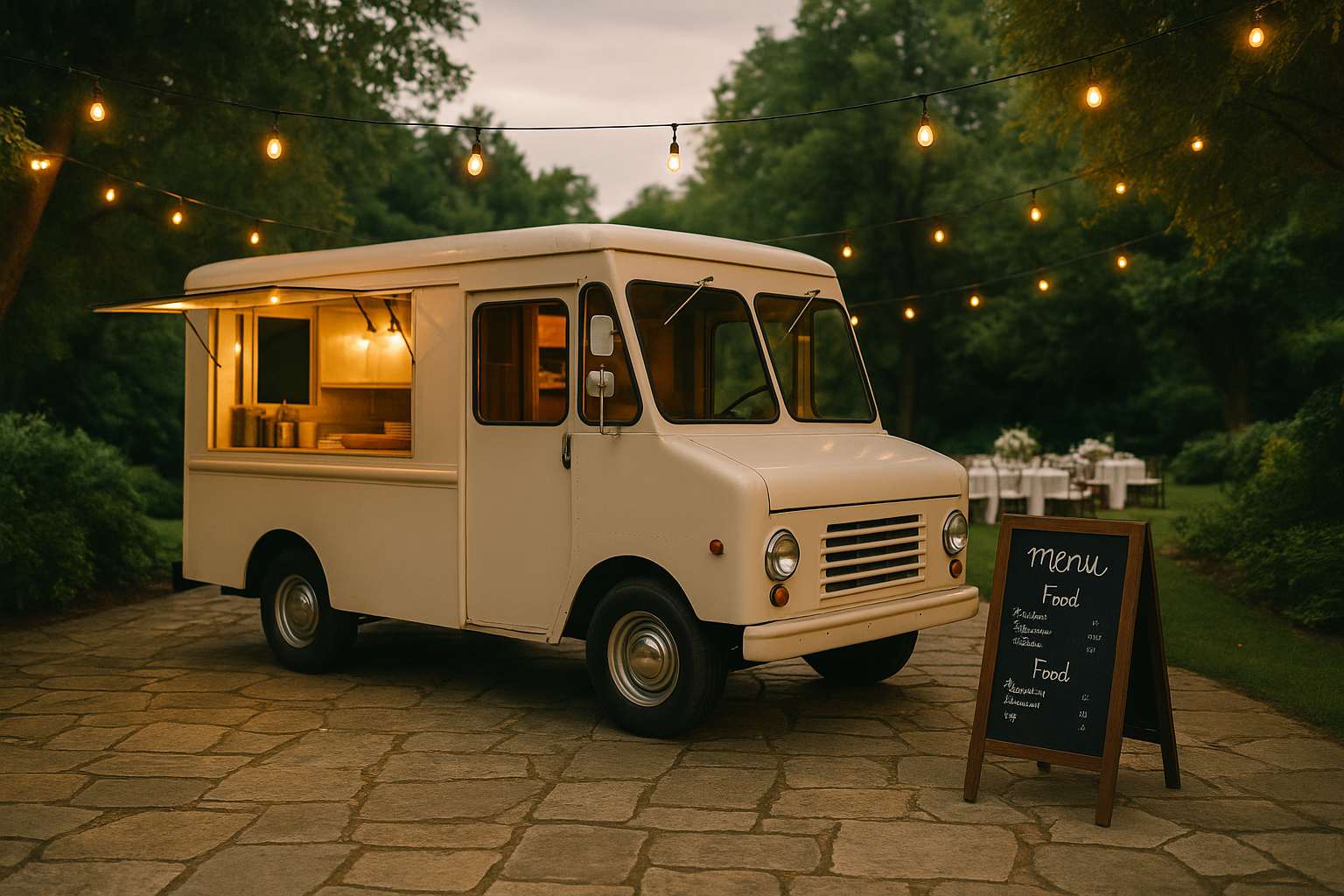
A food truck at your wedding works beautifully when treated as a late-night reveal two to three hours after dinner — not a primary catering solution for a hungry crowd. With venue approval in writing, the right permits secured, and timing coordinated with your DJ, a food truck delivers an authentic, memorable experience at 20 to 40 percent below the cost of equivalent traditional catering.
The late-night food truck reveal has become one of the most anticipated moments at modern wedding receptions. Industry surveys suggest that approximately 50 percent of couples now incorporate some form of interactive food or late-night snack service, and food trucks — once firmly in the territory of street fairs and casual outdoor events — are now booked for black-tie celebrations as readily as barn weddings. The appeal is equal parts practical and festive: guests who have been dancing for three hours are genuinely hungry, a food truck window opening on the far side of the dance floor creates a genuine surprise moment, and the per-person cost is measurably lower than traditional catering at the same caliber.
The planning, however, requires more rigor than most couples anticipate. Venue logistics, local permitting, food truck capacity mathematics, and timing all require specific decisions made well in advance. This guide covers every element, grounded in 2026 cost data from sources including Honeyfund's 2026 Food Truck Cost Guide and industry surveys from Best Food Trucks and Food Truck Club.
What Does a Food Truck Wedding Actually Cost in 2026?
The per-person cost of a wedding food truck ranges from $18 to $45 for a late-night service and $25 to $65 per person when the truck serves as primary catering, according to current market data. But the per-head number is only the beginning of the full cost picture.
Most food trucks require a minimum booking fee regardless of guest count — typically $1,000 to $2,500. An 18 to 22 percent service charge is standard and is frequently line-itemed separately from the food cost. Travel surcharges apply when the venue is more than 25 to 40 miles from the truck's base, at $1 to $3 per mile beyond that threshold. If the venue does not provide power access, a diesel generator rental adds $150 to $300. County health permits and special event vending permits vary by municipality but typically cost $100 to $500. Budgeting 30 to 40 percent above the quoted per-person food cost is the reliable working formula for arriving at a true all-in number.
| Cuisine Type | Per-Person Cost (est.) | 100-Guest All-In (est.) | Best Format |
|---|---|---|---|
| Taco truck | $10–$18 | $1,800–$3,500 | Late-night or primary |
| Burger / sliders | $12–$22 | $2,200–$4,000 | Late-night |
| Pizza | $12–$22 | $2,200–$4,000 | Late-night |
| BBQ / pulled pork | $12–$22 | $2,200–$4,200 | Primary or late-night |
| Mac & cheese | $12–$24 | $2,400–$4,500 | Late-night |
| Gourmet / fusion | $25–$45 | $4,000–$8,000 | Late-night (elevated) |
| Dessert / ice cream | $5–$12 | $1,200–$2,500 | Supplement to savory truck |
Compared to traditional full-service catering, which averages $80 per person nationally before service charges and taxes (per industry survey data), a food truck late-night service at $15 to $30 per person represents a genuine 20 to 40 percent cost reduction for comparable food quality. The trade-off is staffing infrastructure: a traditional caterer handles setup, bussing, breakdown, and table management; a food truck provides only the food and its own service team at the window.
How Do You Secure Venue Approval and Permits?
Venue approval is the non-negotiable prerequisite that must precede every other food truck decision. Approximately 80 percent of outdoor, rustic, and barn venues welcome food trucks without restriction. Hotel properties, ballrooms, and historic estates frequently do not — either because of exclusive catering contracts with their in-house team, fire code restrictions on generators or open flames, or loading dock and parking limitations that a truck cannot meet.
Contact your venue coordinator in writing with a specific question: 'Does our contract permit outside food vendors on the property? If yes, is there an outside vendor fee, and what are the specific parking and access requirements?' The outside vendor fee is a detail that catches many couples off guard — some venues charge a flat fee of $500 to $2,000; others charge a percentage of the truck's total contract, which can rival the food cost itself in expensive markets. Both the approval and the vendor fee structure must be confirmed in writing before you sign any truck contract.
On permits: the food truck operator holds their own county health permit and standard operating license, but your county or municipality may require a separate special event vending permit for a private event at a non-commercial property. In major metropolitan areas, special event permit processing can take four to twelve weeks. Request copies of the operator's health permit and certificate of insurance — naming you and the venue as additional insured — no later than 30 days before the wedding.
How Do You Time and Announce the Food Truck for Maximum Impact?
Timing transforms a food truck from a logistical solution into a genuine wedding moment. The formula is consistent and well-validated by planners: two to three hours after dinner service ends, during the peak energy window of the dance floor, the truck opens. At 9:30 to 10:00 p.m., guests have danced off their dinner and are authentically hungry again. The reveal at this moment — whether it is a server appearing on the dance floor with trays of tacos or a lit chalkboard sign appearing at the truck window — creates the kind of collective delight that guests describe for years afterward.
The announcement matters as much as the timing. A food truck that opens quietly and serves 40 guests while the rest of the room remains unaware is a planning failure. Brief your DJ or bandleader specifically: 'At approximately 9:45, please announce that the [truck name] window is now open.' Consider pairing the announcement with immediate tray-passing of the first item directly on the dance floor — this ensures that guests who would not otherwise leave the floor still experience the moment, and it seeds the line at the truck window gradually rather than in a rush.
For maximum visual impact, position the truck so that guests walking toward it cross a naturally lit, socially active path. A truck visible from the dance floor or positioned near the bar creates a natural gathering area. Park it on firm, level ground at least 100 feet from the ceremony space if that space is still in use, and verify that generator noise (if applicable) is not audible from the primary reception area.
The cultural dimension of food trucks at weddings is worth noting as you choose your menu. Couples whose food story is woven into the truck choice — the taco truck from the neighborhood where they fell in love, the birria truck whose recipe echoes a grandmother's tradition, the pizza truck that mirrors the couple's regular Friday ritual — transform a catering decision into a storytelling moment. The most beloved food truck memories at weddings are almost never purely about the food. They are about recognition: the moment a guest realizes that this choice means something specific about the people who made it.
Sources: Honeyfund — Food Truck Wedding Cost Guide 2026; Food Truck Club — Wedding Cost Breakdown.
Frequently asked
How much does a food truck wedding cost per person in 2026?
Expect to budget $18 to $45 per guest for a food truck serving as a late-night snack option, and $25 to $65 per person when a food truck serves as the primary catering vehicle. According to Honeyfund's 2026 food truck cost guide, taco and burger trucks sit at the lower end ($10 to $20 per person), while gourmet and fusion concepts can reach $30 to $45 per person. Beyond the per-head cost, most trucks require a minimum booking fee of $1,000 to $2,500, add an 18 to 22 percent service charge, and may impose travel surcharges beyond their base radius of 25 to 40 miles. Budget an additional 30 to 40 percent on top of the quoted food cost to account for service charges, taxes, and any event permit fees. For a 150-guest late-night food truck service, a realistic all-in budget runs $4,500 to $8,000.
Do food trucks need venue approval, and how do you get it?
Venue approval is the single most important step to complete before signing any food truck contract — and it must be obtained in writing. Approximately 80 percent of outdoor, rustic, and barn venues welcome food trucks without restriction, according to industry data, but urban ballrooms, hotel properties, and historic venues frequently do not due to exclusive catering contracts, fire code requirements, or loading dock limitations. Send your venue coordinator a direct written inquiry: 'Does our contract permit outside food vendors on the property? If so, is there an outside vendor fee?' Some venues charge a percentage of the truck's total contract as a vendor fee, which can add hundreds to thousands of dollars to your total. Confirm the specific parking zone — trucks require approximately 20 by 30 feet of level, firm ground — and verify power and water access requirements before the truck operator commits to the date.
When is the right time to serve a late-night wedding food truck?
The ideal service window for a late-night food truck is two to three hours after dinner service concludes — typically between 9:30 and 11:00 p.m. Opening the truck within 90 minutes of dinner is the most common and costly timing mistake: the majority of guests will decline, and significant food and budget are wasted. The sweet spot is when the dance floor has reached peak energy and guests are genuinely hungry again after hours of celebrating. Coordinate the reveal timing with your DJ or bandleader and arrange a proper announcement — guests who do not know the truck is open will miss it entirely. For maximum impact, consider having servers carry trays of the first item directly onto the dance floor while the window service opens simultaneously. This dual-approach keeps the floor from emptying and ensures maximum guest engagement with the experience.
What permits and insurance does a wedding food truck need?
While the truck operator is responsible for obtaining their own permits, the couple is responsible for verifying that all documentation is in order before the wedding. Request proof of a current county health department permit, a certificate of insurance showing at minimum $1,000,000 in general liability coverage (with your venue named as an additional insured party), and confirmation of any special event vending permit required by the local municipality. In major metropolitan areas, special event permits can require four to eight weeks for processing — and up to twelve weeks in some cities — so begin this conversation with your truck operator as soon as you finalize venue approval. Secure all certificates no later than thirty days before the wedding. A food truck stopped mid-service by a health inspector for a missing event permit is a documented real-world occurrence, not a hypothetical concern.
How many guests can a single food truck serve, and when do you need two?
A single food truck window can realistically serve 50 to 75 guests per hour during a standard wedding service. For a late-night two-hour window with 100 to 150 guests, one truck is typically adequate when service begins with guests already satisfied from dinner — wait times are shorter and demand is spread across the full window. For guest counts above 150, plan for either a second truck or a supplemental tray-passing service that brings the same menu items directly to the dance floor. Without supplemental service at high guest counts, the last guests in line may wait 45 to 60 minutes, which eliminates the festive, spontaneous feeling that makes food trucks work so well at weddings. For weddings above 300 guests, a catering-staffed interior station almost always outperforms the truck model in pure service efficiency — though it requires sacrificing the visual and theatrical element.
What are the most popular food truck cuisines for weddings in 2026?
Taco trucks remain the consensus most popular wedding food truck choice, combining broad appeal, vibrant presentation, and a per-person cost ($10 to $20) that works for almost any budget. Burger and slider trucks and late-night pizza trucks hold the second and third positions, respectively. The 2025 to 2026 trend cycle has introduced a significant increase in multicultural and global street food — Korean corn dogs, birria taco trucks, Japanese-inspired yakitori skewers, and Mediterranean mezze carts are appearing at mainstream weddings with real frequency. Gourmet comfort food trucks that pair approachable favorites with elevated ingredients — truffle fries in custom branded cones, wagyu beef sliders, artisanal grilled cheese — define the current high-end aesthetic: familiar feeling, sophisticated execution. Dessert trucks (artisan ice cream, churro carts) work particularly well as a complement to a primary savory truck rather than as a standalone late-night option.