Food & Drink
Wedding Cake: The Complete Guide for 2026
From sizing and flavors to fondant versus buttercream, the groom's cake, dessert table alternatives, and the etiquette of the cutting ceremony — everything you need to choose, order, and celebrate your wedding cake with confidence.
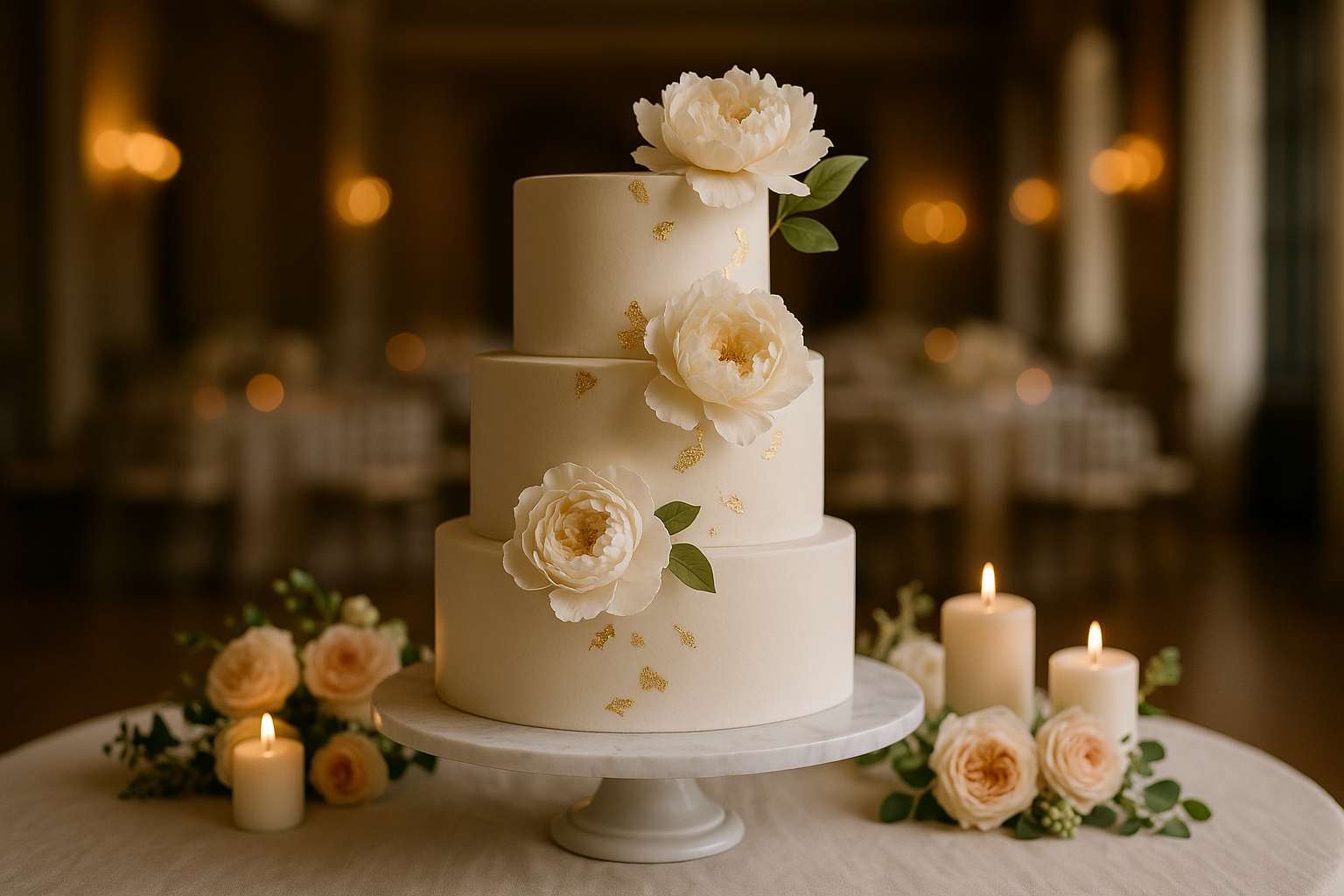
Your wedding cake requires decisions across five areas: serving math, flavor, frosting, design, and cost. Most 100-guest couples budget $500–$917 for a classic three-tier custom cake in 2026 — but the right choice depends on your guest count, venue, season, and which traditions matter most to your family.
Few elements of the wedding day carry the weight that a cake does. It is centerpiece, tradition, and shared celebration simultaneously — the moment the entire room pauses together with a single focus. It is photographed from every angle, carried home in guests' memories, and, in the most beloved tradition of all, saved in the freezer for a private anniversary toast a year later. Getting the decisions right — early and without rushed compromises — ensures this element of your day is every bit as meaningful as you imagined it.
This guide walks through every decision a couple faces: how to size servings honestly, the 2026 flavor and design landscape, the great fondant-versus-buttercream question, what things actually cost, how to find and book the right baker, the groom's cake tradition, dessert table alternatives, and the etiquette of the cutting ceremony itself.
How do you size a wedding cake for your guest count?
The single most common planning mistake couples make is ordering based on invited headcount rather than confirmed attendance. Use these benchmarks instead:
- For a served dinner reception where cake is the primary dessert, plan for 80–90 percent of your RSVP count.
- When a full dessert table or other sweets are available alongside the cake, plan for 60–75 percent uptake — guests will graze multiple items.
- If you are freezing the top tier for your first anniversary (a tradition worth preserving), exclude those servings from the count.
The standard wedding slice is 1 inch wide by 2 inches deep, cut from a 4-inch tall tier. Square tiers yield approximately 15–25 percent more servings than round tiers of equivalent diameter. According to Sunflour Baking Company's serving guide, these are the reliable benchmarks for round tiers:
| Tier Diameter | Wedding Servings | Common Configuration | Guests Served |
|---|---|---|---|
| 6-inch round | 10–12 | Symbolic top tier only | Cutting ceremony |
| 8-inch round | 20–24 | Single-tier intimate wedding | ~20 guests |
| 10-inch round | 30–38 | Top tier in 2-tier stack | Paired with 8" = ~50 guests |
| 12-inch round | 40–56 | Bottom tier in classic 3-tier | 3-tier (12+10+8) = ~90–100 guests |
| 14-inch round | 72–80 | Bottom of 4-tier stack | 4-tier = ~150–175 guests |
If you want visual drama beyond what your guest count justifies, ask your baker about dummy tiers — foam inserts styled to match the cake that add height and grandeur without additional cost or servings. This is a widely used, completely legitimate technique that photographs beautifully.
What flavors and designs are leading the 2026 wedding cake landscape?
Classic flavor combinations remain dominant for good reason: they please broad guest demographics and are forgiving across different service conditions. Vanilla bean with buttercream is the most universally ordered; lemon with raspberry or elderflower leads spring and summer receptions; chocolate with salted caramel and espresso ganache anchors fall and winter weddings. Red velvet with cream cheese frosting carries special resonance at Southern and traditional ceremonies.
The 2026 trend flavors are genuinely exciting. Ashley Huston of DreamWorld Bakes in Philadelphia — a celebrated Black- and woman-owned bakery that opened its first brick-and-mortar in East Kensington in late 2024 — reports strong client interest in live botanical elements integrated directly into cakes. Becca Pham of Little Sister Cake Shop in Houston's Garden Oaks neighborhood cites rising interest in pandan: herbaceous, gently vanilla-like, and distinctly personal. Tiramisu-inspired layers finished with cocoa designs (monograms, florals, or swan motifs) are experiencing strong momentum. Pistachio with rosewater or raspberry is the season's most-discussed premium flavor, while Earl Grey with honey and brown butter frosting offers a simultaneously nostalgic and refined profile.
On the design front, The Knot's 2026 Wedding Cake Trend Report identifies several defining aesthetics:
- Baroque and Rococo revival: Ornate Lambeth-style piping, sculpted scrollwork, garlands, and architectural detail inspired by 18th-century interiors. The grand wedding cake is emphatically back after years of minimalist restraint.
- Sculptural and architectural: Asymmetric tiers, cantilevered layers, floating elements, and gravity-defying silhouettes that function as edible installation art.
- Long table-length cakes: The horizontal “bûche longue” style — multi-foot cakes that run the length of a farm table rather than stacking upward — offers a dramatic alternative with enormous decorative surface area.
- The swan motif: Appearing on toppers, piped designs, and sculptural elements, the swan has become 2026's most talked-about symbolic detail — romantic without being clichéd.
- Garden botanicals and fresh fruit: Cascading grapes, halved figs, candied citrus, pressed edible flowers, and fresh herbs arranged in organic clusters rather than structured bouquets.
- Metallic restraint: Gold leaf and copper luster used selectively to highlight architectural detail, rather than covering entire tiers — a more refined and modern application of glamour.
Fondant or buttercream: which frosting is right for your wedding?
The frosting decision affects aesthetics, budget, and logistics — and there is no universally correct answer. Here is a clear-eyed comparison:
| Factor | Fondant | Buttercream |
|---|---|---|
| Appearance | Perfectly smooth, sculptural, high-fashion | Softer, organic, romantic textures |
| Taste | Neutral to sweet; guests often eat around it | Universally preferred; richer and more flavorful |
| Heat tolerance | Excellent; holds shape above 75°F | American: softens above 75°F; Swiss/Italian: moderate |
| Transport | Highly stable; ideal for long distances | More delicate; requires careful temperature control |
| Cost premium | $2–$4 more per slice than equivalent buttercream | Most budget-friendly frosting option |
| Best for | Outdoor receptions, intricate sculpted designs, hot climates | Indoor receptions, organic aesthetics, budget-conscious couples |
The best-of-both approach is also worth discussing with your baker: a thin buttercream crumb coat applied beneath a fondant exterior captures fondant's visual perfection while preserving real flavor in every bite — since buttercream between the cake layers ensures guests taste something they genuinely enjoy.
What does a wedding cake actually cost, and what are the hidden fees?
National averages for 2026 vary meaningfully by source. Zola's Wedding Cost Index (updated 2026) cites $917 as the average including design, delivery, and setup. WeddingWire places the typical range at $300–$700. The Knot reports a national average near $540. Per-slice pricing is the most useful benchmark: $4–$8 for buttercream, $6–$12 for fondant, and $10–$15 or more for elaborate custom work at premium studios.
At the luxury end, Ron Ben-Israel Cakes in New York City — one of the finest active couture cake studios in the country, regularly featured in Martha Stewart Weddings and Brides — begins at $20 per person with a $1,000 minimum order. Geography shapes cost dramatically: the same design averages $474 in St. Louis versus $1,156 in San Francisco.
Three costs consistently catch couples off guard:
The venue cake-cutting fee. Most catering venues charge $2–$5 per slice for the labor of slicing, plating, and serving your cake. For a 150-guest wedding, this adds $300–$750 to your catering bill — a real number that never appears on the bakery invoice. Ask about it explicitly during your venue tour and confirm it in writing.
Delivery and setup fees. Typically $50–$150 for delivery, plus $75–$200 for on-site assembly of complex cakes. Always confirm whether these are included in the bakery quote or itemized separately.
Cake stand and rental items. A premium stand costs $20–$75 to rent from the bakery or rental company. Clarify ownership and return logistics before the wedding day.
The groom's cake: a Southern tradition worth knowing
The groom's cake is a wholly separate cake styled around the groom's personality, passions, and flavor preferences — served alongside the main wedding cake at the reception or as the star of the rehearsal dinner. The tradition originated in Victorian England, traveled to the American South with 19th-century British immigrants, and became one of the most warmly beloved regional wedding customs in the country.
Today it takes nearly any form: a richly flavored dark chocolate and bourbon cake, a sculpted replica of a beloved stadium, an edible tribute to a shared hobby or film, or a whimsical novelty piece that makes guests laugh and feel seen. It is never required — but it adds a personal spotlight that resonates deeply when the groom has a strong personality, a beloved flavor, or a community of guests who will recognize and delight in the reference. Budget $200–$800 depending on complexity and size.
Dessert tables and alternatives to the traditional cake
The hybrid approach — a small display cake for the ceremonial cutting and photographs, with pre-sliced sheet cakes from the same bakery served in the kitchen — is the most popular budget strategy in 2026. Flavor is identical; savings are typically 30–40 percent versus a full custom tiered cake with equivalent total servings.
| Dessert Format | Per-Person Estimate | Best For |
|---|---|---|
| Cupcake tower | $3–$4.50 each (plan 1 per guest) | Casual, fun receptions; eliminates cutting fee |
| Pie bar | $12–$18 per pie (8–10 slices each) | Fall, rustic, and Southern weddings |
| Donut wall | $2–$4 per donut (plan 1.5 per guest) | Visual statement piece; casual and modern receptions |
| Macaron tower | $2.50–$4.50 each (plan 2–3 per guest) | Elegant, European-inspired aesthetics |
| Dessert grazing table | $10–$20 per person (full spread, 4–6 items) | Relaxed, personalized receptions with varied tastes |
| Gelato or ice cream station | $5–$12 per person | Summer outdoor receptions; guest interactive favorite |
Whatever format you choose, a small symbolic cutting cake — a single 6-inch tier for $75–$200 — preserves the ceremonial moment that families and guests have waited to witness. Never sacrifice the ritual; adjust the scale around it instead.
Your wedding cake planning timeline
The most common logistical mistake is booking too late. Popular bakers in peak spring and fall markets — May, June, and October in particular — fill their calendars 9–12 months in advance. Use this timeline as your guide:
- 9–12 months before: Research and shortlist bakeries; browse portfolios; set your budget range.
- 6–9 months before: Schedule tasting appointments; confirm availability; secure your date with a deposit.
- 4–6 months before: Finalize design, flavors, and serving count; sign your contract.
- 2–3 months before: Confirm final guest count with your baker; adjust servings as needed.
- 1 month before: Confirm delivery logistics: venue address, access time, refrigeration plan, day-of contact.
- 1–2 weeks before: Final confirmation call with your baker; confirm cutting-fee arrangement with venue in writing.
- Wedding week: Brief a designated person to receive and coordinate the cake delivery at the venue.
The cake-cutting ceremony: etiquette and meaning
The wedding cake cutting is one of the oldest continuous rituals in Western marriage tradition, with roots stretching to ancient Roman grain offerings that symbolized fertility and communal blessing. In the Victorian era — cemented by Queen Victoria's famous all-white tiered cake at her 1840 wedding — the cutting became a formal public ceremony. The act of cutting together symbolizes the couple's first shared task in marriage; feeding each other the first bite represents the promise to nourish and care for one another.
The practical etiquette is straightforward: schedule the cut 30–45 minutes before the last dance, give catering staff a five-minute heads-up, stand side by side with one partner's hand over the other's on the knife, and make a single ceremonial cut through the bottom tier. The first slice is small and symbolic — you will not serve the room yourselves. Then step aside gracefully and let the catering team take over.
The cake-smash question — feeding each other with grace versus a playful frosting face — is entirely your choice, but be aligned on it in advance. An unexpected face of buttercream can genuinely sting if one partner was not prepared. Most etiquette guidance, including the Emily Post tradition, leans toward the gracious choice.
If you are preserving the top tier for your first anniversary: wrap it first in plastic wrap, then aluminum foil, then place it in a sealed freezer bag. Brief your catering coordinator to box it immediately after the cut — before the reception ends — and store it in the back of your freezer. On your anniversary, thaw it overnight in the refrigerator and bring to room temperature before you share it.
Frequently asked
How do I know how many tiers my wedding cake needs?
Tier count is determined by guest count and desired visual height — they are not the same thing. For 100 guests eating cake as their primary dessert, the classic three-tier configuration (12-inch, 10-inch, and 8-inch round tiers) provides approximately 90–100 wedding-size slices. If you are hosting 50 guests, a two-tier cake (10-inch and 8-inch) covers you comfortably. Couples who want a dramatic five-tier presence with only 60 guests can ask their baker about dummy tiers — foam inserts that add visual height without additional servings or cost. Always plan servings based on 80–90 percent of your confirmed RSVP count for a reception where cake is the sole dessert; if you are offering a full dessert table alongside the cake, plan for 60–75 percent uptake. Remember to exclude the top tier from your serving calculation if you intend to freeze it for your first anniversary.
What are the most popular wedding cake flavors for 2026?
Classic combinations remain dominant in 2026, with vanilla bean and buttercream holding the top position for universally pleasing flavor. Lemon with raspberry or elderflower leads spring and summer receptions; chocolate with salted caramel and espresso ganache anchors fall and winter weddings. Among emerging 2026 trend flavors, pistachio with rosewater or raspberry is experiencing strong momentum — driven by the global pistachio dessert phenomenon — alongside tiramisu-inspired layers, Earl Grey with honey and brown butter frosting, and matcha with white chocolate ganache. Rebecca Pham of Little Sister Cake Shop in Houston notes rising client interest in pandan, which offers a vanilla-adjacent but distinctly floral quality that feels personal and refined. For weddings with three or more tiers, different flavors per tier give guests variety and personalize the cake without a meaningful cost premium.
Is fondant or buttercream better for my wedding?
Both frostings have real strengths, and the right choice depends on your priorities. Fondant — made from sugar, corn syrup, and gelatin — creates a perfectly sleek surface ideal for intricate piped designs and outdoor receptions where heat stability matters. It travels well and holds shape without refrigeration. The trade-off is cost ($2–$4 more per slice than buttercream) and taste: guests nearly universally prefer buttercream's flavor. Buttercream is warmer in appearance, easier to customize with organic textures, and more budget-friendly. The caveat: American buttercream softens above 75°F. Swiss or Italian meringue buttercream is more stable at a moderate premium. Many couples do both: a buttercream crumb coat beneath fondant captures visual perfection while keeping flavorful buttercream between the cake layers. Discuss this approach with your baker early — it is a widely used, tastier solution.
What is a groom's cake, and do we need one?
A groom's cake is a separate, smaller cake styled around the groom's personality, flavors, or passions — presented alongside the wedding cake at the reception or served at the rehearsal dinner. The tradition originated in Victorian England and traveled to the American South with 19th-century British immigrants, where it became a cherished regional custom. Today a groom's cake may take nearly any form: a chocolate replica of a beloved stadium, a richly flavored dark chocolate and bourbon cake, an edible homage to a shared hobby, or a whimsical sculpted design. Cost is typically $200–$800 depending on complexity. It is not a requirement — but it is a meaningful gesture when the groom has a strong personality, a distinct flavor preference, or a community of guests who will recognize and delight in the reference.
How much does a wedding cake cost in 2026?
National averages for 2026 vary by source: Zola's Wedding Cost Index cites $917 as the average; WeddingWire places the typical range at $300–$700; The Knot reports a national average near $540. Per-slice pricing offers the clearest comparison: buttercream averages $4–$8 per slice; fondant runs $6–$12; elaborate custom work reaches $10–$15 or more at top studios. Ron Ben-Israel Cakes in New York starts at $20 per person with a $1,000 minimum. Geography matters enormously: the same three-tier design costs approximately $474 in St. Louis versus $1,156 in San Francisco. Do not forget the venue cake-cutting fee — most caterers charge $2–$5 per slice, adding $200–$500 to your total for a 100-guest reception. Always clarify whether delivery, setup, and cake stand rental are included in your bakery quote or itemized separately.
What is the etiquette for the wedding cake cutting ceremony?
Schedule the cutting 30–45 minutes before the last dance, after dinner service ends but while energy remains high. Give catering a five-minute heads-up; have your DJ or emcee invite guests to gather. Stand side by side, one partner's hand over the other's on the knife, and make one clean ceremonial cut through the bottom tier. The first slice is small and symbolic — you are not serving the entire room. Whether to feed each other gracefully or embrace the playful cake-smash is entirely your choice, but be aligned in advance: an unexpected face of frosting genuinely stings if one partner was not prepared. Emily Post's guidance traditionally favors the gracious approach. After the cut, step aside and let catering take over. If preserving the top tier for your anniversary, brief your coordinator to box it immediately after the ceremony.
What are the best alternatives to a traditional wedding cake?
The most popular alternative is the hybrid approach: a small display cake for the ceremonial cutting and photographs, with pre-sliced sheet cakes from the same bakery served in the kitchen. Flavor is identical; savings are typically 30–40 percent versus a full custom tiered cake. Cupcake towers ($3–$4.50 each) eliminate the venue cutting fee entirely. A pie bar suits fall, rustic, and Southern weddings beautifully ($12–$18 per pie, 8–10 slices each). Donut walls ($2–$4 per donut, plan 1.5 per guest) make a visual statement. A full dessert grazing table with four to six curated items runs $10–$20 per person for a well-styled spread. Whatever format you choose, include a small symbolic 6-inch cutting cake ($75–$200) to preserve the ceremonial moment that families and guests have been anticipating.