Marriage & Honeymoon
How to Plan a Marriage Proposal: The Complete Guide
The best proposals are not the most elaborate — they are the most intentional. This guide covers every decision: the ring timeline, the right setting for your partner, how to hire a proposal photographer, and what to do the moment she says yes.
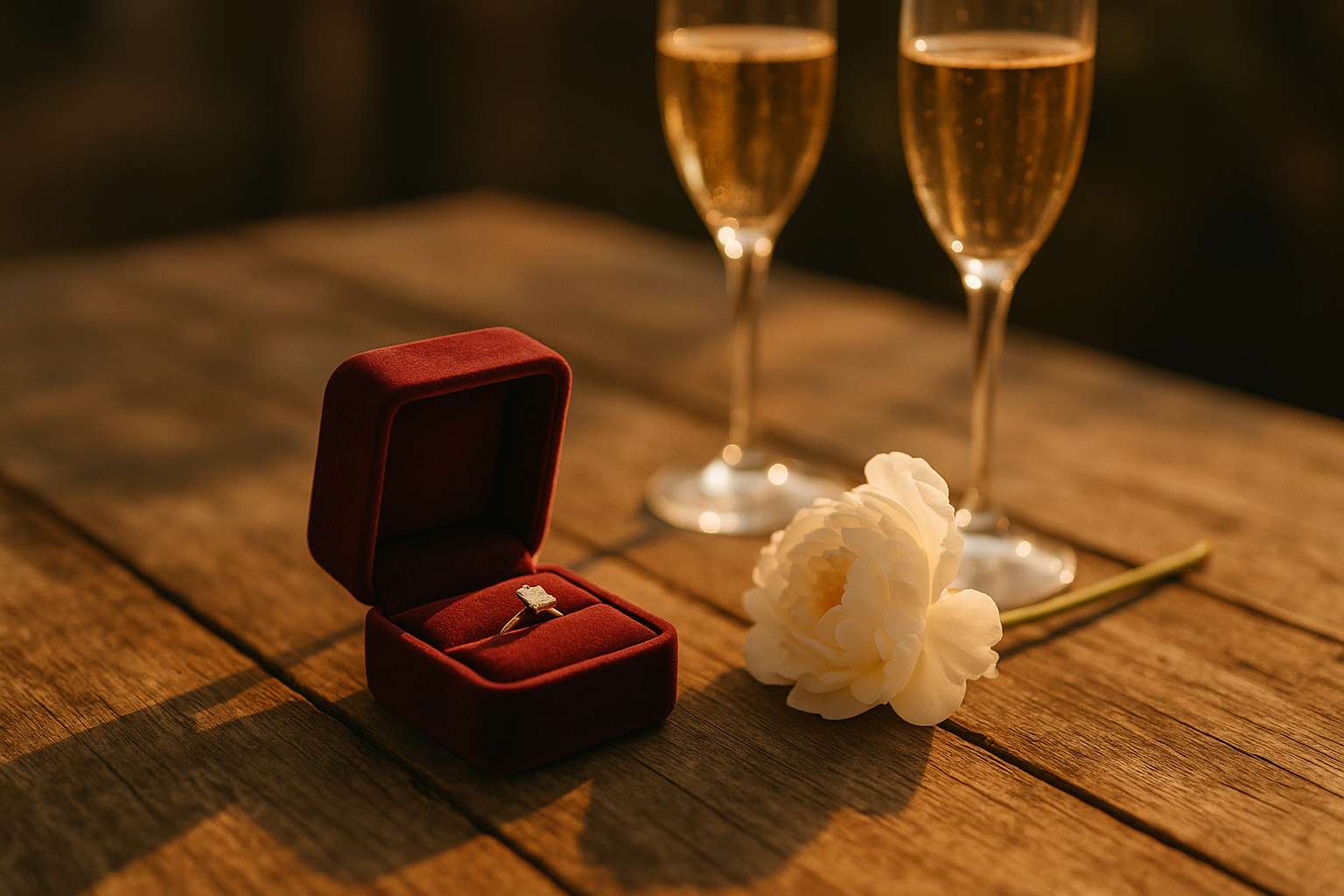
The most memorable proposals are not the most elaborate — they are the most intentional. Start ring shopping at least six months before your target date, choose a setting that reflects your partner's personality rather than social media trends, and give yourselves private time after the yes before the world knows.
More than 2 million couples get engaged in the United States each year, and nearly all of them will tell their proposal story for the rest of their lives. How the ring looked, where you were, what was said — these details become part of a couple's shared origin story in a way that almost nothing else does. Getting the planning right is not about performance; it is about creating a moment that is genuinely yours.
This guide covers every decision in the proposal planning process: the ring purchase timeline, choosing the right setting, whether to hire a photographer, family blessing traditions, and what to do in the first hours after engagement. Data is drawn from The Knot's 2026 Real Weddings Study, current jeweler and photographer pricing, and 2025–2026 proposal trend reporting.
How do you choose the right engagement ring before proposing?
The ring decision deserves its own timeline — one that begins well before any proposal planning. For most proposals, the ring is the single most expensive item involved, and the purchase should be approached with the same care as any major investment.
Understand the 4 Cs before entering any store. Cut, color, clarity, and carat weight are the universal framework for diamond quality, established by the Gemological Institute of America (GIA). Among these four, cut quality is the most important — it determines how brilliantly a stone returns light. Always prioritize an Excellent or Very Good cut grade before trading up on size or color. A smaller, beautifully cut stone will outperform a larger, poorly cut one in every lighting condition.
Lab-grown vs. natural: a real choice in 2026. Lab-grown diamonds are chemically, physically, and optically identical to mined diamonds — graded on the same GIA scale with the same cut, color, and clarity standards. As of 2025–2026, lab-grown diamonds cost roughly 50–70% less than comparable mined stones and now account for approximately 61% of all U.S. engagement ring center stone purchases. The meaningful trade-off is secondary market value: lab-grown stones depreciate sharply as production costs continue falling, while natural diamonds hold value more durably over decades. For couples prioritizing beauty and budget efficiency, lab-grown is excellent. For a couple treating the ring as a generational heirloom, natural carries distinct significance.
Where to shop. Online direct-to-consumer jewelers — Brilliant Earth (with 20 U.S. showrooms and a strong ethical sourcing position), James Allen (known for extensive 360° diamond imagery and competitive pricing), and Blue Nile — often deliver superior value to branded retail chains because of lower overhead. Each allows you to compare stones side by side with grading reports before purchase. Always request a GIA or AGS grading report for any stone over $1,000 and have the ring independently appraised within 30 days of purchase.
| Timeframe Before Proposal | Action | Notes |
|---|---|---|
| 6 months out | Begin researching stones, settings, and jewelers | Custom designs need 8–12 weeks fabrication; start early |
| 3–4 months out | Finalize ring design and place order | In-stock rings need 2–4 weeks; custom up to 12 weeks |
| 1–2 weeks out | Pick up ring; insure it immediately | Standalone jewelry insurance costs ~$65–$130/year for a $6,500 ring |
| After proposal | Get an independent appraisal within 30 days | GIA-certified appraiser; cost $50–$150 |
How do you choose the right proposal setting?
The research on successful proposals is consistent: location matters, but meaning matters more than spectacle. A large analysis of proposals found that the most emotionally resonant settings are not the most elaborate — they are the most intentional. The single most successful proposal setting is the home or a privately meaningful private space.
Before choosing a location, ask three questions about your partner: Does she prefer being the center of attention or find it uncomfortable? Does she tend toward private, intimate experiences or loves being celebrated publicly? Is she a person who values personal history and ritual, or is she more drawn to novelty and adventure? Your honest answers point directly toward the right setting.
For private, intimate personalities: At home with candles, flowers, and meaningful personal photos; a favorite restaurant with a reserved private room; a quiet spot at a location that holds real story for you both — where you had your first date, a trail you hike regularly, a bookstore you love. These proposals feel like a culmination of your relationship rather than a performance staged for an audience.
For expressive, celebration-loving personalities: A rooftop with a sunset view, a botanical garden, a destination trip with the proposal woven into a day you both love. In 2026, greenhouse and botanical garden proposals are trending specifically for their combination of natural beauty and intimate scale — romantic and photogenic without feeling like a public production.
The public proposal question. Know your partner. Over a third of proposals in 2025–2026 happen on a planned trip — a destination that matters to the couple. The important principle: if you are genuinely uncertain whether she would love a public setting, choose private. A private proposal can immediately become a public celebration. A public proposal that lands wrong is simply not reversible.
Trending 2026 approaches: Proposals embedded into daily rituals (a morning coffee walk, cooking dinner together) are rising in popularity among couples who value authenticity over spectacle. Handwritten letters accompanying the ring, delayed social media announcements, and simple evenings at home have all gained ground against the elaborate flash-mob proposals of earlier years.
Should you hire a proposal photographer?
Approximately 80% of couples report wishing they had better documentation of their proposal. A discreet proposal photographer positioned nearby costs $300–$1,500 and captures not just the ring reveal but the authentic emotion of the minutes immediately following — the genuine joy, the first phone calls, the undirected happiness that cannot be recreated in a styled shoot. Most photographers who specialize in weddings offer proposal documentation as a package add-on; book 6–8 weeks in advance, longer if your date falls near a popular proposal peak (December, Valentine's Day, New Year's Eve).
An emerging alternative for 2026: the wedding content creator who documents the first hour as a newly engaged couple — the phone calls to parents, the champagne, the ring-reveal photos. This format deliberately keeps the proposal moment private between the two of you, while capturing everything that follows in a natural, shareable format.
What happens after she says yes?
The hours after the proposal deserve as much care as the proposal itself. Give yourselves private time before the world knows. The notification order matters: both sets of parents should hear from you directly, ideally the same day, before any social media post. Siblings and best friends come next — by voice, not message, for the inner circle. Only then does a social post make sense.
On the practical side: approximately 57% of couples begin wedding planning within one month of engagement. The urgency is real — popular venues book 12–18 months out. But the advice from planners and happily married couples is consistent: give yourselves one to two weeks to simply be engaged before opening a single vendor website. The engagement period is its own season, distinct from the wedding planning project that follows. Honor it.
Frequently asked
How far in advance should you start planning a marriage proposal?
Planning well in advance protects against the most common proposal complications. If you are ordering a custom or semi-custom engagement ring, begin shopping six months before your intended proposal date — most custom fabrication requires 8–12 weeks, and you need time to compare jewelers and review stones. For an in-stock ring from a retailer like Brilliant Earth or James Allen, four to six weeks allows for sizing, any adjustments, and insurance setup before the proposal. For the proposal itself, begin planning the setting and any vendor bookings (proposal photographers, restaurant reservations, travel logistics) at least four to six weeks out. December, Valentine's Day, and New Year's Eve are the most popular proposal dates — these dates require additional lead time for photographers and venues, which may be fully booked months ahead.
Should a marriage proposal be public or private?
This decision is entirely about knowing your partner — not what makes the most compelling social media content. Research consistently shows that the most emotionally resonant proposals are the most intentional, not the most elaborate. A woman who values privacy, dislikes being the center of attention, or tends toward introversion will not enjoy a Jumbotron or flash-mob proposal regardless of how much effort it took. For a partner who is openly expressive, loves shared experiences, and would genuinely relish being celebrated publicly, a public setting can be beautiful. The rule is simple: when in doubt, choose private. A private proposal can become a public celebration immediately afterward. A public proposal that goes wrong cannot be undone. If you are genuinely uncertain about your partner's preference, err toward intimate and personal.
Do you need a proposal photographer, and how much does one cost?
Approximately 80% of couples report wishing they had better documentation of their proposal after the fact. A proposal photographer captures not just the ring reveal but the immediate joy of the first minutes as a newly engaged couple — calling parents, the first champagne, the authentic emotional reactions that cannot be recreated. A discreet photographer positioned nearby costs $300–$1,500 for a proposal session depending on market and photographer tier. Many engagement photographers offer proposal documentation as a package add-on alongside the engagement session. An alternative for 2026: hiring a wedding content creator specifically to document the engagement announcement — the first hour after the proposal, including phone calls to family and the ring reveal. These professionals specialize in natural, unposed moments and create content perfectly suited for social sharing. Book proposal photographers 6–8 weeks in advance; popular proposal destinations book faster.
What is the tradition of asking for a family blessing before proposing?
The tradition of asking a woman's father or parents before proposing has evolved meaningfully in contemporary practice. Most couples and families today treat this as asking for a blessing rather than permission — a significant distinction that honors tradition while respecting the woman's full agency. In practice, this conversation is a gesture of respect and an opportunity to bring the family into the joy of what is coming. Many partners deeply value this tradition and would want their future spouse to make this gesture; others prefer to keep the decision between the two of them. The right approach is to understand your partner's values about family involvement and act accordingly. If you are uncertain, a quiet conversation with your partner about their preferences is entirely appropriate.
What are the most meaningful proposal settings in 2026?
Research and planning data consistently show that the most emotionally resonant proposals are set in locations that carry genuine personal meaning — not merely photogenic backdrops. The home or a privately meaningful space remains the most successful setting: a living room with candles and meaningful photos, a backyard where you have shared countless evenings, a kitchen where you cook together regularly. Beyond the home, favorite restaurants with a private dining room, locations where you met or had your first date, natural settings you both love, and travel destinations that matter to your relationship are all proven settings. In 2026, experiential proposals embedded into a daily activity you share — a morning walk, cooking together — are rising in popularity for their authenticity. Rooftop views and botanical garden spaces are trending for their combination of natural beauty and intimate scale.
What should you do immediately after she says yes?
The first moments after a yes deserve to be experienced fully before the external world is invited in. Give yourselves private time before reaching for a phone. When ready, the notification sequence matters: both sets of parents should hear from you directly, ideally the same day, before any social media announcement. Siblings and closest friends come next — by voice, not message. On the practical side: get the ring insured within the first 30 days (standalone jewelry insurance from Jewelers Mutual or BriteCo runs approximately $65–$130 per year for a $6,500 ring). Have the ring independently appraised within 60 days. And allow yourselves at least one to two weeks simply being engaged before opening a single wedding planning app. The engagement period is its own season, distinct from the planning project that follows.