Wedding Planning
Average Cost of a Wedding in 2026: A Complete Breakdown
The Knot's 2026 Real Weddings Study surveyed 10,474 couples: the national average is $34,200. But that number hides enormous variation by city, season, and guest count. Here is what weddings actually cost — and how to make every dollar intentional.
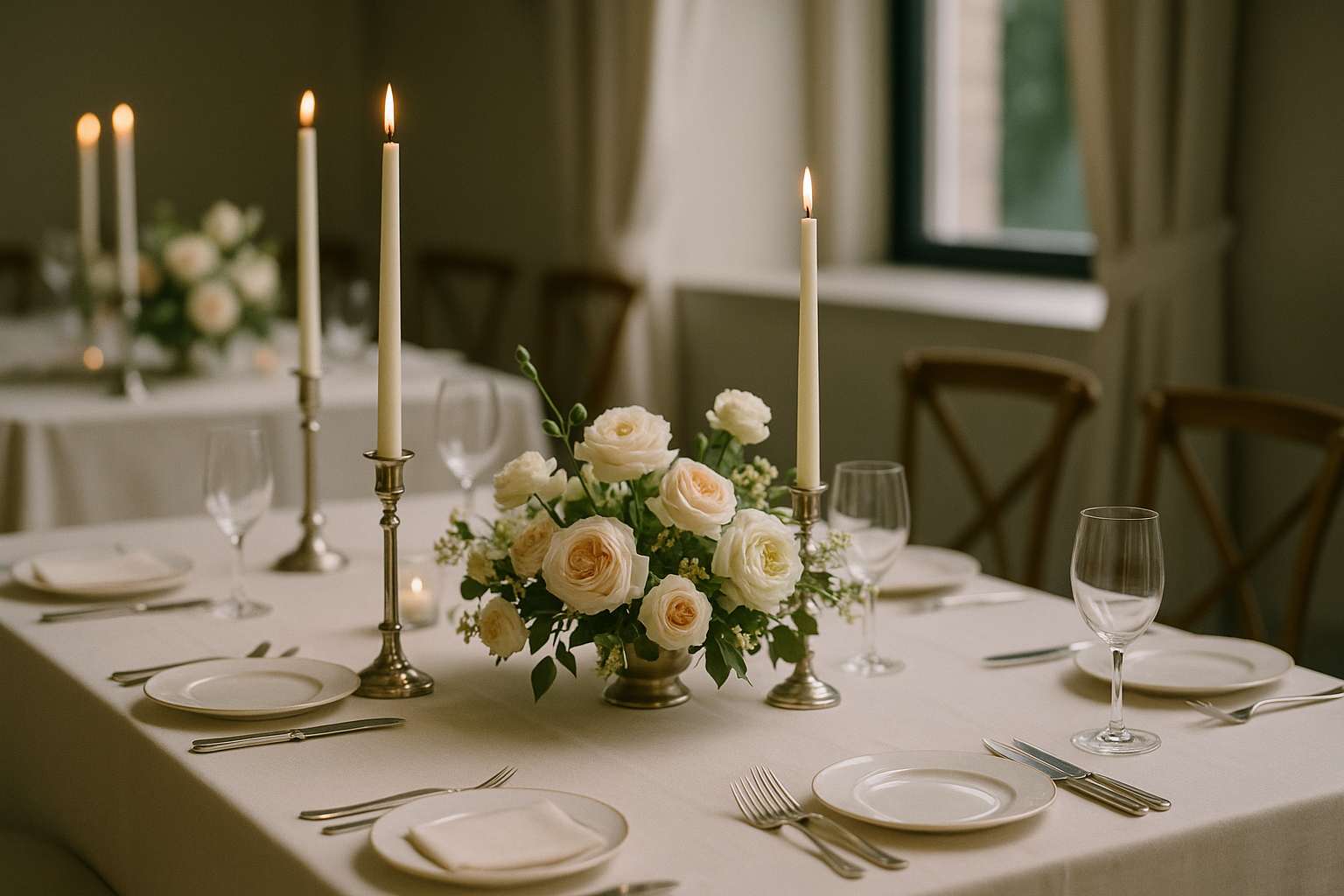
The average U.S. wedding cost $34,200 in 2025, per The Knot's 2026 Real Weddings Study of 10,474 couples. That national average disguises enormous range — from $16,000 in Alaska to $87,700 in New York City — and the single biggest lever in any budget is guest count, at roughly $292 per person nationally.
Before you tour a single venue or fall in love with a florist's portfolio, the budget conversation deserves your full attention. The couples who navigate wedding finances with the most grace are not necessarily the ones with the largest budgets — they are the ones who set a real number first, understand what drives it, and make deliberate choices about where to invest and where to hold back. This guide gives you the numbers you need to have that conversation honestly.
What does a wedding actually cost in 2026 — and why does the average mislead?
The headline figure from The Knot's 2026 Real Weddings Study, which surveyed 10,474 couples married in 2025, is $34,200. That number is real, methodologically grounded, and worth knowing — but it is an average, not a midpoint. A handful of $200,000 galas in Manhattan pull the average upward considerably. The median spend (the point at which half of couples spend more and half spend less) sits closer to $20,000–$25,000, which is a more representative number for most brides planning in mid-size cities or suburban markets.
The most important variable is not national averages at all — it is your specific geography. The same 100-guest wedding can cost two to three times more in New York City or San Francisco than in Nashville or Columbus. Before anchoring to any number from a national survey, research per-head catering costs and venue day-rates in your specific market.
| Market | Average Total Cost | Notes |
|---|---|---|
| New York City | $87,700 | Highest metro average in the country |
| Chicago | $54,190 | — |
| New Jersey (statewide avg.) | $54,400 | Most expensive state overall |
| San Francisco | $51,500 | — |
| National average | $34,200 | 117 guests; 13 vendors |
| Oklahoma City | $20,650 | Representative mid-size, mid-cost market |
| Alaska (statewide avg.) | $16,150 | Least expensive state overall |
How does guest count drive the total cost of a wedding?
At $292 per guest nationally — the 2025 figure from The Knot's study, up $8 from the prior year — the guest count is not merely a logistical decision. It is a financial one. The arithmetic is direct: every 25 guests you add or remove shifts your total catering and venue cost by approximately $7,300. Cutting the guest list from 150 to 100 guests frees up roughly $14,600 that can be redirected toward a more elevated venue, a photographer you love, or simply not starting your marriage in debt.
Run three scenarios before finalizing any list:
- 75 guests × $292 = approximately $21,900 in guest-driven costs
- 100 guests × $292 = approximately $29,200 in guest-driven costs
- 150 guests × $292 = approximately $43,800 in guest-driven costs
Add fixed costs (photography, florals, music, stationery, attire) that do not scale directly with headcount — typically $8,000–$15,000 depending on your market and priorities — and you have a workable range for each scenario before you speak to a single vendor.
How should a wedding budget be divided across vendors?
Professional planners and industry researchers have converged on a percentage-based allocation framework that provides a meaningful starting point. These are not rigid rules — a couple who values photography above all else should consciously shift toward that category — but they represent where most couples land when they have not yet made intentional priority decisions.
| Category | Typical Allocation | Notes |
|---|---|---|
| Venue (ceremony + reception) | 28–33% | Single largest line item; often bundled with catering |
| Catering & Bar | 33–38% | Includes food, beverage, service, and tax |
| Photography | 10–12% | Photographer, second shooter, editing, album |
| Florals & Décor | 8–10% | Highly elastic — DIY or greenery-forward designs reduce this significantly |
| Music & Entertainment | 5–8% | DJ vs. live band is a 3–5× cost difference |
| Wedding Attire | 5–8% | Gown, alterations, accessories, groom's attire |
| Videography | 5–8% | Often discounted when booked with photographer |
| Hair & Makeup | 2–4% | Includes bridal trial session — not optional |
| Stationery & Signage | 2–3% | Save-the-dates, invitations, day-of paper goods |
| Transportation | 2–3% | Couple's car, guest shuttles, parking |
| Contingency Reserve | 10–15% | Non-negotiable — set this aside before allocating anything |
The most important line is the last one. Service charges of 18–24% on food and beverage, overtime fees of $500–$1,500 per hour, and the cascade of small day-of additions are almost universal. Couples who hold a contingency reserve absorb these without stress. Couples who don't often feel blindsided at the final reconciliation.
What hidden costs catch couples off guard?
The gap between an initial vendor quote and the final invoice is one of the most consistent sources of budget anxiety. These additions are not deceptive — they appear in the fine print of most vendor contracts — but they are rarely mentioned in initial conversations.
Venue: Service charges (18–24% on all food and beverage), sales tax (6–10%), and venue minimum spends that can require paying for 80 guests even if only 60 attend are the most consequential. Always request an all-in quote — with tax, service charge, and any setup or breakdown fees — before comparing venues.
Catering: Cake-cutting fees ($2–$10 per guest when you supply your own cake) and corkage fees ($10–$25 per outside bottle) add up quietly. Coffee and tea service, late-night snack stations, and children's meals are frequently quoted separately from the main per-head price.
Attire: The gown's price tag does not include alterations ($300–$800 for a typical dress), undergarments, veil, or shoes. A bride budgeting $2,000 for her gown should plan for $2,800–$3,200 as a realistic total-look investment.
Photography: Travel fees beyond the photographer's home radius ($0.67/mile or flat fees), a second shooter for guest counts above 80 ($400–$800), and album upgrades above the digital-only base package are almost always additional.
Tipping: Gratuities are expected by caterers, the DJ, hair and makeup artists, the driver, and your coordinator. A useful default: budget 2% of your total wedding spend for gratuities, distributed in labeled envelopes by your maid of honor on the day itself.
How do couples at different budget levels approach their weddings?
The Knot's 2026 study breaks spending into three clear brackets that illuminate how priorities shift with scale:
- Under $15,000: Average spend $8,900. Typically micro-weddings of 20–50 guests at non-traditional venues — restaurant buyouts, park pavilions, family properties — with DIY or minimal florals and a DJ rather than a band.
- $15,001–$40,000: Average spend $26,400. The broad middle, representing the majority of American weddings. Full vendor roster, standard guest count of 75–120, professional photography, and a purpose-built venue.
- Over $40,000: Average spend $70,300. Luxury venues, full-service planners, live bands, elevated florals, and guest counts that frequently exceed 150.
Three in four couples across all brackets told The Knot their wedding was financially worth the investment — a reminder that within-budget satisfaction matters far more than the absolute dollar amount spent.
If you are setting your own budget from scratch, the most disciplined approach is to calculate your Maximum Viable Budget — liquid savings earmarked for the wedding, plus projected savings between now and the date, plus any confirmed (not promised) family contributions — before looking at a single venue price. Hold 10–15% of that figure as a contingency reserve, and derive your guest-count scenarios from what remains. That sequence, rather than anchoring to averages and working backward, is what separates couples who feel empowered by their budget from those who feel chased by it.
Frequently asked
What is the average cost of a wedding in the United States in 2026?
According to The Knot's 2026 Real Weddings Study — which surveyed 10,474 couples married in 2025 — the national average wedding cost is $34,200. That figure has held remarkably steady year over year, even as per-guest costs have ticked upward. Crucially, the average is pulled significantly higher by expensive metropolitan markets: the median spend (the midpoint where half of couples spend more and half spend less) is closer to $20,000–$25,000. Couples in smaller cities and rural markets frequently complete beautiful weddings for $12,000–$22,000, while New York City weddings can reach $87,700 on average. The single most powerful variable in your total cost is guest count — at $292 per guest nationally, every 25 guests you add or remove shifts your budget by roughly $7,300.
How much does the average wedding cost per guest?
The Knot's 2026 data places the national average at $292 per guest — up $8 from 2024 and well above pre-pandemic levels. That figure blends catering, venue, and proportional shares of photography, florals, music, and other services. In major metropolitan markets (New York, San Francisco, Chicago, Boston), the per-guest cost frequently reaches $350–$500+. In mid-size cities and the South, it typically runs $200–$280. In smaller markets and rural areas, couples often achieve $150–$200 per guest. The per-guest metric is the most honest way to stress-test a budget before you set your guest count: multiply your local market estimate by each guest-count scenario you are considering, and you will immediately see your cost ceiling.
What is the most expensive state for weddings, and what is the least expensive?
New Jersey is the most expensive state for weddings in the United States, with an average total cost of $54,400, according to The Knot's 2026 Real Weddings Study. New York City weddings reach an average of $87,700 — the highest of any metropolitan market tracked. On the opposite end, Alaska has the lowest state average at approximately $16,150. Other affordable markets include Mississippi, Arkansas, and rural areas of the Mountain West. The takeaway for planning purposes: location alone can create a 3–4× difference in total cost for the same headcount and quality level. If you have flexibility on where to hold your celebration, exploring venues in adjacent, lower-cost markets is one of the most effective budget levers available.
How do couples typically allocate their wedding budget across vendor categories?
Industry consensus, drawn from The Knot, Zola, and professional planner guidance, points to a fairly consistent allocation framework. Venue and catering (often bundled) absorb the largest share — roughly 45–50% of the total budget combined. Photography and videography together account for 10–18%. Florals and décor run 8–12%. Music and entertainment (DJ vs. band is a 3–5× cost difference on its own) takes 5–8%. Attire — including the gown, alterations, and accessories — typically runs 5–8%. Stationery, hair and makeup, transportation, and officiant together make up another 8–12%. A non-negotiable contingency reserve of 10–15% should be held before allocating anything else: service charges, overtime fees, and day-of extras will arrive whether you budget for them or not.
What hidden costs do most couples forget to include in their wedding budget?
The most common budget shocks arrive in categories couples assumed were simpler than they are. Venue service charges of 18–24% on food and beverage spend are almost universal at catered venues but rarely appear in initial quotes. Cake-cutting fees ($2–$10 per guest when you supply your own cake) can add $200–$1,000. Alteration costs for the wedding gown ($300–$800 for a typical dress, more for complex work) are almost never included in the gown's sticker price. A second photographer, essential for guest counts above 80, adds $400–$800. Travel fees for photographers and officiants outside their home radius apply at most bookings. The marriage license fee ($30–$100 depending on state) and an officiant travel fee ($50–$200) are small but real. Tipping — a meaningful expected gesture for caterers, the DJ, the hair and makeup team, the coordinator, and drivers — amounts to roughly 2% of the total budget if done thoughtfully.
Does the season or day of the week affect wedding cost?
Meaningfully, yes. Peak season — primarily May through October, with June and September the most in-demand months — commands the highest venue rates and the least vendor availability. Off-peak months (November through March, excluding New Year's Eve) offer 20–40% reductions at many venues and from photographers and florists who have open calendars to fill. Saturdays are the most expensive and most sought-after day; Sunday weddings regularly yield 10–20% savings; Friday evenings offer a middle ground that has grown significantly in popularity among couples who want weekend energy at a more accessible price point. A January or February Sunday wedding in a second-tier market is one of the most effective ways to access a premium venue at a dramatically reduced cost.
What percentage of couples go over their wedding budget?
A substantial majority. Industry data consistently shows that only about 39% of couples stay within their original planned budget — meaning more than six in ten overspend relative to their initial number. The Knot's 2026 study found that 85% of couples reported the economic environment affected their planning, yet most adapted rather than scaled back dramatically: 77% of those who adjusted their budgets actually increased their spending during the planning process. The most common cause of overspending is setting a budget based on aspirational research before fully understanding per-guest costs in the local market, followed by creeping additions and upgrades throughout the vendor selection process. The solution is establishing a Maximum Viable Budget — grounded in liquid savings plus confirmed contributions — before researching or touring anything.