Reception & Parties
One Venue vs Two Venues Wedding: A Real-Cost Comparison
The choice between one venue and two shapes your timeline, your guest experience, your vendor logistics, and thousands of dollars in secondary costs. Here is how to decide with clarity.
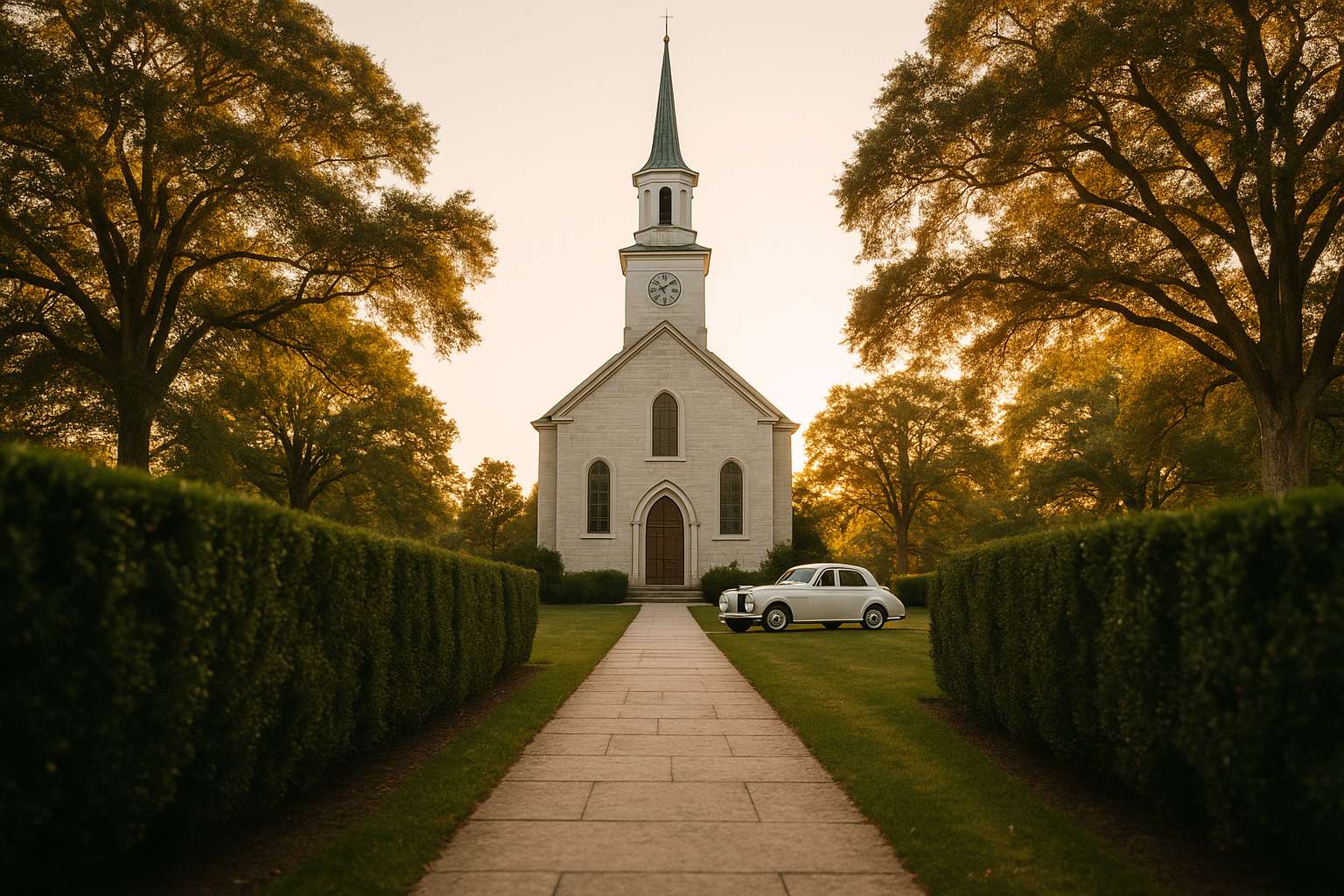
One venue keeps the day seamless, lower-cost, and logistically forgiving. Two venues offer religious and creative freedom but add $1,500 to $5,000 in transportation, coordination, and secondary costs. The right answer depends on whether your ceremony is determined by tradition — or by choice.
The choice between one venue and two is not merely a logistics question — it is the architectural decision that determines how your entire wedding day is experienced by you and by every guest you have invited. Make it deliberately, with full awareness of what each option costs, requires, and makes possible.
According to the Zola Wedding Cost Index, couples spend an average of $8,573 on wedding venue costs — but that figure masks the full picture. A couple using two venues often pays a comparable venue rental fee and then adds $800 to $2,500 in guest transportation, additional coordinator hours, and décor costs that cannot be reused between spaces. Understanding the true total cost of each approach is the foundation of the decision.
What Are the Real Advantages of a One-Venue Wedding?
The single-venue wedding has one foundational advantage that compounds across every other planning decision: simplicity. When ceremony and reception happen in the same property, the entire logistical apparatus shrinks. Vendors load in once. Guests arrive once and stay. The timeline has no mandatory travel gap. A ceremony that runs 20 minutes long does not create a cascade of problems for shuttle schedules, room readiness, and reception entrance timing.
The financial case is equally strong. Many venue properties offer bundled ceremony-and-reception pricing — but even when they do not, the secondary savings accumulate quickly. Guest transportation at $1,200 to $3,000 disappears entirely. Vendor travel fees, which some photographers, florists, and caterers charge per venue, consolidate to zero additional surcharge. Ceremony décor — the arch, the aisle flowers, the altar arrangements — can often be repositioned for the reception, saving $500 to $2,000 in duplicate floral work. And the day-of coordinator who at a two-venue wedding must manage transitions, shuttle timing, and double setup logistics has a meaningfully simpler job, which translates to fewer errors and lower overtime risk.
Guest experience is perhaps the most undervalued benefit. At a one-venue wedding, attendance at the reception approaches 100% of ceremony guests. Elderly relatives, families with young children, and out-of-town guests unfamiliar with the area all navigate exactly one location. There is no attrition between ceremony and reception — the emotional energy built at the ceremony carries directly into the celebration.
The primary limitation of a one-venue approach is this: not every meaningful ceremony space can host a reception, and not every couple has the flexibility to choose. A family parish with deep meaning, a cathedral of genuine architectural grandeur, or a sacred space required by religious tradition may not be negotiable. When the ceremony location is set by faith or family history, the question of one venue versus two is largely already answered.
When Do Two Venues Make Sense?
Two venues are not a compromise — for many couples, they are the only appropriate choice, and the planning should honor that rather than treating the second venue as a problem to be solved. Religious traditions that require consecrated ceremony spaces are the most common reason: Catholic weddings in a specific parish, Jewish ceremonies in a synagogue, Hindu ceremonies in a mandir, Orthodox ceremonies in an established church. The ceremony space holds meaning that transcends aesthetics. No ballroom can substitute for it.
Beyond religious necessity, two venues make strategic sense in these scenarios: when a specific outdoor ceremony location (a family estate, a beach, a garden) does not have weather protection adequate for a full reception; when the couple wants to perform genuine budget arbitrage — a modest ceremony venue paired with a premium reception venue — that the bundled pricing of all-in-ones does not allow; or when the aesthetic vision for ceremony and reception are genuinely distinct and one space cannot serve both.
| Factor | One Venue | Two Venues |
|---|---|---|
| Guest convenience | High — one location, zero navigation | Moderate to low — dependent on distance and transport |
| Added transport cost | $0 | $800–$3,000 typical |
| Décor reuse potential | High — arch and florals move room to room | Low to moderate — separate install at each location |
| Timeline resilience | High — delays absorbed in cocktail hour buffer | Moderate — shuttle timing creates cascade risk |
| Religious and cultural flexibility | Limited to non-sacred venues | Full — ceremony in any meaningful space |
| Room flip requirement | Sometimes — if same room used for both | Never — venues are separate |
| Coordination complexity | Standard | Significantly higher — two venues, two schedules |
| True total cost | Venue fee + no transport | Two venue fees + transport + duplicate setup |
The Room Flip: What It Takes and How to Plan for It
When a one-venue wedding uses the same physical space for both ceremony and reception, a room flip is required — and it is one of the most operationally demanding elements of a single-venue day. The flip sequence: guests recess and move to the cocktail hour space; venue staff and vendors wait for the room to fully clear; ceremony elements are removed or repositioned; reception tables, linens, full place settings, and florals are installed; a final walkthrough occurs; reception doors open.
The time this takes depends directly on guest count and décor complexity. For a 75-guest wedding with moderate décor, 30 to 40 minutes is achievable. For a 150-guest wedding with a full floral installation, budget 55 to 70 minutes minimum. Your cocktail hour must be long enough to accommodate the flip plus a comfortable margin: 75 minutes is the minimum; 90 minutes is the professional standard for weddings over 125 guests.
Critically, a room flip requires a dedicated staffing plan. The venue's standard event staff may not be sufficient — confirm in writing how many staff members the venue deploys for the flip, and whether additional crew is included or separately charged ($200 to $600 is typical). Your florist team must also remain on-site through the ceremony to execute floral repositioning during the flip window. Confirm this commitment in your floral contract before signing.
Pre-setting strategy reduces flip time by 15 to 20 minutes: linens, charger plates, and flatware can be set on tables and covered with protective cloths before the ceremony begins. Florals, candles, and water-filled vessels cannot be pre-set for obvious reasons but arrive immediately after the room clears.
Transportation: Planning the Guest Journey Between Venues
When two venues are more than 10 minutes apart, guest transportation becomes an act of hospitality as much as a logistical necessity. The shuttle circuit model is the most cost-effective approach for most weddings: two runs from the hotel to the ceremony venue pre-ceremony; continuous service from ceremony to reception for 30 to 45 minutes post-recessional; two or three runs from the reception to the hotel at the end of the evening. A standard shuttle bus carrying 20 to 35 passengers runs $60 to $100 per hour. Most events require a 3-to-5-hour minimum booking — budget $1,200 to $2,500 for a complete shuttle program for a 150-guest wedding.
Assign a specific member of the wedding party as shuttle liaison — someone who knows the schedule, has the driver's cell number, and can answer guest questions. This role prevents the couple from fielding shuttle coordination questions on their wedding day. Communicate the full shuttle schedule on your wedding website and include a logistics insert with invitations.
For the 2025–2026 cycle, the all-in-one estate wedding — where ceremony, cocktail hour, reception, and overnight accommodations happen at a single property — has emerged as a significant trend, precisely because it solves the logistics problem entirely. Couples booking a vineyard, historic inn, or private estate for the entire wedding weekend are not just choosing a venue; they are eliminating virtually every transportation and transition complication at once.
Whether you choose one venue or two, the decision deserves the same intentionality you bring to every other element of the day. Run the full cost model. Visit both options with your coordinator present. Ask your venue directly about room flip capabilities and staffing. And build your timeline — including every buffer — before you commit to either path.
Sources: Cost data from Zola Wedding Cost Index and The Knot Real Weddings Study.
Frequently asked
Is a one-venue wedding cheaper than a two-venue wedding?
In most cases, one venue is less expensive when you account for the full picture rather than comparing base rental fees. Eliminating guest transportation alone saves $800 to $2,500 at most. When two-venue weddings include ceremony venue rental, guest shuttles, additional vendor travel fees, décor that cannot be reused between spaces, and the extra coordinator time required to manage transitions, the total cost frequently exceeds a comparable all-in-one venue by $2,000 to $5,000 or more. The comparison is often misleading because a raw ceremony space — a church, a garden, a beach permit — appears inexpensive at $300 to $1,500, while a ballroom that bundles ceremony and reception looks expensive at $8,000 to $12,000. Run the full cost model before drawing conclusions: add transportation, additional venue fees, setup labor, and coordination costs to both scenarios.
How long does a wedding room flip take, and what does it cost?
A room flip — the transformation of a ceremony space into a reception space between the two events — takes 30 to 80 minutes depending on the size of the wedding and the complexity of the décor installation. A 75-guest wedding with a moderately decorated ceremony space requires 30 to 40 minutes; a 150-guest wedding with a full floral arch and elaborate tablescape installation typically requires 55 to 70 minutes. Budget for a minimum 75-minute cocktail hour when a flip is planned; 90 minutes for weddings over 125 guests. The flip itself may be included in the venue's staffing or charged separately — typically $200 to $600 for additional crew. Florists must remain on-site through the ceremony to execute floral transitions during the flip, which is frequently a separate line item in floral contracts. Always confirm who is responsible for the flip and what the staffing plan is before signing your venue contract.
What is the maximum travel time between a ceremony and reception venue?
Wedding planners consistently recommend a maximum of 30 minutes of travel time between ceremony and reception venues, and strongly prefer 15 minutes or less. Beyond 30 minutes, guest goodwill erodes noticeably: out-of-town guests get lost, families with young children struggle, and the energy built during the ceremony dissipates before guests arrive at the reception. Beyond 45 minutes, expect meaningful late arrivals who miss the grand entrance and cocktail hour. A gap of more than 90 minutes between ceremony end and reception doors opening — without a clearly communicated, hosted plan for guests — is the most common cause of wedding-day guest dissatisfaction. If you are committed to two venues and the distance is more than 30 minutes, invest in guest shuttles, communicate the plan explicitly on your wedding website, and prepare a hosted activity or refreshment for the gap period.
Do I need to hire guest transportation for a two-venue wedding?
Guest transportation becomes strongly advisable — and sometimes necessary — when ceremony and reception venues are more than 10 minutes apart, when the reception venue has limited parking, when guests will be consuming alcohol, or when a significant portion of guests are out-of-towners unfamiliar with the area. The most common and cost-effective approach is a shuttle circuit between a central hotel room block and both venues, rather than attempting to transport every individual guest. A standard shuttle bus carrying 20 to 35 passengers runs $60 to $100 per hour; most events require a minimum booking of 3 to 5 hours. For a 150-guest wedding with two venues separated by 20 minutes, two to three shuttle vehicles operating in circuits typically run $1,200 to $3,000 total. Book 6 to 9 months out for peak season dates — transportation vendors are among the first to sell out for popular summer and fall Saturdays.
What is the 'Catholic Gap' and how do I manage it?
The Catholic Gap is the industry term for the 1.5-to-4-hour interval between a morning or early-afternoon religious ceremony — Catholic Nuptial Mass, some Orthodox ceremonies, certain Hindu wedding timelines — and an evening reception. It is very common and entirely manageable with the right approach. The most effective strategies: host a bridesmaid luncheon or family gathering that bridges the gap; open a lounge or light refreshment area at the reception venue earlier than the formal start; provide traveling guests with a curated activity guide (nearby restaurants, parks, or downtown shops) on your wedding website; and send welcome bags to hotel-block guests with snacks and the full day's schedule. The essential principle is that a well-communicated gap feels like a generous gift of leisure time to guests — and a gap with no communication feels like abandonment. Address it proactively in your invitation inserts and on your wedding website.
When should I decide between one venue and two venues?
This decision should be made before you tour any venues — ideally in the first two weeks of planning — because it fundamentally shapes what you are looking for when you walk through a property. Couples who visit venues without having resolved this question often fall in love with a ceremony-only or reception-only space and then spend months backfilling the logistics rather than building the day with intention. If your ceremony is dictated by religious or family tradition — a specific church, synagogue, or temple your family has attended for generations — the two-venue question is largely answered for you. If you have full flexibility, the default recommendation from most experienced wedding planners is one venue: it reduces complexity, protects the timeline, typically reduces cost, and increases the likelihood that every invited guest actually experiences both the ceremony and the celebration.