Reception & Parties
Wedding DJ vs Live Band: The Complete Guide
About 70% of couples hire a DJ; the rest choose a live band. Neither is universally better. This guide covers cost, atmosphere, venue logistics, and the hybrid model so you can make the decision that is right for your reception.
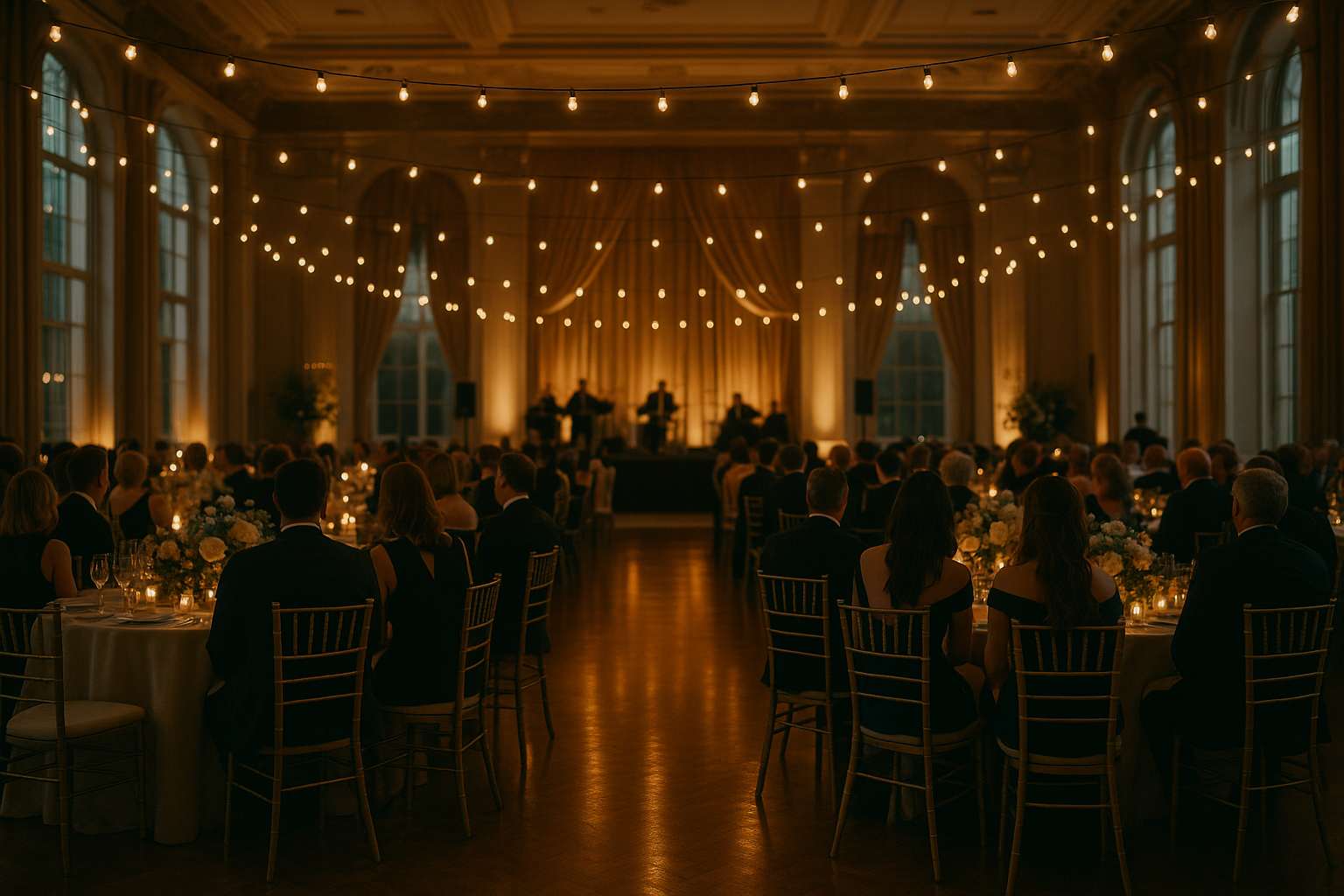
About 70% of couples hire a DJ for their wedding reception; the remaining 30% choose a live band. DJs average $1,689 nationally; bands average $4,576. Neither is universally better — cost, venue size, cultural tradition, and the experience you want to create all point toward different answers.
Of all the decisions involved in planning a wedding reception, the choice between a DJ and a live band touches the most variables simultaneously: the atmosphere you create, the amount you spend, the logistics your venue can support, and the memories your guests carry home. It deserves far more than a price comparison.
According to The Knot's 2026 Real Weddings Study — drawn from 10,474 couples married in 2025 — approximately 70% of couples hire a DJ and 30% choose a live band. The gap in those numbers reflects cost more than preference; in a world of equal budgets, the split would almost certainly be closer. Here is everything you need to make this decision with full information.
How much does wedding entertainment cost in 2026?
The Knot's 2026 study places the national average DJ cost at approximately $1,689, with regional ranges from roughly $1,339 in the Southeast to $2,371 in the Mid-Atlantic. Live bands average $4,576–$4,657 nationally, but that average spans an enormous range based on ensemble size:
| Entertainment Format | Typical Cost Range | Notes |
|---|---|---|
| Professional DJ (experienced) | $1,500–$3,000 | Includes MC duties; all hours from ceremony through final dance |
| Premium / high-demand DJ | $3,000–$5,000+ | Top-market performers; peak dates in NYC, LA, Chicago |
| Acoustic duo or trio | $1,800–$3,500 | Ideal for ceremony and cocktail hour; limited dancing repertoire |
| 4-to-5-piece live band | $3,500–$7,500 | The most common live band format for mid-range weddings |
| 7-to-9-piece show band | $7,500–$14,000 | Full show experience; requires substantial stage and electrical infrastructure |
| 10-piece and above | $12,000–$25,000+ | Destination or luxury market; often includes horns section |
| Hybrid (live musicians + DJ) | $3,500–$7,000 | Fastest-growing format; live for ceremony/cocktail, DJ for dancing |
| DJ + live saxophonist | $1,800–$3,500 | Visual and live energy at lower cost than a full band |
Peak Saturday dates in May, June, September, and October command a 20–40% premium over quoted base rates for both DJs and bands. Entertainment typically represents 5–10% of a total wedding budget; for couples prioritizing music and dancing, 10–15% is a sound allocation.
What does each option actually deliver for your guests?
A live band creates something a DJ fundamentally cannot replicate: the electricity of a shared musical performance happening in real time. There is a visual and visceral dimension to watching musicians play — the resonance of live drums, a vocalist working the room, the sense of collective attention — that elevates a reception into something closer to a genuine event. Bands consistently generate earlier and more sustained guest participation on the dance floor, particularly during cocktail hour and the early portion of dancing. And a band can do something profoundly personal: perform a custom arrangement of your first dance song at the exact tempo, key, and emotional texture you want. No recording can replicate a version created specifically for you and your moment.
Bands excel at: grand ballroom and estate venues where they fill a large acoustic space; receptions of 150 or more guests where the stage has physical room to breathe; culturally specific repertoire (klezmer, Afrobeats, Tejano, Irish traditional) where authentic performance carries real cultural meaning; and couples who want their reception to feel like a concert as much as a party.
A skilled DJ offers a different and equally powerful set of capabilities: absolute musical versatility spanning any decade, genre, or niche taste; seamless continuous playback with no breaks or wrong notes; and the ability to read a room and shift energy in real time with surgical precision — dropping the tempo to draw people back, then lifting it to open the floor for a new wave of guests. Because a DJ plays original recorded versions of every song, guests hear exactly what they know and love. There is no close enough.
DJs excel at: smaller venues where band logistics are impractical; tighter budgets that must be allocated to other priorities; diverse playlists spanning generations that no live band can cover authentically; and late-night sets requiring electronic, hip-hop, or current pop music that most bands cannot perform convincingly.
What venue logistics should you confirm before choosing?
This is the dimension most couples underestimate, and it can override any other preference. Before committing to a large band, confirm your venue can physically and electrically support them.
A four-to-five-piece band requires a footprint of roughly 10 by 20 feet (comfortable) — not counting stage risers. A 10-piece ensemble needs 20 by 24 feet or more, which can consume 300–500 square feet of space that would otherwise serve as dance floor or guest seating. A DJ, by comparison, needs 6–8 feet by 8–12 feet. In venues under 3,000 square feet, a large band's stage footprint can fundamentally reshape the guest experience in ways that are difficult to anticipate from a venue walkthrough.
Electrical requirements also diverge significantly. A full band with amplifiers, monitors, and production lighting may require 20–30 amps across multiple circuits. Many historic buildings, loft conversions, and outdoor tent venues cannot reliably provide this without bringing in a licensed electrician — an additional cost that should be established before contract signing. A DJ typically operates on 15–20 amps, which most venues handle without issue.
Finally, many venues — particularly urban buildings near residential areas, hotels, and historic properties — have sound limiters or municipal noise ordinances. Live bands generate approximately 95–110 decibels on average; bass frequencies trigger limiters first. Ask your venue for the exact decibel threshold and share it with any band you are considering before auditions begin.
How does the hybrid format work, and is it right for you?
The hybrid model — live musicians for ceremony and cocktail hour, DJ for the dinner and reception dancing — is the fastest-growing entertainment format in 2025–2026 precisely because it solves the core tension elegantly. Live music appears at the moments that are most photographed and emotionally charged; a DJ handles the portion of the evening where song range, adaptability, and late-night energy matter most.
A practical hybrid structure: a string duo or acoustic guitarist performs during guest arrival and the ceremony, an acoustic jazz trio or similar ensemble plays cocktail hour, and a professional DJ takes over from dinner through the final dance. The transition between live and DJ is smooth and feels like a natural chapter change rather than a downgrade. Budgets for this format typically run $3,500–$7,000 combined, making it accessible for many mid-range wedding budgets.
An increasingly popular variation: a DJ performing alongside a live saxophonist or percussionist. A DJ-sax duo at approximately $1,800–$3,500 delivers significant visual presence and live energy without the complexity, space requirements, or cost of a full ensemble.
How do faith traditions and cultural background affect the choice?
For some weddings, this dimension supersedes all others. Jewish receptions typically center on the hora — a circle dance with specific repertoire, physical choreography, and cultural meaning that requires an entertainer with documented fluency in Jewish wedding traditions. At Orthodox celebrations, mechitza protocol and appropriate nigunim require more than a generalist approach; experienced Jewish wedding bands navigate these requirements as a matter of professional standard.
South Asian celebrations (sangeet, baraat) require live dhol players for the baraat entrance — this is not optional, it is the tradition. Latin weddings vary significantly by country of origin: mariachi for Mexican celebrations, salsa or son for Cuban, cumbia for Colombian. In these contexts, a culturally fluent live band carries authority that a generalist DJ cannot replicate regardless of the depth of their digital library.
For couples without specific cultural requirements, the decision returns to the full framework above: budget, venue, and the experience you want to create for your guests and for yourselves.
Frequently asked
How much does a wedding DJ cost versus a live band in 2026?
According to The Knot's 2026 Real Weddings Study, which surveyed 10,474 couples married in 2025, the national average cost for a wedding DJ is approximately $1,689, while the average live band costs $4,576–$4,657 for a reception. Most couples with mid-range budgets hire a DJ in the $1,500–$2,500 range; live bands run $3,500–$7,500 for a four-to-five-piece group and $7,500–$14,000 for a seven-to-nine-piece show band. In competitive markets — New York, Los Angeles, Chicago — costs for both categories run 20–30% above national averages. A full Saturday in peak season (May–October) adds another 20–40% on top of quoted base rates. The hybrid format — live musicians for cocktail hour paired with a DJ for dancing — typically runs $3,500–$7,000 combined.
Does a live band or a DJ create a better atmosphere for a wedding reception?
This depends entirely on the outcome you want to create. A skilled live band generates something a DJ cannot replicate: the visual electricity of a live performance, the resonance of live instruments in the room, and the capacity to arrange songs specifically for your first dance. Research and planner reports consistently suggest that live bands drive earlier and more sustained guest participation on the dance floor, particularly during the first hour of dancing. A skilled DJ, however, offers something equally powerful in a different register: unlimited repertoire spanning any decade or genre, seamless continuous playback without breaks, and precise real-time crowd reading. A great DJ can pivot the energy of a room with surgical precision. The honest answer: the quality of the individual performer matters more than the category. An exceptional DJ will outperform a mediocre band every time.
What venue considerations affect the DJ versus band decision?
Venue logistics are the most underestimated dimension of this decision and should be confirmed before you fall in love with a particular band. A four-to-five-piece live band requires a minimum footprint of roughly 10 by 20 feet for setup; a 10-piece band needs 20 by 24 feet or more — potentially consuming 300–500 square feet that would otherwise serve as dance floor or seating. A DJ typically needs only 6 by 8 feet minimum. Many historic venues, loft spaces, and outdoor tents have sound limiters or noise ordinances; live bands generate approximately 95–110 decibels on average, which can trigger ceiling-mounted limiters even at moderate volume. A full band may also require 20–30 amps of electrical capacity across multiple circuits, which some older venues cannot provide. Always ask your venue for its decibel limit, electrical capacity, stage access, and load-in time restrictions before committing to a large ensemble.
What is the hybrid wedding entertainment format, and is it worth the cost?
The hybrid format pairs live musicians — typically a string duo, acoustic guitarist, or jazz trio — for the ceremony and cocktail hour with a professional DJ for the dinner and dancing portions of the reception. It is the fastest-growing entertainment model in 2025–2026. The logic is compelling: live music at the ceremony and cocktail hour creates the emotional resonance and visual elegance that photographs and videos capture most memorably, while a DJ handles the late-night set when song range, contemporary hits, and nonstop energy matter most. A DJ-sax duo — a DJ performing alongside a live saxophonist — typically costs $1,800–$3,500, considerably less than a full band with comparable visual impact. Total hybrid budgets generally run $3,500–$7,000 depending on configuration, making them accessible for couples who want live music presence without full-band pricing.
What should I ask a wedding DJ or band before signing a contract?
For a DJ: How many weddings do you take per weekend, and will you personally be at mine? What is your backup plan if you or your equipment fails the day of the wedding? Walk me through how you handle MC duties, including name pronunciations and reception transitions. Can I hear a sample of your MC work, not just your mixing? What are your overtime rates, and what exactly is included in your base fee? For a band: Can you send your complete song catalog, and is my first-dance song in it? How are songs outside your repertoire handled, and what does that cost? Who specifically serves as MC for reception announcements? What are your setup time, electrical, and staging requirements? Read the contract for 'replacement musician' language — insist on a clause guaranteeing your specific lead vocalist and at minimum 75% of the musicians you auditioned.
When should we book our wedding entertainer?
For peak-season Saturday dates — particularly in May, June, September, and October — top DJs and bands in competitive markets book 12–18 months in advance. The Knot's planning data confirms that entertainment vendors fill their calendars faster than most couples expect. A safe booking window is 9–12 months for peak dates, with 6–9 months generally sufficient for off-peak Fridays, Sundays, or winter dates. The cost of waiting is not just higher prices — it is the loss of the specific entertainer you want. Unlike florists or caterers who can often refer to colleagues in their network, the performer you book is irreplaceable. Once you have confirmed your venue and date, placing entertainment booking on the priority list alongside photographer is the wise approach.