Reception & Parties
Wedding Reception Timeline: The Complete Hour-by-Hour Guide
A complete guide to building a wedding reception timeline that keeps energy flowing, vendors on track, and the couple present — with a full hour-by-hour sample schedule, expert sequencing advice, and the mistakes to avoid.
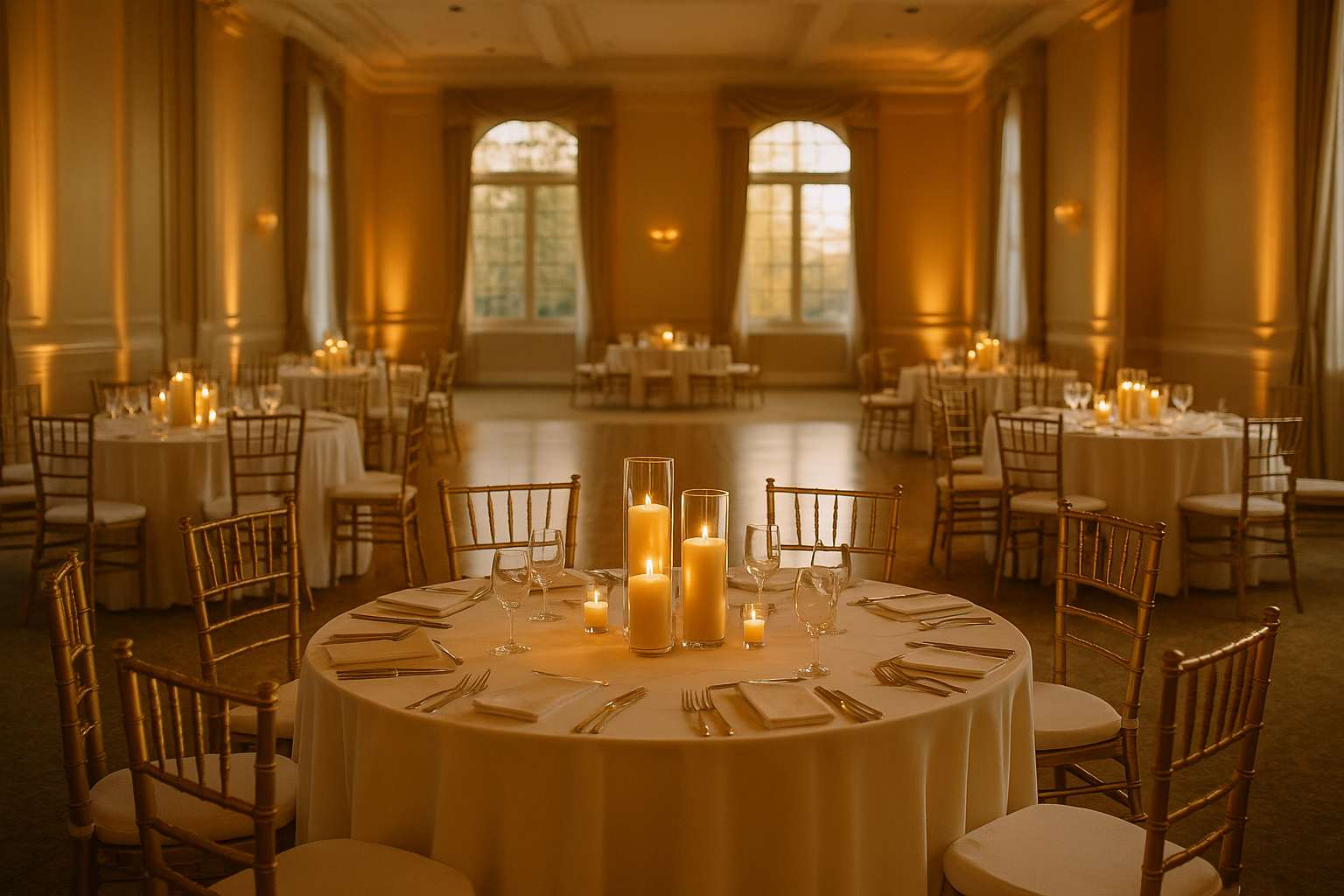
A well-built wedding reception timeline is a 4–6 hour choreographed framework that gives every emotional moment the space it deserves, absorbs small delays without cascade, and keeps energy flowing from the first toast to the last dance. The average reception is five hours; sequencing, not spontaneity, is what makes it feel effortless.
Wedding planners consistently identify poor timeline construction as the root cause of the most common reception regrets: dinner ran cold, the cake was cut after most guests left, the dance floor opened too late, the couple missed an hour of their own party. A well-built timeline does not constrain the day — it protects it.
This guide walks through every segment of the reception in sequence, with timing benchmarks, expert sequencing choices, and the insider knowledge that separates a merely pleasant evening from one your guests will speak about for years.
What Is the Standard Wedding Reception Arc?
Most receptions last four to six hours. Five hours — for example, 5:00 to 10:00 PM — is the industry benchmark for a seated-dinner format. The timeline below represents a standard Saturday evening reception; adjust anchor times for brunch, afternoon, or Sunday formats.
| Segment | Duration | Start Time | Notes |
|---|---|---|---|
| Cocktail Hour | 60–75 min | 5:00 PM | Guests mingle while couple completes portraits |
| Grand Entrance | 8–15 min | 6:00 PM | Wedding party, then couple — always last |
| First Dance | 3–5 min | 6:12 PM | Ask DJ to fade at 3 min if song runs long |
| Welcome Toast / Blessing | 5–10 min | 6:17 PM | Best man or designated toaster; faith blessing if applicable |
| Dinner Service | 60–90 min | 6:25 PM | Plated 3-course; add toasts during courses |
| Parent Dances | 6–10 min | 7:30 PM | Father-daughter + mother-son, back to back or staggered |
| Additional Toasts | 15–25 min | 7:40 PM | Maximum 4–6 total including welcome toast |
| Cake Cutting | 15–20 min (ceremony + serve) | 8:00 PM | Cut before 9 PM; many guests leave after |
| Open Dancing — First Set | 30–45 min | 8:20 PM | DJ opens floor with broad anthems; fill floor immediately |
| Bouquet / Anniversary Dance (optional) | 10–15 min | 8:55 PM | Anniversary dance is universally inclusive; bouquet toss optional |
| Open Dancing — Main Block | 60–75 min | 9:10 PM | Energy peak; avoid interruptions |
| Last Dance Announced | 5 min | 9:50 PM | Announce explicitly; invite all couples to floor |
| Send-Off Preparation | 10–15 min | 9:55 PM | Coordinator assembles guests in lines; distribute sparklers |
| Send-Off | 5–10 min | 10:05 PM | Couple exits to cheering two-line tunnel |
Buffet and food-station formats compress dinner service by 20–30 minutes and typically shift the open-dance block 30–45 minutes earlier, extending the dancing portion of the evening.
How Do You Build a Cocktail Hour That Sets the Right Tone?
The cocktail hour does three things simultaneously: it entertains guests while the couple completes portraits and family formals; it provides a warm-up that heightens anticipation for the grand entrance; and it delivers the first impression of the reception's hospitality. All three matter.
Duration: 60 minutes is standard. Extending to 75 minutes is acceptable if portrait time requires it; beyond 75 minutes, guest energy noticeably flags and alcohol consumption rises. Keep cocktail hour food to 5–8 passed hors d'oeuvres per guest for a pre-dinner format; plan 10–15 pieces per guest if this is your only food service. A string quartet, jazz trio, or acoustic duo costs $500–$2,000 for 60 minutes and signals quality before guests ever sit down.
One expert move: ask your photographer to spend the first 15–20 minutes of cocktail hour shooting candid guest arrivals before returning to the couple for portraits. This doubles coverage without adding a second photographer and gives you photographs of guests genuinely enjoying the first hour — often the most natural and joyful images of the day.
First Dance Before or After Dinner: How to Decide
This is one of the most consequential sequencing decisions in the reception timeline, and the right answer is different for every couple.
First dance immediately after entrance — the most common choice — preserves emotional momentum at the evening's peak energy moment. Guests are already standing and cheering; the transition to the first dance feels seamless and powerful. The photographer captures the highest-energy room reactions of the night. This choice also front-loads the formal programming, allowing the second half of the reception to be entirely celebratory.
First dance after dinner is better for couples who want to relax into the evening, greet guests at their tables during the meal, and prefer dancing to feel like a culmination rather than an opener. It suits couples whose first dance is highly choreographed, as the audience is more settled and attentive after a meal.
The most important principle: do not make this decision based on what feels 'correct.' Make it based on your energy levels and your vision for how the evening should feel.
Toasts, Cake Cutting, and the Open Dance Floor
Three to four toasts of 2–4 minutes each is the range that works. Distribute toasts across dinner courses — one per course — to sustain entertainment without halting service. Your MC gates the microphone: no one speaks without advance approval. The rehearsal dinner is where extended or additional toasts belong; reserve the reception microphone for your curated list.
Cut the cake approximately 90 minutes into the main reception — after entrées are cleared, before sustained open dancing. Cutting after 9 PM at a 10 PM reception means a significant portion of your guests will already be gone. The cake cutting is not primarily about cake; it is the visual signal that formalities have concluded and the celebration is fully open.
Opening the dance floor requires the DJ's full skill. The first two or three songs must get people up immediately — this is not the time for slow builds or unfamiliar selections. Brief your DJ on crowd demographics weeks in advance. Provide 10–15 must-play songs and 10–15 do-not-play songs. For multigenerational crowds, broad anthems (classic Motown, timeless pop) fill the floor faster than current chart toppers. A floor that empties in the first 20 minutes is almost always a DJ briefing problem, not a guest enthusiasm problem.
The Send-Off: Planning Backward from Your Exit
Whatever send-off format you choose — sparklers, bubbles, ribbon wands, flower petals, or lavender — plan it 60–90 minutes before the reception's hard end time, not at the last minute. Guests who are still present and energized at 9:15 PM at a 10:00 PM reception make a joyful send-off line; guests assembled in a hurry at 9:55 PM are tired and confused.
Sparkler send-offs are the most visually dramatic and most photographed exit option. Use 20-inch sparklers (90-second burn) rather than 10-inch (45-second). Have a coordinator distribute sparklers and multiple lighters 15 minutes before exit, with guests assembling into two lines with 3–4 feet of space between them. Couple walks slowly; photographer is pre-positioned mid-tunnel. Confirm venue approval well in advance — many indoor venues prohibit them entirely.
A practical alternative for couples who want to continue dancing after the official exit: the "fake exit" — the couple exits for the send-off photographs, then quietly re-enters for an additional 30–45 minutes of dancing. This is increasingly common and gives you both the stunning exit photo and the extended celebration.
The Details That Make a Timeline Work
A timeline your vendors do not have is a timeline that does not exist. Distribute identical, time-stamped copies to every vendor at least two weeks before the wedding: DJ, caterer, photographer, florist, and venue coordinator. Each vendor should confirm receipt and raise any conflicts with the timing.
Build in a 10–15 minute flex buffer after dinner service before the first programmed dancing element. Dinner always runs over. The buffer absorbs that reality without cascading delays through the rest of the evening.
Finally: build two 5-minute windows for just the two of you. A moment to slip away together, breathe, eat a plate of your own food, and actually be present with each other before returning to guests. The couples who consistently report the most satisfaction with their reception experience are those who were actually present for it — not perpetually managing the schedule. That is your coordinator's job. Your job is to enjoy the day you have worked so hard to create.
Sources: guidance and figures informed by The Knot and Brides.
Frequently asked
How long should a wedding reception be?
Four to six hours is the standard range, with five hours being the most common and consistently well-reviewed duration. A 5:00–10:00 PM reception gives sufficient time for cocktail hour, dinner, toasts, dancing, and a meaningful send-off without guests experiencing fatigue. Shorter receptions of three to four hours work well for cocktail-style or brunch formats, where there is no seated dinner service. Longer receptions — beyond six hours — carry real risk of guest attrition, energy dips, and significantly higher vendor overtime costs. Most venues cap events at a hard end time (commonly 10 or 11 PM on weeknights, midnight on weekends) with overtime charges that can reach $500–$1,500 per hour for venue rental and additional hours for DJ and catering staff. Build your timeline within the venue's outer limits from the beginning rather than trying to compress later.
Should the first dance happen before or after dinner?
Both work — and the right answer depends on your couple's energy and the evening's flow. A first dance immediately after the grand entrance is the most common and energetically powerful choice: guests are already standing and cheering, the room is at peak excitement, and the photographer captures the highest-energy reactions of the night. It also front-loads the formal programming, allowing the second half of the reception to be purely celebratory. A first dance after dinner is a graceful alternative for couples who want to greet guests at their tables during the meal and prefer a more relaxed start to the evening, or whose first dance is highly choreographed and benefits from a settled audience. A hybrid approach — enter, go directly to tables, offer a brief welcome, then rise for the first dance before the salad course — combines intimacy with energy and works especially well at smaller, more formal receptions.
How many toasts should we have at our reception?
Three to four toasts is the range most wedding professionals and etiquette authorities recommend. The traditional sequence: best man, maid of honor, one parent set (or both, back to back), and a brief couple's response. Each toast should run 2–4 minutes — a 2-minute toast delivered with genuine feeling outperforms a 7-minute toast every single time. Assign your MC to gate the microphone: no one speaks without your advance approval. An open-mic invitation without a designated end is one of the most reliable timeline killers, with well-meaning guests turning 15 minutes of programming into 45. If more people want to toast, the rehearsal dinner is the ideal venue for extended toasting — it is expected and welcomed there without the logistical pressure of a main reception timeline.
When should we cut the wedding cake?
Approximately 90 minutes into the main reception — after entrées are cleared and before sustained open dancing — is the optimal cake cutting moment. Cutting too early (before guests have eaten) interrupts the meal; cutting too late (after 9 PM at a 10 PM reception) means many guests will have already departed before the moment. Older guests and families with children typically begin leaving between 9 and 10 PM regardless of what is scheduled. The cake cutting serves a strategic function beyond tradition: it visually signals that formalities are concluding and open celebration is beginning, and it triggers dessert service. Plan for 15–20 minutes total: 3–5 minutes for the ceremonial cutting and photography, then time for plating and distribution. Confirm with your caterer in advance who is responsible for slicing and serving after the ceremonial first cut.
How do sparkler send-offs work, and what do I need to plan ahead?
A sparkler send-off requires more coordination than most couples anticipate, and the details make the difference between a chaotic scramble and a stunning photograph. First, confirm with your venue that sparklers are permitted — many indoor venues and some outdoor venues prohibit them entirely. Use 20-inch sparklers (approximately 90-second burn time) rather than 10-inch sparklers (45 seconds), which frequently burn out before the couple reaches the end of the line. Order 20–30% more sparklers than the number of guests exiting, accounting for sparklers that fail to light. Designate a coordinator or family member to distribute sparklers and multiple lighters 15 minutes before the exit — not at the last second. Form two lines with 3–4 feet of space between them. Brief your photographer in advance on the send-off plan and confirm the lighting setup. The couple should walk slowly and pause briefly mid-tunnel; rushing the exit produces blurred, dark images.
What is the most common wedding reception timeline mistake?
Underestimating how long each transition takes and building a schedule with no buffer time. Dinner service routinely runs 15–20 minutes longer than planned; portrait sessions almost always extend past their allotted end time; guests take longer than expected to move from cocktail hour to their seats; the send-off takes 10–15 minutes of coordination before the couple can actually exit. Professional planners universally advise adding a 10–15 minute flex buffer after dinner service before the first programmed dancing element, and a separate 15-minute buffer before the send-off. Distribute the finalized timeline to every vendor at least two weeks before the wedding — DJ, caterer, photographer, florist, and venue coordinator should all have identical time-stamped copies. A timeline your DJ does not have cannot help them keep you on schedule.