Invitations, Registry & Gifts
Wedding Registry Checklist: The Complete 2026 Guide
A well-built wedding registry does two things at once: it guides guests confidently toward gifts they will be thanked for, and it sets you up with items you will actually use for years. Here is the complete framework — what to register for, how many items, where, and what the 2026 data says has changed.
Register for 1.5 to 2 times your guest count across all price tiers, with roughly 42% of items under $50. Build on two to three platforms — one for physical gifts, one for cash or honeymoon funds — and include at least one named experience fund. According to Zola's 2026 data, 87% of couples now include a cash fund, confirming it is fully mainstream.
Your wedding registry is the mechanism through which the people who love you most translate their generosity into your life together. A thoughtful registry protects everyone: guests arrive at their purchase with confidence; you receive things you will actually use; and the gift-giving culture around your wedding feels warm rather than awkward.
The landscape has shifted significantly in recent years. More than 80% of American couples live together before marrying, which means the traditional registry model — building a household from scratch — applies to fewer couples every year. The 2026 registry is a different exercise: it is about upgrading what you already have, acquiring the anchor quality pieces you have been deferring, and converting guest generosity into experiences and future memories. Understanding this shift changes how you build the list.
How many items should be on a wedding registry?
The rule of thumb from The Knot and registry platforms uniformly: register for approximately 1.5 to 2 times your guest count. A 100-guest wedding warrants 150 to 200 items; a 50-guest celebration warrants 75 to 100. The buffer exists because items are purchased at showers (before the wedding), multiple guests sometimes want the same item, and guests shop across a span of months — a registry that looked full in January can look sparse by May.
| Guest Count | Recommended Items | Price Under $50 (approx. 42%) |
|---|---|---|
| Fewer than 50 | 75–100 | 30–42 items |
| 50–100 | 100–150 | 42–63 items |
| 101–150 | 150–225 | 63–95 items |
| 151–200 | 200–300 | 84–126 items |
| 300+ | 300–450 | 126–189 items |
The most common registry mistake is building a list that is too small — the opposite of what most couples fear. A registry of 40 items for a 120-person wedding is not restraint; it is a logistical problem that leaves guests without options and creates the awkward situation where arriving-late shoppers find nothing left. Add generously, across all price tiers. The registry is a curated menu, not a purchase order.
What categories should be on every wedding registry?
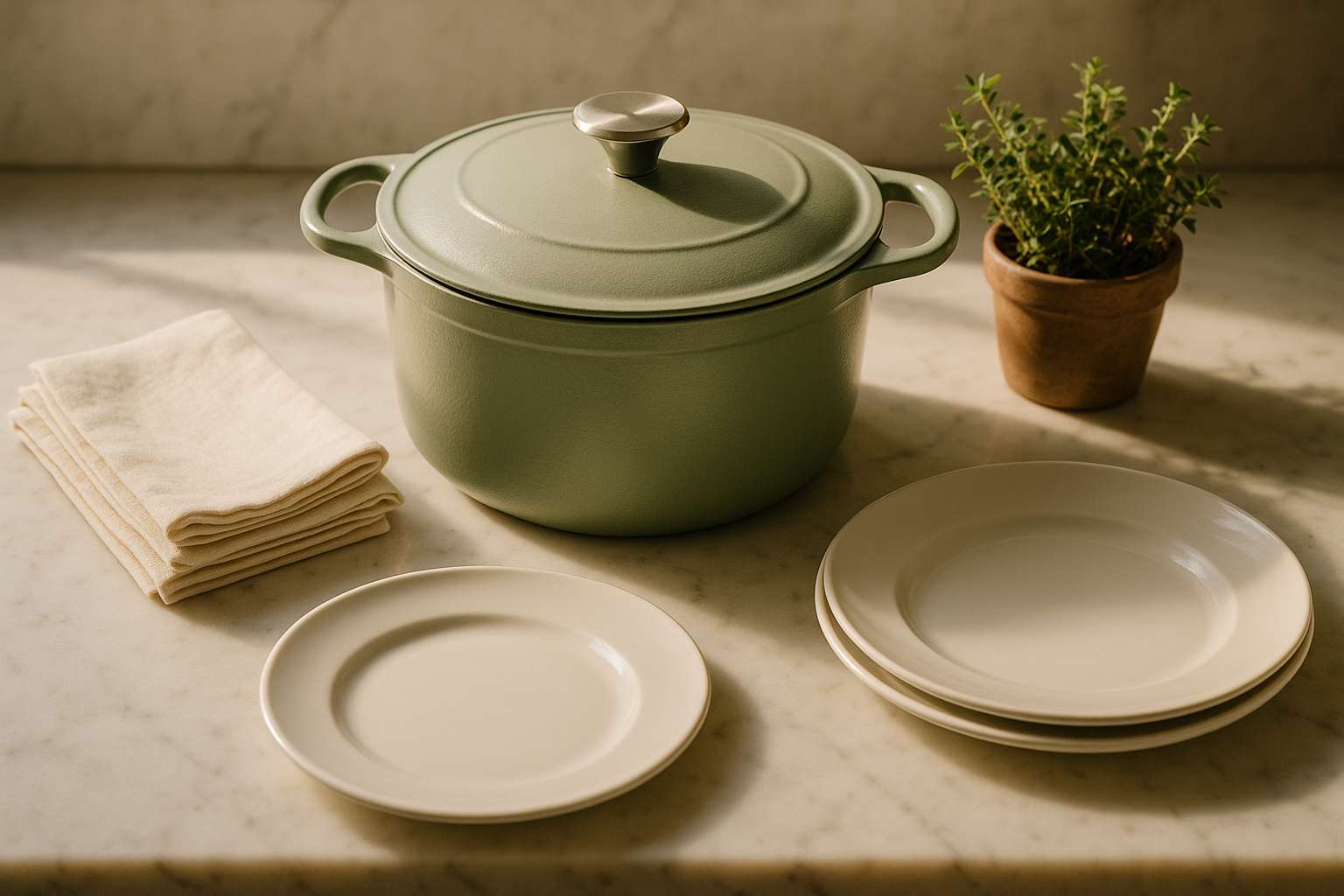
Kitchen and cooking remains the anchor of most registries — and for good reason. Quality kitchen items are used daily for decades, represent the clearest upgrade opportunity for most couples, and include natural group-gift candidates. Prioritize: a Dutch oven (Le Creuset or Staub in the $350 to $450 range are the definitive group gift; Staub's matte-black is a perennial top registry item on MyRegistry.com), a KitchenAid Artisan Stand Mixer (available in over 50 colors, with a lifetime of accessories), a quality chef's knife ($100 to $200 from Wusthof or Shun), sheet pans, a blender, a coffee maker or espresso machine appropriate to how you actually drink coffee, and food storage that will replace the mismatched containers currently in your cabinet.
Bedding and bath are where even the most established households typically have room for meaningful upgrades. Register for a duvet insert and cover in a natural fiber (Parachute's Classic Waffle Duvet Insert is OEKO-TEX certified and the most-registered duvet insert on MyRegistry.com for 2026), sheet sets in long-staple cotton (Brooklinen's Luxe Core Sheet Set is a consistent top performer), and a complete set of bath towels — three sets per person in the household. Luxuries that land beautifully as gifts: a heated towel rack, a matching robe set, a bathtub caddy.
Dining and entertaining: Register for eight to twelve place settings — dinnerware, flatware, and glassware at consistent scale. This number accounts for hosting, breakage over time, and the two of you expanding your table. Classic white or ivory porcelain reads as elegant in any decade; strongly trend-influenced patterns date more quickly than they seem to when purchased.
Experience and cash funds: According to Zola's 2026 First Look Report, 87% of couples now include at least one cash fund. Honeymoon funds are the most popular (cited by 86% of cash-fund users), followed by home funds (toward a down payment or renovation) and experience funds (cooking classes, travel, concerts). Give each fund a specific, evocative name — not a generic 'Cash' label — and use warm, optional language. Share fund links exclusively on your wedding website, not on invitations.
Which platforms are best for a 2026 wedding registry?
| Platform | Completion Discount | Cash Fund Fee | Return Window | Best For |
|---|---|---|---|---|
| Zola | 20% (multi-use, 6 months) | 2.5% CC / free Venmo | Standard | All-in-one; universal add-on from any site |
| Amazon | 20% (one order, max $300) | N/A | 180 days | Selection breadth; familiar checkout for guests |
| Joy | 20% | Zero (Venmo/PayPal) | Standard | Fee-free cash contributions; group gifting |
| Target | 15% | N/A | 1 year | Accessible pricing; everyday item depth |
| Williams Sonoma / Crate & Barrel | 10–20% | N/A | Standard | Premium kitchen and home items |
| Honeyfund | N/A | Free (optional guest gratuity) | N/A | Honeymoon-specific fund contributions |
The recommended combination for most 2026 couples: one universal or store registry (Zola with universal add-on or Amazon for breadth and return flexibility), one cash/experience fund platform (Joy for zero-fee cash transfers; Honeyfund for honeymoon-specific), and optionally one specialty retailer. More than three registries overwhelms guests navigating them from a shower invitation.
What are the most common registry mistakes — and how do you avoid them?
The registry mistakes that cause the most friction are predictable and entirely preventable:
Listing registry information on wedding invitations. This is the most frequently cited registry etiquette violation. The correct location is your wedding website — always and only. Registry information may appear on bridal shower invitations, because gift-giving is that event's explicit and understood purpose.
Building a cash-only registry. Even among couples who strongly prefer experience-based gifts, maintain at least 20 physical items. Some guests prefer something tangible; some are attending from an older generation with different giving customs. Forcing all guests into a cash-only framework narrows options in a way that can feel presumptuous.
Not refreshing after showers. Replenish sold-out items within 48 hours of any gifting event. The two weeks before the wedding are peak gift-purchasing time; guests who open the registry and find it depleted have no obvious path forward.
Forgetting completion discounts. Set a calendar reminder the day of your wedding for the completion discount deadline — typically 60 days to six months post-wedding depending on the platform. This window to purchase remaining registry items at 10 to 20% off is one of the most practically valuable post-wedding tools available, and it expires whether you use it or not.
Starting too late. The registry should be live before your first event invitation — whether that is an engagement party, a bridal shower, or a holiday gathering where the wedding comes up. Guests who want to give something early deserve a list to work from. Begin building within the first month of engagement, and have the registry substantially complete six to nine months before the wedding date.
Frequently asked
How many items should be on a wedding registry?
Register for approximately 1.5 to 2 times your guest count, plus a buffer. For a 100-guest wedding, aim for 150 to 200 items. For 50 guests, 75 to 100 items; for 150 guests, 200 to 250. This formula accounts for items purchased at showers before the wedding, multiple guests wanting to give the same item, and guests shopping across a span of months. The most common mistake is registering too few items — a sparse registry creates the uncomfortable situation where guests who shop late find the list picked clean. A second concern: register across price tiers so no guest is priced out. Roughly 42% of registry items should fall under $50, ensuring coworkers, acquaintances, and guests on modest budgets have genuine options without feeling forced into a group gift.
Is it rude to ask for cash or a honeymoon fund?
No — and the data is clear on this. According to Zola's 2026 First Look Report, 87% of couples now include at least one cash fund, and 91% of couples believe cash registry requests are entirely acceptable. The etiquette is entirely in the framing: give each fund a specific, evocative name rather than a generic 'cash fund' label ('Amalfi Coast Dinner for Two' inspires giving; 'Cash Fund' does not). Use warm, optional language ('If you'd like to contribute to our honeymoon, we'd be so honored') rather than directive language. Share registry and fund information only on your wedding website — never on invitations or save-the-dates. Maintain at least 20 physical gift items alongside cash funds so guests who prefer something tangible have that path available.
Which wedding registry platform is best in 2026?
Two to three registries is the accepted standard. The most functional combination in 2026: one universal or store registry for physical gifts (Zola's universal add-on function allows items from any website; Amazon's 180-day return window is a meaningful practical advantage), one platform for cash and experience funds (Joy has zero fees for Venmo and PayPal transfers, making it the most guest-friendly option for cash contributions; Honeyfund is specifically built for honeymoon fund contributions), and optionally one specialty retailer for premium kitchen or home items (Williams Sonoma and Crate & Barrel both offer 10 to 20% completion discounts). More than three registries creates guest confusion. One is typically too limiting unless a universal add-on function is included.
What are the most important items to register for?
The anchor of a strong registry is quality in the categories you will use most: kitchen and cooking (a Dutch oven, a quality chef's knife, a stand mixer, and versatile cookware), bedding (sheets and duvet you will use for years, prioritizing natural fibers), bath (towel sets sized for your bathroom), and dining (dinnerware for eight to twelve, glassware, and flatware). In 2026, travel gear (luggage, packing cubes) and experience contributions (honeymoon funds, cooking classes, subscription services) have become registry staples alongside traditional housewares. The items most likely to be regretted are trend-specific décor that dates quickly, appliances sized for a home you plan to leave soon, and duplicates of things you already own in perfectly good condition.
When should we create our wedding registry?
Create your registry six to nine months before the wedding date, and ensure it is live before engagement party invitations go out — guests will look for it the moment they receive an engagement party invitation. A common timeline: open registry accounts within the first month of engagement and begin adding items; have the registry substantially complete six to nine months before the wedding; refresh and replenish sold-out items within 48 hours of any shower or gifting event; and do a final refresh two weeks before the wedding, which is peak gift-purchasing time for guests. After the wedding, use your completion discount window (typically 60 days to six months, at 10 to 20% off remaining items) before it expires.
What are wedding registry completion discounts, and how do we use them?
Completion discounts are one of the most underused benefits of the modern registry system. Most major platforms offer a window after the wedding — typically 60 days to six months — during which you can purchase items remaining on your registry at a discount: Zola offers 20% off for six months and allows multiple uses; Amazon offers 20% on one order up to $300; Target offers 15%; Williams Sonoma offers 10 to 20%. Set a calendar reminder for the day after your wedding with the discount window deadline and use it to acquire the high-ticket items (a Le Creuset Dutch oven, a KitchenAid stand mixer, premium luggage) that guests loved but may not have purchased as individual gifts. This is one of the most financially practical post-wedding actions available.