Venues & Destinations
Backyard Wedding Cost: A 2026 Breakdown
A backyard wedding feels free — until you price the tent, generators, portable restrooms, and landscaping. Here is every cost category couples overlook, with real 2026 price ranges so you can budget honestly from the start.
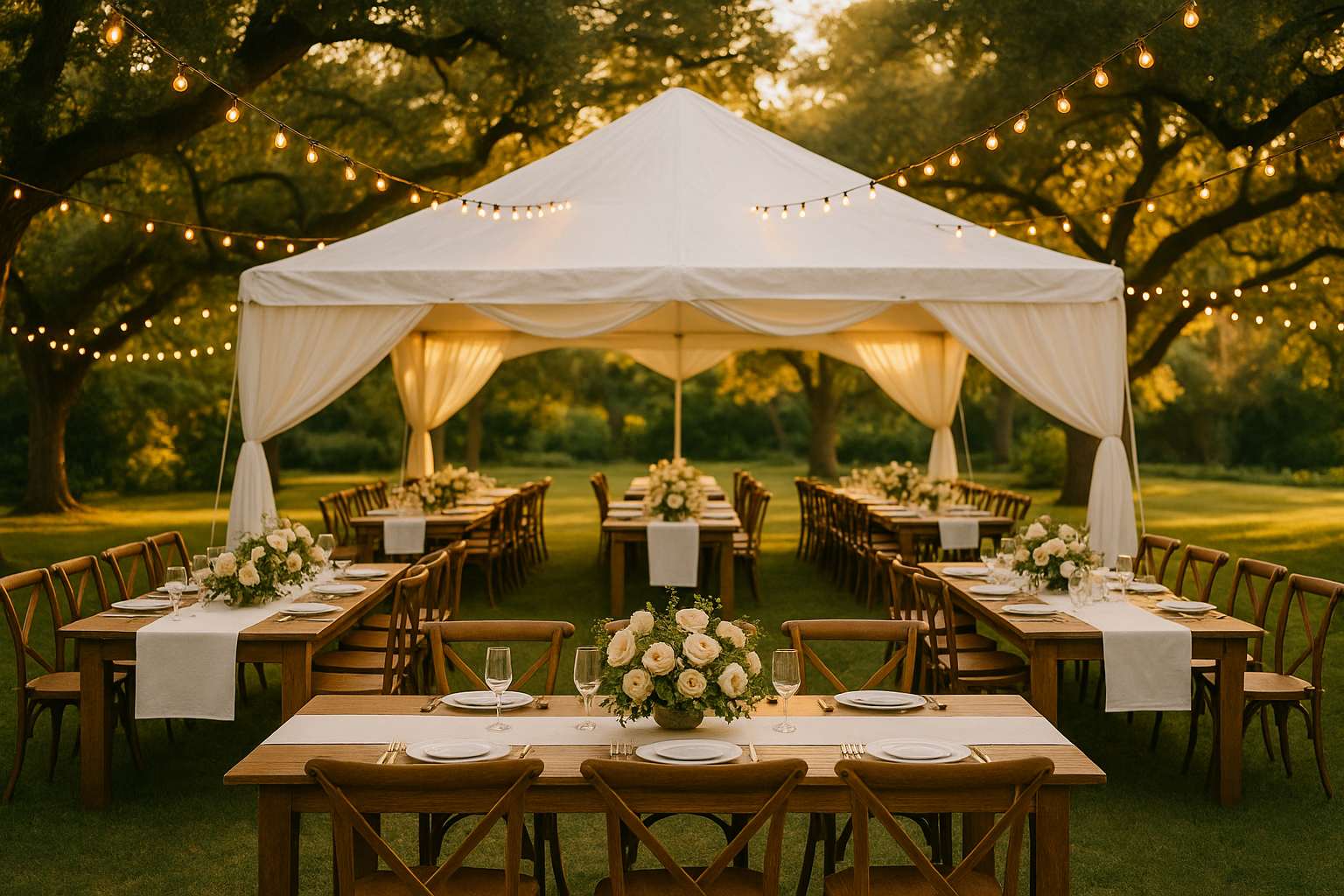
A backyard wedding for 75–100 guests in 2026 realistically costs $15,000–$35,000 once you add tent rental, generators, portable restrooms, catering infrastructure, and landscaping — not the zero-venue-fee dream most couples imagine. The savings over a traditional venue are real, but far smaller than the headline suggests.
The appeal of a backyard wedding is deep and completely understandable. The personal meaning of celebrating on a property tied to your family, the freedom to customize every detail, the absence of a venue fee on the invoice — these are genuine advantages. But the phrase "free venue" can obscure a complicated reality: a home or property becomes a wedding venue only after you have supplied everything a built venue already has.
That means a tent. Portable restrooms. Generator power. Catering prep infrastructure. Tables, chairs, linens, and serviceware. Landscaping. Parking. Trash removal. Permits. And liability insurance. When couples add these categories honestly, the comparison to a traditional venue looks quite different.
According to The Knot's 2025 Real Weddings Study, the national average wedding venue fee is approximately $12,900. Infrastructure costs for a backyard celebration of 75–100 guests can reach $10,000 to $20,000 before a single catering invoice or florist delivery. The savings are real — but they require a precise, honest accounting of what you are actually building.
What does a backyard wedding actually cost in 2026?
The total cost for a backyard wedding depends heavily on guest count, the existing condition of the property, and how much infrastructure you need to rent or build. Here are the core cost categories:
| Category | Low Estimate (50 guests) | Mid Estimate (100 guests) | High Estimate (150 guests) |
|---|---|---|---|
| Tent rental (structure only) | $1,000–$2,000 | $2,000–$4,000 | $3,500–$7,000 |
| Tent flooring & sidewalls | $500–$1,200 | $1,000–$2,500 | $2,000–$4,000 |
| Tables, chairs, linens, serviceware | $1,500–$3,000 | $3,000–$5,000 | $4,500–$8,000 |
| Portable restrooms (luxury trailer) | $800–$1,200 | $1,200–$1,800 | $1,800–$3,000 |
| Generator rental & fuel | $400–$800 | $600–$1,500 | $1,000–$2,500 |
| Tent lighting | $300–$700 | $600–$1,500 | $1,000–$2,500 |
| Landscaping & site prep | $300–$1,000 | $500–$2,000 | $1,000–$3,500 |
| Permits & insurance | $250–$600 | $400–$1,000 | $600–$1,500 |
| Trash removal & cleanup | $200–$400 | $300–$700 | $500–$1,000 |
| Infrastructure subtotal | $5,250–$10,900 | $9,600–$20,000 | $15,900–$33,000 |
These figures cover infrastructure only — before catering, florals, photography, entertainment, or a wedding planner. When you add full vendor coverage at the national average, total backyard wedding costs for 100 guests typically land between $25,000 and $45,000.
What permits does a backyard wedding require?
Permit requirements vary widely by municipality, but most jurisdictions require at least one — and often several — permits for a private-property wedding gathering. The most common categories:
- Special event or assembly permit: Required in many cities for gatherings above a set headcount, often 50 to 75 guests.
- Noise ordinance permit: Live music or amplified sound after a set hour may require written permission or advance notification of neighbors.
- Fire safety permit: Tent structures and open-flame elements such as candles or fire pits require inspection in most jurisdictions.
- Health department permit: Required if food is being prepared on-site by a caterer, rather than brought as pre-packaged food.
- Temporary structure permit: Some counties require permits for tent footprints above a certain square footage.
Contact your local city or county zoning and planning office 90 to 120 days before your wedding date. Permit processing times vary, and some approvals involve neighbor notification periods. Your tent rental company and caterer may also need to file vendor-specific permits — ask each one explicitly what paperwork they handle and what is the couple's responsibility.
What does a generator actually cost — and do you always need one?
For any backyard wedding with a DJ or live band, catering equipment, tent lighting, and portable restroom trailers, a generator is almost certainly necessary. Residential electrical panels are not designed for the combined draw of event equipment, and patching into your home's service risks tripping breakers or damaging appliances.
A 20kW generator — sufficient for most 75 to 100-guest events with standard equipment — costs $500 to $1,200 for a weekend rental, including delivery and fuel. Large events or two-zone tented setups may require two generators, with combined rental costs of $1,500 to $2,500.
Before renting, ask each vendor what their power draw requirements are and whether they supply their own power. Many experienced caterers and DJ companies are fully self-powered. If your DJ, catering company, and lighting vendor are all self-sufficient, your generator needs may be limited to restroom trailer service and ambient lighting.
Is a backyard wedding actually cheaper than a traditional venue?
Sometimes — but the math depends entirely on your starting conditions and guest count. The financial case for a backyard wedding is strongest when:
- The property already has mature, beautiful landscaping that requires minimal preparation.
- The home has real restrooms sufficient for 50 or fewer guests.
- The electrical system can support vendor requirements or the host already owns generator equipment.
- The guest count is under 75.
- Family members can provide meaningful labor for setup and breakdown.
According to Junebug Weddings' planning guide, backyard weddings for 50 to 100 guests typically come in between $10,000 and $30,000 in total. That is often meaningfully less than the national average of $34,000 to $36,000 — but it requires disciplined budgeting and a property well-suited to the task. The savings are real. They are just not free.
One cost no spreadsheet can capture: the intangible value of celebrating on property that belongs to your family. For couples for whom that meaning is central, no venue comparison quite applies.
Frequently asked
How much does a backyard wedding cost in 2026?
Most backyard weddings for 50–100 guests cost between $15,000 and $35,000 in 2026, once you account for tent rental, furniture, portable restrooms, generator power, catering infrastructure, and landscaping. Intimate celebrations under 50 guests can come in between $8,000 and $15,000 if the family already owns much of the outdoor infrastructure. Large celebrations of 150 guests or more can exceed $40,000 because every cost category scales with headcount. For comparison, the national average wedding venue fee is approximately $12,900 according to The Knot's 2025 Real Weddings Study — which means the savings from using a backyard shrink considerably once you add the infrastructure a venue would otherwise provide. Add a 10–15% contingency buffer on top of your estimated total to account for weather contingencies, overtime charges, and vendor price increases.
Do you need permits for a backyard wedding?
Most municipalities require at least some permits for large gatherings on private property, even when the event is a one-day celebration. Common permit categories include noise ordinances, fire safety permits for tent structures and open flames, zoning approvals for temporary structures, and health department permits if food is being prepared or served on-site. Some counties require a special event permit for gatherings exceeding a set guest count — commonly 50 or 75 people. Permit requirements and fees vary dramatically by city and county. Contact your local zoning or planning department as early as possible, ideally 90 to 120 days before the wedding date, to understand what approvals are needed. Your tent rental company and caterer may also need to file separate permits. Failing to obtain required permits can result in fines or, in rare cases, event shutdown.
What does tent rental cost for a backyard wedding?
A standard tent for 100 guests ranges from $1,500 to $4,000 in 2026. A large tent for 150 guests typically runs $2,500 to $5,500, and full-coverage frame tent structures with flooring, climate control, liner, and lighting can reach $8,000 to $15,000 or more at the high end. Tent rental companies typically charge by the square foot, with basic coverage costing $0.75 to $1.20 per square foot. Important additional costs include tent flooring or subflooring ($1,000 to $3,000 for 100 guests), tent lighting such as bistro string lights or chandeliers ($500 to $2,500), sidewall panels for rain or wind protection ($300 to $800), and delivery and installation labor, which is usually quoted separately. Request itemized quotes from at least three rental companies, and be clear about your ground conditions — uneven terrain, soft soil, or proximity to underground utilities can affect installation costs.
How much do portable restrooms cost for a wedding?
Standard portable toilet rentals cost $75 to $150 per unit for a one-day event, but most couples hosting a backyard wedding with more than 30 guests opt for luxury restroom trailers, which offer a far better guest experience. Luxury restroom trailers cost $1,000 to $2,500 depending on the number of stalls and the level of finish, and typically include real porcelain fixtures, air conditioning or heat, running water, vanity mirrors, and floral or candle accents. The industry standard is one restroom per 50 guests; when alcohol is served, increase the ratio to one per 35 guests. For a 100-guest wedding serving a full bar, plan on three restroom units. Your vendor should handle delivery, setup, and removal — confirm that their delivery vehicle can access your property without damaging your lawn or landscaping.
Do you need a generator for a backyard wedding?
Almost certainly yes, for any wedding reception beyond the most minimal gathering. A typical wedding reception draws power from the DJ or live band, catering equipment, tent lighting, portable restroom trailers, climate control fans or space heaters, and possibly a photo booth or bar display lighting. Most residential electrical systems cannot handle this combined load safely, and your homeowner's insurance may have specific restrictions on commercial events drawing from the home's panel. A primary generator in the 20kW to 30kW range costs $500 to $1,200 for a weekend rental. For larger events or two-zone tented setups, two generators running in parallel may be required. Many experienced wedding vendors — especially caterers and DJ companies — carry their own generator capacity, so ask each vendor about their power requirements and whether they are self-powered before assuming you need to rent additional capacity.
Is a backyard wedding cheaper than a traditional venue?
Sometimes, but far less often than couples initially expect. When you account for all the infrastructure a traditional venue includes in its rental fee — flooring, built-in restrooms, existing kitchen or catering prep areas, climate control, electrical capacity, parking, and liability insurance — the gap narrows quickly. The national average venue fee is approximately $12,900 according to The Knot, while backyard infrastructure costs alone can reach $10,000 to $20,000 before catering or entertainment. The financial case for a backyard wedding is strongest when the property already has excellent landscaping, sufficient electrical capacity, real restrooms, and natural shade or a permanent structure — and when the guest count stays under 75. It is also worth noting that a backyard wedding can offer intangible value that no venue can match: the meaning of celebrating on a property with personal history that no rental fee can replicate.
What are the most common hidden costs in a backyard wedding?
The costs most consistently underestimated in backyard wedding budgets include: landscaping and lawn preparation ($500 to $3,000 for professional grooming, aeration, or new plantings); trash and waste removal ($200 to $600, since vendors will leave bags and your municipal service will not accommodate event volume); post-event lawn restoration ($200 to $800 for reseeding or repairing high-traffic areas); parking and shuttle logistics ($500 to $2,000 if your property lacks sufficient parking); catering infrastructure including prep kitchen rental or catering trailer ($500 to $1,500 for caterers who require a commercial prep area); and service charges and gratuity, which add 9–15% on top of quoted vendor fees. Add a weather contingency plan — a secondary indoor location, backup tent siding, or space heater deposits — with associated costs factored into your budget from day one.