Venues & Destinations
How to Choose a Wedding Venue: The Complete 2026 Guide
Your venue decision controls your guest count, your vendors, your budget, and the emotional tone of your entire wedding day. Here is how to find the right one — and every question to ask before you sign.
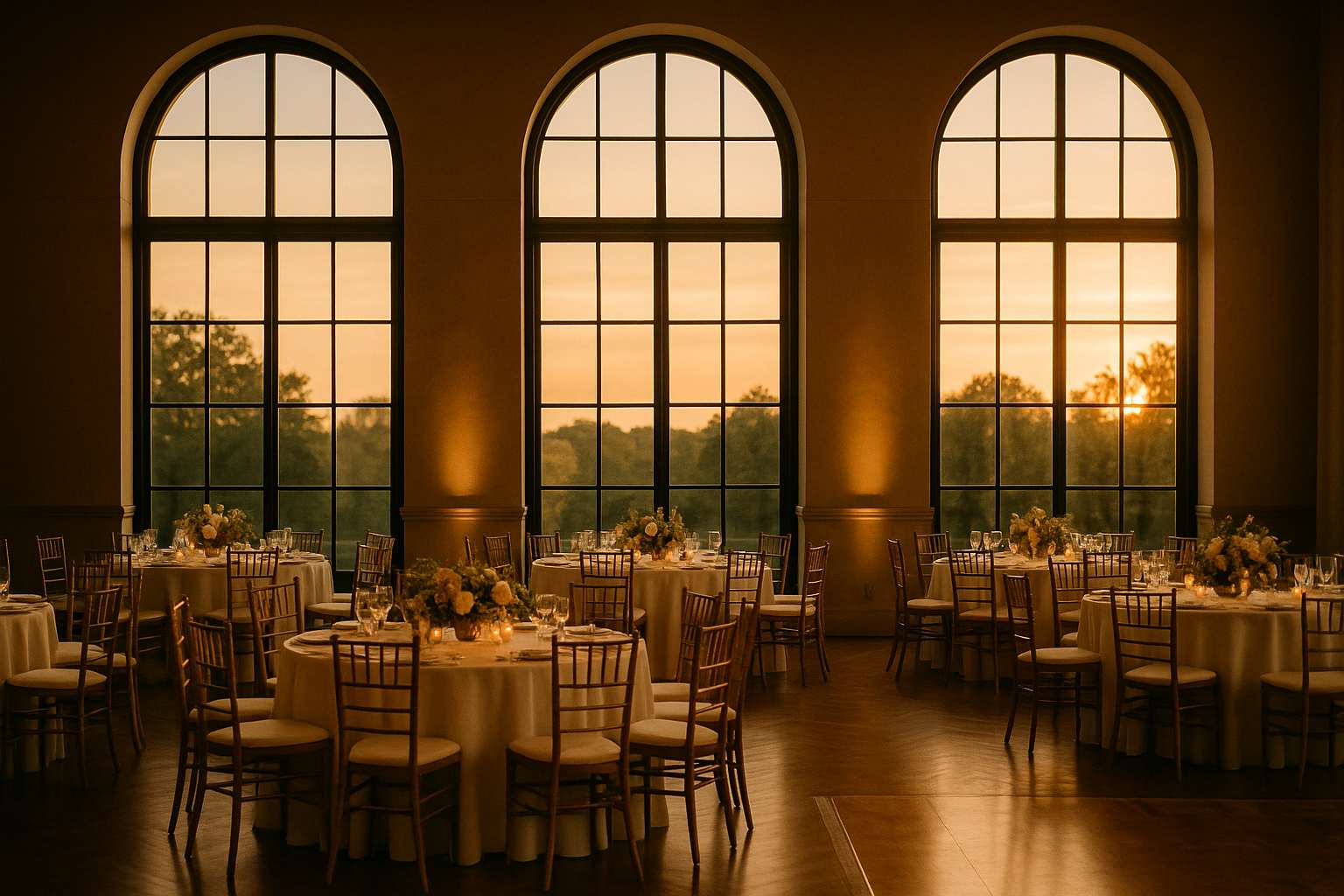
Your wedding venue is the single most consequential decision in your entire planning process — it sets your budget ceiling, determines which vendors you can hire, and establishes the emotional tone of the day. Establish your guest count and total budget before you tour anything, then book the right venue 14–18 months out for peak Saturday dates.
Every other wedding decision is downstream of the venue. Your photographer must be able to work in the light it offers. Your florist must know its surfaces and constraints. Your guests must be able to reach it and move through it comfortably. And your caterer — whether the venue's own team or someone you hire independently — must feed everyone beautifully within its kitchen and its rules.
The Knot's 2026 Real Weddings Study, surveying 10,474 couples married in 2025, found the national average total wedding cost was $34,200, and venue rental alone accounted for roughly 17 to 40 percent of that total depending on whether the space is site-fee-only or all-inclusive. The right venue choice sets you up for an intentional, financially clear planning process. The wrong one creates friction at every stage.
What is the step-by-step process for choosing a wedding venue?
The most common mistake couples make is touring venues before they know their guest count and budget. Venue capacity and price are inseparable — fall in love with a space that seats 80 when your family list alone runs to 120, and you have created a problem that cannot be solved. Follow this sequence:
- Draft your guest list first — not a final list, but a realistic working count. Include the must-invite tier (immediate family, closest friends) and calculate your approximate total. Your venue must seat that number comfortably, not at its technical maximum.
- Establish your Maximum Viable Budget (MVB) — before any tours. Confirm contributions from family in writing, calculate your own savings, and determine the total before you fall in love with anything priced above it.
- Set your date priorities — Saturday evening in peak season (May–October) commands the highest pricing; Sunday, Friday, and off-peak months yield 20–30% savings at the same venue with the same vendor team.
- Research venue categories — decide which type of space reflects your vision before booking tours (see comparison below). This prevents wasted appointment time.
- Tour three to five options with a written list of questions — at each visit, photograph every relevant space, test the acoustics, and ask to see a floor plan. Arrive with the key questions already written down.
- Build the full-cost projection — for every finalist, calculate the site fee plus all required add-ons: catering, rentals, tax, service charges, and insurance. Compare full-cost totals, never site fees alone.
- Sign the contract and pay the retainer — once you are certain. A verbal agreement means nothing; a signed contract and deposit secures your date.
How do the major venue types compare — and which is right for your wedding?
There are nine core venue categories, each with its own cost structure, atmosphere, and trade-offs. The table below gives you a working comparison; the details that follow explain what each type genuinely demands.
| Venue Type | Typical Site Fee | Best For | Capacity Range | Weather Risk | Vendor Flexibility |
|---|---|---|---|---|---|
| Hotel Ballroom | $7,500–$30,000+ | Large formal celebrations; out-of-town guest blocks | 100–500+ | None | Low–Medium |
| Barn / Farm | $4,000–$12,000 | Rustic warmth; relaxed aesthetic; blank-canvas styling | 75–250 | Medium | High |
| Vineyard / Winery | $5,000–$20,000 | Romantic; wine-centered; scenic outdoor ceremony | 50–200 | Medium | Medium |
| Beach / Waterfront | $500–$25,000+ | Destination; intimate; sunset photography | 20–200 | High | Medium |
| Garden / Estate Garden | $4,500–$20,000 | Nature-immersive; romantic; 50–150 guest sweet spot | 50–200 | High | Medium |
| Historic Estate / Mansion | $4,000–$30,000+ | Exclusive; multi-day weekends; architectural drama | 50–300 | Medium | High |
| Museum / Cultural Institution | $8,000–$30,000+ | Unique; sophisticated; urban couples | 75–300 | None | Low |
| Restaurant / Private Dining | $3,000–$12,000 + F&B min. | Intimate; food-focused; 30–80 guests | 30–80 | None | Low |
| Church / House of Worship | $100–$3,000 | Faith-centered; sacred; traditional community ceremony | 50–500 | None | Low |
The 2026 venue trend picture is clear: non-traditional spaces are dominant among couples under 35. The Knot's 2026 Real Weddings data identifies garden and greenhouse venues as the single fastest-growing category, fueled by the broad move toward nature-immersive, eco-conscious celebrations. Over 60 percent of engaged Gen Z couples now ask venues about sustainability practices — solar power, composting, locally sourced catering — as part of their selection process. October remains the single most booked month for weddings nationally; September and June follow. Book 12 to 18 months ahead for any of these peak months at a sought-after venue.
What questions should I ask at every venue tour?
A venue tour is a high-stakes interview. Bring a written list; take notes on a phone or notepad; photograph every space you might use, including bathrooms, parking areas, and back-of-house staging areas. The questions below are non-negotiable starting points — every answer should be in writing before you sign anything.
On pricing and inclusions:
- What is the all-in quote — site fee, food-and-beverage minimum, service charges, tax, and insurance — for our estimated guest count and date?
- What is included in the site fee (tables, chairs, linens, audiovisual, staffing) versus rented separately?
- Are there off-peak discounts for Sunday, Friday, or winter dates?
On capacity, setup, and vendors:
- What is the maximum seated capacity? (Different from standing cocktail capacity — get both.)
- What time can vendors arrive for setup, and what time must teardown be complete?
- Which vendors, if any, are required to come from an approved or exclusive list?
- Can we bring our own alcohol, or do we use the venue's bar program? What is the corkage fee if we bring wine?
On weather and logistics:
- What is the venue's specific rain or weather backup plan — and where exactly does the ceremony move?
- Are there noise ordinances or music cutoff times?
- What is the parking situation for 150 guests?
On the contract:
- What are the cancellation and force-majeure provisions?
- How many events does the venue host on the same day as ours?
- What are the overtime fees if the event runs past the contracted end time?
One piece of advice from experienced planners: if a venue representative cannot answer a question clearly or deflects it, write that down. Opacity about pricing or policies is almost always a sign of future friction. Transparent venues make for smooth wedding days.
What is the right venue booking timeline?
Different venue types and date choices require different lead times. The framework below reflects current 2026 market conditions.
| Timeframe Before Wedding | Action |
|---|---|
| 18–24 months | Begin venue research; tour top 3–5 options; for destination or garden venues, this is minimum lead time |
| 14–18 months | Sign venue contract and pay deposit; Saturday peak-season venues book fastest at this stage |
| 12–14 months | Confirm all vendor availability with your signed venue contract in hand |
| 9–12 months | For churches: complete pre-marital preparation programs; finalize floor plan and ceremony layout |
| 6–9 months | Finalize catering selections; share floor plan with florist and photographer; confirm guest count tier |
| 4–8 weeks | Final walk-through with all lead vendors present; confirm overtime fees in writing |
The most important principle in all of this: establish your guest count and your real budget before you fall in love with any space. The venue that photographs beautifully but seats only half your family, or that prices out at twice your total budget, will cost you far more than a disappointed afternoon — it will cost you months of replanning. Start with the numbers, then find the beauty that fits them.
Frequently asked
How far in advance do I need to book a wedding venue?
For Saturday peak-season dates — May through October — at popular venues, 14 to 18 months of lead time is the current industry standard. The Knot's 2026 Real Weddings Study data confirms that popular venues in sought-after regions book out quickly, with couples in major markets increasingly securing dates 18 to 24 months ahead. Micro-venues, restaurant buyouts, and weekday or off-season dates can sometimes be secured in six to nine months. Church ceremony dates tied to required Pre-Cana or premarital counseling programs need their own 12 to 18 months of lead time for scheduling. If you fall in love with a venue that is fully booked, ask to be placed on a cancellation waitlist — venue cancellations happen more often than couples expect, particularly for dates six to nine months out.
Is an outdoor venue always less expensive than an indoor venue?
Not when you add up the full cost. Outdoor venues often carry a lower site fee, which can be deeply misleading. A barn at $5,000 and a hotel ballroom at $14,000 may reach very nearly the same total spend once you add the barn's required rentals (tables, chairs, linens, dinnerware: $2,000–$5,000), tent for weather backup ($3,000–$10,000), portable restroom trailers if permanent facilities are absent ($1,500–$3,000), generator hookup ($500–$1,500), and evening lighting ($1,000–$5,000). The hotel absorbs all of those costs in its base package. Before comparing venues on price, build a full-cost projection for each that includes all required add-ons — then compare the totals, not the site fees.
What is a venue food-and-beverage minimum and can it be negotiated?
A food-and-beverage minimum is the least amount you must spend on catering and bar service, separate from the site fee. It protects the venue's revenue on days they reserve exclusively for your event. Minimums are common at hotel ballrooms, upscale estates, and museum venues, and they can range from $10,000 to $50,000 or more at premium properties. Minimums are sometimes negotiable, particularly for off-peak dates (January through March, Sundays, Fridays), smaller guest counts, or shorter event windows. Always ask what the minimum is before you fall in love with a venue, and request a full all-in quote — site fee, service charges, tax, and minimum spend together — so you can compare accurately with other venues.
Should my ceremony and reception be at the same venue?
Not necessarily, but co-locating your ceremony and reception dramatically simplifies logistics and removes the single most stressful guest-experience element: transportation between two venues. When ceremony and reception are in one place, you eliminate shuttle coordination, the twenty-to-thirty-minute gap that can feel awkward for guests, and the logistical risk of guests arriving late because of traffic. The most common reason for separate venues is a faith ceremony: a church, mosque, synagogue, or temple where the religious rite is most meaningful, followed by a separate reception venue. If you choose two venues, aim for no more than twenty minutes of travel between them, plan and communicate transportation clearly, and budget for the gap activities (cocktails, lawn games) that keep guests engaged.
What are the newest venue types trending for 2026?
The 2026 venue landscape is being reshaped by a strong move away from traditional ballrooms and toward spaces that feel personal, atmospheric, and connected to nature or culture. Art galleries and creative spaces are leading the non-traditional category, particularly in urban markets. Living plant nurseries and greenhouses — which appeared in The Knot's 2026 Real Weddings Study as one of the fastest-growing venue subcategories — offer year-round lush beauty without weather risk. Private ranch estates and boutique hotel rooftops are gaining ground for their combination of exclusivity and scenic setting. Hybrid indoor-outdoor spaces with retractable glass panels or covered courtyards are among the most requested features venues are adding, addressing the two biggest outdoor-venue concerns — weather risk and noise ordinances — in a single architectural solution.
What hidden fees do most couples miss when reviewing a venue contract?
The fees that consistently catch couples off guard are those buried in the contract rather than discussed during the initial tour. Service charges of eighteen to twenty-five percent applied to all food and beverage spending are rarely mentioned upfront and can add $4,000 to $12,000 to a catering bill at premium venues. State and local sales tax (six to ten percent in most jurisdictions) is almost never included in initial quotes. Overtime fees — ranging from $500 to $1,500 per hour beyond your contracted end time — can accumulate unexpectedly if the reception runs long. Cake-cutting fees ($2 to $10 per guest when you bring your own cake), corkage fees ($15 to $25 per bottle of outside wine), mandatory valet parking, and required event liability insurance are all additional line items worth identifying before signing.