Venues & Destinations
Types of Wedding Venues: Ideas, Examples & Inspiration
From grand hotel ballrooms to intimate barn farms, sun-washed vineyards to historic estates — every major wedding venue type compared with real costs, named examples, pros and cons, and the insider questions to ask before you sign anything.
Venue typesReal cost rangesVenue pros & consBooking timeline2026 trends
The quick verdict
Nine major venue categories — from grand hotel ballrooms to intimate vineyard estates — compared with real 2026 costs, named examples, genuine tradeoffs, and the questions every bride should ask before she signs.
- Best overall
- Historic Estate — Offers the ideal balance of exclusivity, natural beauty, vendor flexibility, and the multi-day experience 2026 couples increasingly want — often at a site fee lower than a comparable hotel ballroom.
- Best value
- Church + Separate Reception Venue — Church ceremony fees of $100–$3,000 dramatically lower the ceremony cost, freeing budget for a more elevated reception experience at any venue type.
- Best for Large formal wedding of 150+ guests with out-of-town families
- Hotel Ballroom — Purpose-built infrastructure, on-site guest rooms, in-house catering and ADA accessibility eliminate every logistical complication for large, multi-family celebrations.
How we evaluated
Each venue type is evaluated against five criteria: real 2025–2026 cost data from The Knot's 2026 Real Weddings Study and verified venue pricing; logistics requirements (what additional infrastructure each type demands beyond the site fee); weather risk and contingency planning burden; vendor flexibility (whether you can hire vendors freely or are restricted to an approved list); and the planning lead time required at peak dates. Named venue examples are real, bookable properties with publicly available pricing wherever possible. Rating reflects the overall value, experience, and planning manageability of each venue category — not the aesthetics alone.
- Total Cost Transparency. How closely does the site fee reflect the all-in cost? Venues requiring extensive supplemental rentals, infrastructure, or mandatory minimums score lower on this criterion.
- Logistics Simplicity. Does the venue provide purpose-built infrastructure (catering, restrooms, climate control, parking) or require the couple to source each element independently?
- Weather & Contingency Risk. How vulnerable is the venue to weather disruption, and how robust are the built-in contingency options?
- Vendor Flexibility. Can couples hire their preferred caterer, photographer, florist, and band freely, or are they restricted to an approved vendor list?
- Guest Experience. How seamlessly does the venue serve guests across all ages and mobility levels, including accessibility, parking, transportation, and on-site amenities?
Rating scale: Venues are rated 1–5 across Total Cost Transparency, Logistics Simplicity, Weather Risk (lower = better), Vendor Flexibility, and Guest Experience.
Last verified .
At a glance
| # | Name | Rating | Best for | Pricing |
|---|---|---|---|---|
| 1 | Historic Estate & Mansion | 4.8 | Couples wanting an exclusive private-property buyout and a multi-day wedding weekend with on-site lodging | Site fees $4,000–$30,000+; weekend buyouts $8,000–$50,000+ |
| 2 | Hotel Ballroom | 4.5 | Large formal weddings of 150+ guests, especially with out-of-town families who need on-site rooms | Site fees $7,500–$30,000; luxury city all-in $150–$500+/person |
| 3 | Vineyard & Winery | 4.7 | Couples wanting a scenic wine-country celebration of 50–200 guests with an in-house beverage program | Site fees $5,000–$15,000; Napa/top Sonoma $15,000–$30,000+ |
| 4 | Garden & Botanical Garden | 4.6 | Nature-loving couples of 50–150 guests who want a photogenic outdoor setting and a firm tent contingency | Site fees $4,500–$20,000; +$3,000–$10,000 tent at any outdoor garden |
| 5 | Barn & Farm | 4.4 | Couples of 75–250 who want rustic character and full vendor freedom, and will budget for supplemental rentals | Site fees $4,000–$12,000; +$5,000–$12,000 supplemental infrastructure |
| 6 | Beach & Waterfront | 4.3 | Destination and waterfront couples of 20–200 who will sign a written rain plan into the venue contract | Public beach permits $50–$500; private resort beachfront $5,000–$25,000+ |
| 7 | Museum & Cultural Institution | 4.5 | Design-forward couples who want an irreplaceable cultural setting and can absorb high minimums and strict rules | Intimate $1,800–$7,500; Smithsonian SAAM/NPG from $50,000; Guggenheim $75,000+ |
| 8 | Restaurant & Private Dining Venue | 4.3 | Food-first couples hosting an intimate 30–80 guest celebration who want exceptional cuisine over scale | Site fees $3,000–$12,000 + F&B minimum; all-in 50 guests $15,000–$30,000 |
| 9 | Church & House of Worship | 4.6 | Faith-centered couples who want a sacred ceremony at the lowest cost, paired with a separate reception venue | Member fees $100–$3,000; non-member $200–$2,000 (reception separate) |
Historic Estate & Mansion
Aristocratic grandeur, sweeping grounds, and the exclusivity of a private property buyout
Editor's pick
Historic estates and mansion venues consistently deliver what no hotel ballroom or restaurant can: the sensation of inhabiting a private world entirely your own for the day. Stone manor houses, Federal-style country estates, Gilded Age mansions, and Tudor-influenced properties offer sweeping lawns, formal gardens, period interiors for cocktail hours, and the intimacy of an exclusive buyout with no strangers wandering through. Real-world examples with publicly available 2025–2026 pricing include The Crane Estate in Ipswich, Massachusetts (peak Saturday site fee $14,000), Blithewold in Bristol, Rhode Island ($13,795 for peak Saturdays, ceremony garden an additional $2,350), and Belle Meade Historic Site in Nashville, Tennessee ($10,000–$15,000 site fee for up to 200 guests). The Biltmore Estate in Asheville, North Carolina represents the ultra-luxury tier, with complete wedding experiences ranging from $50,000 to $80,000 and beyond. Estate venues are the primary beneficiary of 2025–2026's dominant trend toward multi-day wedding weekends: couples increasingly buy out entire properties from Friday through Sunday, hosting welcome dinners, the wedding, and a farewell brunch on the same grounds. Historic estates that include on-site lodging — either in the main house or in adjacent cottages — are the most sought-after properties for this format. One important planning note: historic structures sometimes carry preservation restrictions on what can be affixed to walls, what lighting can be installed, and what areas guests may access. Always tour the property with your photographer before signing to identify any aesthetic or operational limitations.
Strengths
- Property exclusivity creates an intimate atmosphere impossible to replicate in shared commercial venues
- Architectural details and formal grounds provide extraordinary photography without supplemental decor investment
- Multi-day estate buyouts align perfectly with 2026's trend toward extended wedding weekends
- Site fees at many preserved nonprofit estates are surprisingly competitive with hotel ballroom pricing
Weaknesses
- Remote locations require robust guest transportation planning; older structures may have electrical capacity or HVAC limitations that add infrastructure cost
- Best for
- Couples wanting an exclusive private-property buyout and a multi-day wedding weekend with on-site lodging
- Pricing
- Site fees $4,000–$30,000+; weekend buyouts $8,000–$50,000+
Source: Tulle Together — Historic New England Estates and Mansions (With Pricing) · Visit Historic Estate & Mansion
Hotel Ballroom
Grand, polished, and purpose-built for the classic large wedding celebration
Hotel ballrooms are the original wedding venue category for a reason: they are purpose-engineered for large celebrations in a way that no barn, vineyard, or estate can fully replicate. Chandeliers, climate control, ADA-compliant accessibility, on-site guest rooms, in-house catering teams, and a dedicated events coordinator who has executed hundreds of weddings in that space — these are not small conveniences. They are the difference between a wedding day that flows effortlessly and one that requires constant logistical problem-solving. Named examples in the luxury tier include the InterContinental Chicago's Grand Ballroom (7th floor, featuring a 6-ton Baccarat crystal chandelier), the Waldorf Astoria New York (Grand Ballroom renovated in 2025 to 9,990 square feet with capacity for up to 1,500 guests), and The Peninsula Chicago (Grand Ballroom on the Magnificent Mile, consistently rated among Chicago's premier wedding venues). Luxury hotel ballroom packages in New York and Chicago typically run $150–$500+ per person all-in, reflecting catering, bar service, staffing, and the venue itself. Couples who prioritize seamless execution over distinctive personality are best served by this category. The primary planning caution: service charges of 18–25% on food and beverage are applied on top of catering quotes and can add $5,000–$15,000 to the final bill at full-service properties. Minimum spend requirements can also force overspending on catering when the guest count doesn't meet the hotel's revenue floor for a given date.
Strengths
- Purpose-built event infrastructure eliminates every logistical gap — restrooms, parking, climate control, ADA access, and backup spaces are all present
- On-site guest room blocks eliminate transportation logistics for out-of-town families, which is especially valuable for large multigenerational celebrations
- In-house catering and bartending staff are experienced and coordinated with the venue's exact timeline
- Bridal suites and getting-ready rooms within the same building simplify the day-of schedule dramatically
Weaknesses
- Service charges of 18–25% on food and beverage inflate the final bill significantly beyond the initial catering quote; ballrooms can feel generic without meaningful decor investment, requiring additional florals and lighting budget to achieve a distinctive aesthetic
- Best for
- Large formal weddings of 150+ guests, especially with out-of-town families who need on-site rooms
- Pricing
- Site fees $7,500–$30,000; luxury city all-in $150–$500+/person
Source: The Knot — The Average Wedding Venue Cost, According to Real Data · Visit Hotel Ballroom
Vineyard & Winery
Romantic, European-influenced, and enduringly on-trend for 2026
Vineyard and winery weddings have been growing steadily since 2022 and show no sign of slowing — industry forecasters identify them as among the most booked venue categories for 2026 and 2027. The appeal is genuine: rows of grapevines at golden hour, barrel-lined tasting rooms, harvest tables laden with local cuisine, and a landscape that does the decorating for you. Real named options include Charles Krug Winery in Napa Valley (founded 1861, one of only a handful of Napa wineries permitted to host weddings under the county's Winery Definition Ordinance), Willamette Valley Vineyards in the Salem Hills of Oregon (offering coordinated elopement and wedding packages with vineyard views and on-site coordinator assistance), and Mountain House Estate in Cloverdale, Sonoma County (40 private acres offering the wine country aesthetic at $5,000–$8,000 less than comparable Healdsburg properties). Sonoma County wineries typically charge $10,000–$15,000 for venue rental alone at peak dates; Napa Valley averages $9,250 with far fewer properties available due to county use restrictions. Off-season bookings (November through March at most vineyards) yield 20–30% discounts and, at Sonoma properties in February–March, the spectacular yellow mustard blooms between vineyard rows. The planning caution specific to wineries: harvest season (typically September–October) can introduce working-farm activity, noise, and tractor traffic onto the property, and some wineries require exclusive use of their own beverage program, limiting outside alcohol options.
Strengths
- The landscape is the design — spectacular scenery dramatically reduces supplemental decor spend
- In-house wine programs and increasingly local food pairings elevate the guest experience naturally
- Many estate wineries now include on-site accommodations and an on-staff coordinator, providing partial hotel-like convenience
- Versatile event flow — ceremony in the vines, cocktail hour in the barrel room, dinner under the stars — creates a natural three-act structure
Weaknesses
- Harvest season availability conflicts and mandatory in-house beverage programs can limit flexibility; rural properties require guest transportation planning and most outdoor ceremony spaces need a contracted weather contingency
- Best for
- Couples wanting a scenic wine-country celebration of 50–200 guests with an in-house beverage program
- Pricing
- Site fees $5,000–$15,000; Napa/top Sonoma $15,000–$30,000+
Source: Mountain House Estate — Wine Country Weddings 101 · Visit Vineyard & Winery
Garden & Botanical Garden
The fastest-growing venue category for 2026 — nature-immersive, romantic, and photogenic
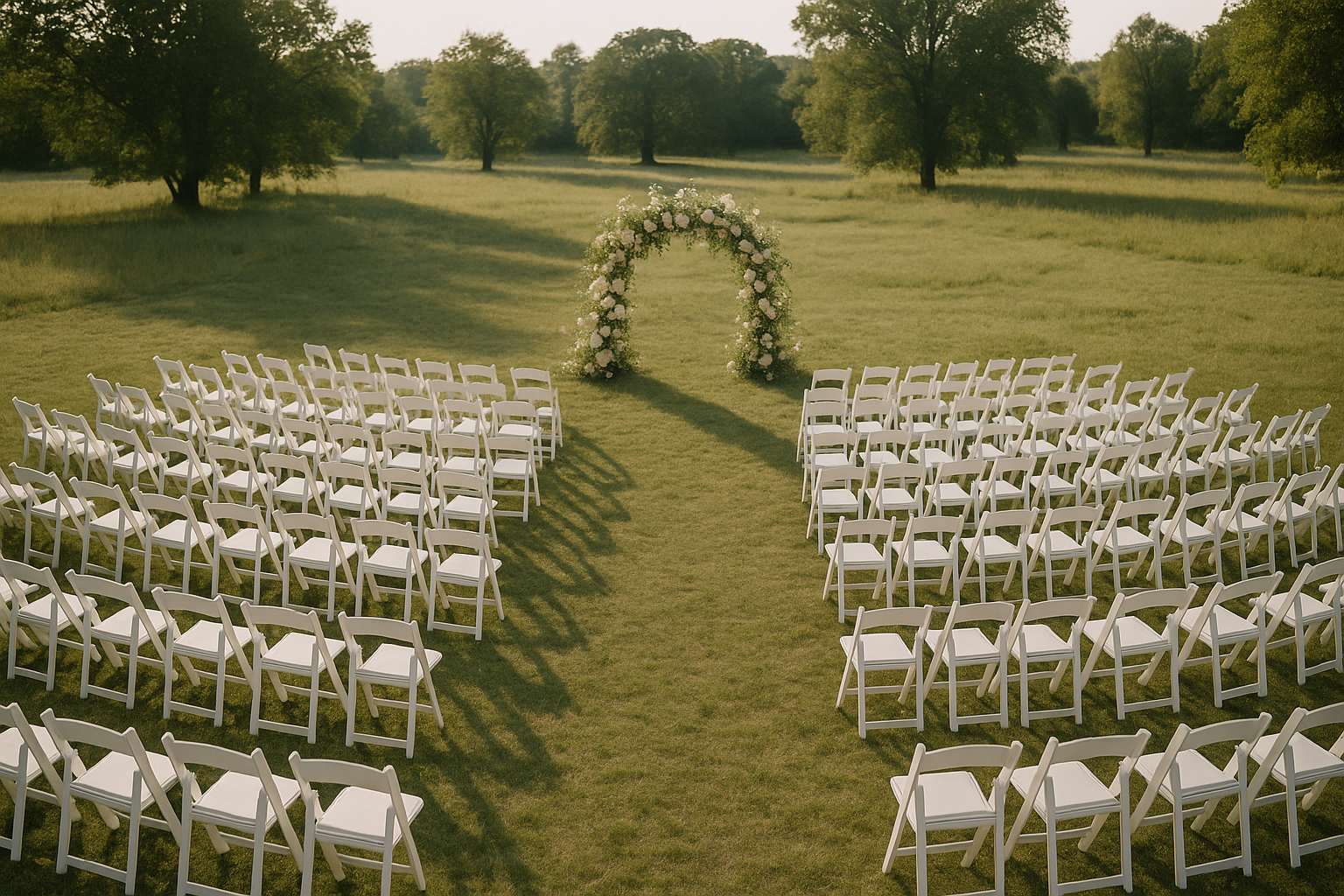
Garden venues — spanning private estate grounds, botanical garden rentals, arboretums, and resort gardens — are identified by The Knot's 2026 Real Weddings data as the single fastest-growing venue category, driven by the broad move toward nature-immersive, eco-conscious celebrations among couples under 35. Manicured hedgerows, rose gardens, pergolas draped with wisteria, and al fresco dining under a canopy of mature trees create the kind of visual poetry that minimal supplemental florals can achieve. Booking timelines at top botanical venues have extended to 18–24 months in advance for peak Saturday dates as demand outpaces supply. Botanical garden rentals in major cities — institutions that combine horticultural prestige with genuine event infrastructure — often command $8,000–$20,000 due to their high demand and the prestige of the setting. Private estate gardens and resort gardens typically range $4,500–$12,000. The defining planning challenge with all garden venues is weather: nearly all require a tent contingency plan, and tent rental adds $3,000–$10,000 to the total budget. Evening events additionally require rented lighting infrastructure ($1,000–$5,000) that indoor venues absorb in their base fee. Confirm that any botanical garden or shared public garden venue provides exclusive use for your event window — some institutions host visitors and other events simultaneously, which can disrupt the intimate atmosphere couples expect.
Strengths
- Natural beauty dramatically reduces decor spend — the venue provides the visual backdrop that indoor venues require elaborate florals and lighting to approximate
- Intimate scale (typically 50–150 guests) works beautifully for the guest-count range most 2026 couples target
- Photogenic at every angle and in every season — spring cherry blossoms, summer roses, autumn color, winter greenhouse warmth
- Many botanical institutions carry a sense of civic prestige and cultural significance that adds meaning to the setting
Weaknesses
- Weather contingency is non-negotiable and adds $3,000–$10,000 in tent rental costs; seasonal peak beauty aligns precisely with peak pricing, and booking competition at top gardens is intense
- Best for
- Nature-loving couples of 50–150 guests who want a photogenic outdoor setting and a firm tent contingency
- Pricing
- Site fees $4,500–$20,000; +$3,000–$10,000 tent at any outdoor garden
Source: Blithewold — Bristol, Rhode Island (garden estate weddings) · Visit Garden & Botanical Garden
Barn & Farm
Rustic warmth and a blank canvas — but budget carefully for the total cost
Best value
Barn venues have evolved from a trend into an enduring aesthetic category, appealing to couples who value authenticity, warmth, and connection to the land over formal polish. String lights, exposed timber beams, wildflower centerpieces, and the scent of open countryside create the specific sensory experience no hotel can approximate. Real named examples with publicly available 2025–2026 pricing include The Barn at Gibbet Hill in Groton, Massachusetts (set on a working farm with soaring cathedral ceilings; site fee approximately $5,000 for up to 220 guests), The Barn at Raccoon Creek in Littleton, Colorado ($4,500–$12,000 for high season, $2,500–$8,500 mid-season, updated through 2025 with a new bridal farmhouse), and Stone Tavern Farm in the Catskills, New York (a 19th-century Dutch barn on a 200-acre working farm surrounded by perennial gardens). The essential budgeting reality of barn venues: the lower site fee is frequently offset by the supplemental costs of a site-fee-only format. Tables, chairs, and linens: $2,000–$5,000. Portable restroom trailers if no permanent facilities: $1,500–$3,000. Generator rental: $500–$1,500. Shuttle service from hotels to the rural property: $800–$2,000. Climate control (fans for summer heat, propane heaters for spring or fall): $500–$1,500. A barn at $6,000 with these additions routinely totals $12,000–$15,000 before catering. Always build out the complete cost projection before comparing a barn to a hotel.
Strengths
- Natural character and warmth that no commercial venue can replicate — the setting itself communicates the couple's personality
- High vendor flexibility: most barns impose no approved vendor lists, allowing couples to hire their preferred caterer, florist, and band
- Indoor-outdoor flexibility with barn doors opening to lawns, fields, or covered porches creates a natural event flow
- Photography backdrops — golden light through timber frames, wildflower fields, stone walls — are genuinely extraordinary
Weaknesses
- The "affordable" barn is often a budgeting illusion: rentals, climate control, restrooms, generator, and transportation regularly match or exceed the site fee savings compared with all-inclusive venues; rural locations challenge guests without cars and create accessibility concerns for elderly relatives
- Best for
- Couples of 75–250 who want rustic character and full vendor freedom, and will budget for supplemental rentals
- Pricing
- Site fees $4,000–$12,000; +$5,000–$12,000 supplemental infrastructure
Source: SHF Weddings — Budgeting for a Barn Wedding (2025-2026) · Visit Barn & Farm
Beach & Waterfront
Inherently luminous and romantic — with genuine weather planning required
Beach weddings span a dramatic aesthetic range: a 20-person barefoot ceremony at a remote cove costs almost nothing; a 200-person black-tie gala on a private resort beachfront costs as much as the most exclusive inland venue. The common thread is the inherently stunning natural backdrop — the sound of waves during vows, sunset timing that provides the most flattering natural light of any venue type, and the relaxed, celebratory mood that only open water creates. Public beach permit fees for small ceremonies are genuinely affordable: Florida counties typically charge $50–$300; California's Laguna Beach charges $396–$492 for permits for up to 50 guests; Hawaii permit costs run $50–$300 depending on the island. Private resort beachfront venues scale to $5,000–$25,000+ for site fees. The honest planning reality is that weather risk is the defining challenge of every beach ceremony, and the wind challenge for hair, decor, and sound systems is practical and genuine even on clear days. Any beach venue booking must include a specific, written rain plan that names the backup location, identifies who makes the call and when, and is signed into the venue contract. “We’ll figure it out if it rains” is not a plan. Coastal Southeast and Gulf Coast couples should evaluate their hurricane season overlap (June–November) carefully and consider event weather insurance.
Strengths
- Inherently extraordinary photography — sunset timing and ocean light create images no indoor venue can match
- The setting itself establishes a relaxed, joyful, celebratory atmosphere that guests carry throughout the entire event
- Ideal for destination weddings where guests treat the trip as a vacation, generating positive associations with the celebration
- Public beach permit fees make small beach ceremonies accessible at virtually any budget level
Weaknesses
- Weather risk is the most significant operational variable, requiring a fully planned and contractually specified backup that many couples underestimate until the week of their wedding; accessibility for elderly guests and guests with mobility limitations requires advance planning on uneven terrain
- Best for
- Destination and waterfront couples of 20–200 who will sign a written rain plan into the venue contract
- Pricing
- Public beach permits $50–$500; private resort beachfront $5,000–$25,000+
Source: Florida Weddings — Florida Beach Wedding Cost (Price Guide) · Visit Beach & Waterfront
Museum & Cultural Institution
One-of-a-kind, sophisticated, and permanently unforgettable — at a price to match
Museum weddings represent the fastest-growing non-traditional venue subcategory in urban markets, and their appeal is visceral: saying your vows amid ancient artifacts, natural history exhibits, or contemporary sculpture creates a wedding experience your guests will describe for years. The Smithsonian American Art Museum and National Portrait Gallery in Washington, D.C. (sharing a historic Greek Revival building with the soaring Kogod Courtyard as its crown event space) charges $50,000 for events of up to 200 guests, $60,000 for 201–400 guests, and $70,000–$80,000 for larger events. The Guggenheim Museum's iconic Frank Lloyd Wright rotunda in New York City commands $45,000–$55,000 for the venue rental plus a $30,000 membership. The American Museum of Natural History's Hall of Ocean Life — the one with the legendary blue whale — starts at approximately $256,000 all-in for 200 guests. More accessible entry points exist: The Merchant's House Museum in New York City hosts intimate weddings starting at $1,800 for 10 guests, and Storm King Art Center in the Hudson Valley starts around $7,500. Museum venues operate under strict regulations governing photography (flash restrictions, off-limits gallery areas), decor attachment, load-in and load-out windows, and catering vendor requirements. They are not well-suited to couples who want a spiritually oriented ceremony experience. Ask your venue contact whether galleries are lit for evening events — some institutions are dramatically illuminated at night; others require supplemental lighting rental to avoid a flat visual aesthetic.
Strengths
- Completely unique — no two museum weddings feel alike, and the setting genuinely expresses the couple's intellectual and cultural values
- Built-in conversation starters and visual entertainment for guests throughout the evening require no additional programming
- Extraordinary photography: dramatic architectural scale, exceptional ambient lighting, and genuinely irreplaceable backdrops
- Fully staffed security and event infrastructure at major institutions mean operational reliability
Weaknesses
- Strict institutional rules governing decor, photography flash, off-limits areas, and load-in windows require careful vendor coordination; high minimum spend requirements and mandatory catering partnerships limit flexibility and inflate cost significantly
- Best for
- Design-forward couples who want an irreplaceable cultural setting and can absorb high minimums and strict rules
- Pricing
- Intimate $1,800–$7,500; Smithsonian SAAM/NPG from $50,000; Guggenheim $75,000+
Source: Tulle Together — Museums You Can Get Married at in the U.S. (And How Much It Costs) · Visit Museum & Cultural Institution
Restaurant & Private Dining Venue
Intimate, culinarily driven, and warmly personal — ideal for smaller guest counts
Restaurant weddings are the preferred format for couples who prioritize exceptional food and hospitality over the grandeur of scale. A private dining buyout at a beloved restaurant creates the most personally curated celebration available for guest counts of 30–80 — and aligns precisely with 2025–2026 data showing 40% of couples choosing 50–75 guest counts. The restaurant's core competency is the guest experience the couple is committing to: kitchen teams that are expert and working in their own environment, service staff who know the space, and a physical setting already perfected for making guests feel welcomed and well-fed. Site fees typically run $3,000–$12,000 plus a minimum food and beverage spend, which scales from $5,000–$25,000+ at upscale establishments depending on guest count and menu selection. All-in, a restaurant wedding for 50 guests at a fine-dining establishment typically totals $15,000–$30,000 with food, beverage, and service included. The aesthetic constraint is real: unlike a barn or estate, you are largely working within the restaurant's existing design language, and customization is limited. Vendor restrictions are common — outside caterers, outside cake suppliers, and outside floral vendors are frequently not permitted. The service pace of a restaurant kitchen, optimized for course-by-course dining rather than the plate-service flow of a traditional reception, may not match a wedding timeline without advance conversation with the chef and maître d'.
Strengths
- Food quality is exceptional — the kitchen team is expert and in its own environment, eliminating the catering quality uncertainty that site-fee-only venues carry
- Intimate guest count creates genuine warmth and connection that large ballroom celebrations cannot replicate
- Accessible urban locations mean guests rarely need transportation, which is a meaningful courtesy for city weddings
- Decor investment is minimal — the restaurant's existing ambiance and design do the work
Weaknesses
- Limited capacity makes restaurant venues unsuitable for guest lists above 80–100; customization of the space is constrained by the restaurant's existing aesthetic and vendor restrictions
- Best for
- Food-first couples hosting an intimate 30–80 guest celebration who want exceptional cuisine over scale
- Pricing
- Site fees $3,000–$12,000 + F&B minimum; all-in 50 guests $15,000–$30,000
Source: The Knot — The Average Wedding Venue Cost, According to Real Data · Visit Restaurant & Private Dining Venue
Church & House of Worship
Sacred, timeless, and the most affordable ceremony venue available
For faith-centered couples, no secular venue can replicate what a church ceremony offers: the weight of tradition, the witness of a faith community, and the sacramental significance of being married before God within a sacred space. Church ceremony venues are also — by a considerable margin — the most affordable ceremony option available. Fees for members are typically $100–$3,000; non-member donation or venue fees average $200–$2,000, depending on denomination and the individual parish. Interest in church ceremonies has increased as overall wedding costs have risen, as couples recognize that a church ceremony fee represents meaningful savings that can be reallocated to a more elevated reception. The planning reality is that church weddings require the most lead time of any venue type. Most parishes require booking 12–18 months in advance and completion of pre-marital preparation programs before a wedding date is confirmed. Catholic couples complete Pre-Cana (several months of sessions); most Protestant denominations require premarital counseling. Music is often restricted to liturgically appropriate selections at traditional churches. Ceremony and reception at separate venues — the most common church wedding format — adds transportation logistics and a gap in the event timeline that requires coordination. The 20–30 minute maximum travel window between ceremony and reception is a real constraint worth building into the planning conversation before the reception venue is selected.
Strengths
- Profound spiritual and sacramental meaning that secular venues cannot provide, for couples for whom faith is foundational to their marriage
- Beautiful architecture — stained glass, carved stonework, soaring ceilings — provides extraordinary ceremony photography without supplemental design investment
- Experienced officiants provide premarital guidance as part of the engagement season, adding pastoral depth to the planning process
- The most affordable ceremony venue available, freeing substantial budget for the reception
Weaknesses
- Ceremony and reception at separate venues requires transportation logistics and creates a timeline gap; music, photography, and decor restrictions vary by denomination and require advance confirmation with the specific parish
- Best for
- Faith-centered couples who want a sacred ceremony at the lowest cost, paired with a separate reception venue
- Pricing
- Member fees $100–$3,000; non-member $200–$2,000 (reception separate)
Source: The Knot — The Average Wedding Venue Cost, According to Real Data · Visit Church & House of Worship
Frequently asked
What is the most popular type of wedding venue in 2026?
According to The Knot's 2026 Real Weddings Study — which surveyed 10,474 couples married in 2025 — outdoor and garden venues are the single fastest-growing category in 2025–2026, driven by Gen Z couples who now represent 41% of the wedding market and consistently prioritize nature-immersive, eco-conscious settings. Barn venues, vineyard estates, and historic outdoor properties together account for the plurality of bookings among couples under 35. Hotel ballrooms remain the dominant choice for large formal celebrations of 150+ guests, particularly in urban markets where logistics simplicity outweighs the desire for a distinctive setting. Non-traditional venues — galleries, lofts, greenhouses, and private estates — are outperforming traditional banquet halls in booking volume in every major market.
How far in advance do I need to book a wedding venue?
For a Saturday peak-season date (May through October) at a sought-after venue, 14–18 months is now the standard booking window — and 18–24 months is increasingly common at top botanical gardens, historic estates, and vineyard properties where demand significantly outpaces availability. Micro-venues, restaurant private dining rooms, and weekday or off-season dates can often be secured in 6–9 months. Church ceremony dates tied to Pre-Cana completion or denominational counseling requirements may demand 12–18 months of lead time independent of the church's calendar availability. The practical rule: begin venue research and touring as soon as your engagement is official, establish your approximate guest count before your first tour, and be prepared to sign a contract — typically with a 25–50% deposit — on the day you decide. Popular venues hold no dates without a signed agreement.
Is an outdoor wedding venue actually less expensive than an indoor venue?
Not necessarily — and this is one of the most common and consequential budgeting misconceptions in wedding planning. A lower site fee at a barn, garden, or beach venue frequently conceals significant supplemental costs that indoor venues absorb in their base fee. Tent rental adds $3,000–$10,000; flooring for grass or gravel adds $1,500–$4,000; generator rental adds $500–$1,500; decorative and ambient lighting adds $1,000–$5,000; and climate control (fans, misting systems, propane heaters) adds $500–$1,500 depending on season and climate. A barn venue with a $6,000 site fee and $10,000 in supplemental infrastructure may total $16,000 before catering — identical to a hotel ballroom that includes all of those elements in a $14,000 all-in package. Build out the complete projected cost for every venue before making comparisons between categories.
Can I get married at a church if I'm not a member of the congregation?
Most denominations welcome non-member weddings with a venue fee and, typically, a requirement that the couple participate in the church's pre-marital preparation program. Non-member fees typically range from $200 to $2,000 depending on denomination and the individual parish. Catholic parishes generally require that at least the bride or groom be a baptized Catholic and that both complete Pre-Cana regardless of affiliation. Most Protestant, evangelical, and non-denominational churches are welcoming and flexible with non-members, often requiring only participation in a premarital counseling program and a meeting with the officiating pastor. Eastern Orthodox, LDS, and some Jewish synagogues have more specific eligibility requirements. Contact the specific church or faith community directly — policies vary meaningfully between individual congregations even within the same denomination.
What hidden fees should I ask about before signing a venue contract?
Six categories of fees consistently surprise couples who don't ask upfront. First, service charges: hotel and resort venues apply 18–25% to all food and beverage, which can add thousands to an initial catering quote. Second, overtime fees: most venues contract for 4–5 hours with hourly overtime rates of $500–$1,500. Third, cake-cutting fees: $2–$5 per guest at many banquet venues. Fourth, corkage fees: $15–$25 per bottle if outside wine or spirits are permitted. Fifth, vendor meals: most contracts require you to feed vendors (photographer, coordinator, band members) at the same per-head rate as guests, typically $45–$80 each. Sixth, event liability insurance: many venues require a one-day policy ($150–$300) naming the venue as additional insured. Also ask specifically about: parking fees, coat check charges, valet requirements, noise ordinance curfews, approved vendor list restrictions, and setup and teardown window lengths — all of which have direct cost and planning implications.
What is a venue food and beverage minimum, and can it be negotiated?
A food-and-beverage minimum is the least amount you must spend on catering and bar service, separate from the site fee. It is the hotel or venue's mechanism for ensuring that an event generates sufficient revenue to justify occupying the space. Minimums typically scale with the prestige of the property, the day of the week, and the season. They are sometimes negotiable — particularly for off-peak dates (Sundays, Fridays, January through March) — because venues strongly prefer a confirmed booking at a slightly reduced minimum over an empty date at the full one. Always ask, and ask in writing. If the minimum exceeds your catering budget, explore whether soft items like flowers, linens, or audio-visual services can count toward it. Some venues are flexible on this; others are not. Never assume a minimum is non-negotiable without testing the conversation.
What type of wedding venue works best for a large wedding of 200 or more guests?
Hotel ballrooms are the most operationally reliable venue type for large formal weddings of 200 or more guests. Purpose-built event infrastructure — purpose-designed HVAC, dedicated restroom capacity for large groups, ADA-compliant accessibility, on-site catering and bar teams, and coordinated staff at scale — eliminates the logistical improvisation that large events require at most other venue types. The Waldorf Astoria New York's Grand Ballroom holds up to 1,500 guests; the InterContinental Chicago's Grand Ballroom is among the most celebrated large wedding venues in the Midwest. Banquet halls and estate properties with permanent tent structures are strong secondary options. Barns and outdoor gardens at maximum capacity consistently feel crowded; museums have strict loading restrictions that make 200+ guest events operationally complex. For guest lists above 200, always confirm the venue's seated capacity — not its standing or fire-code maximum — to ensure guest comfort throughout a multi-hour seated dinner.